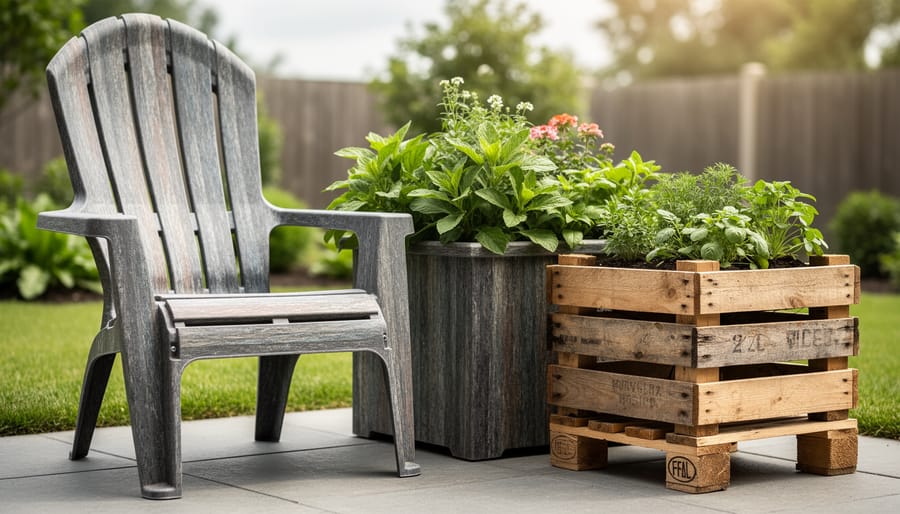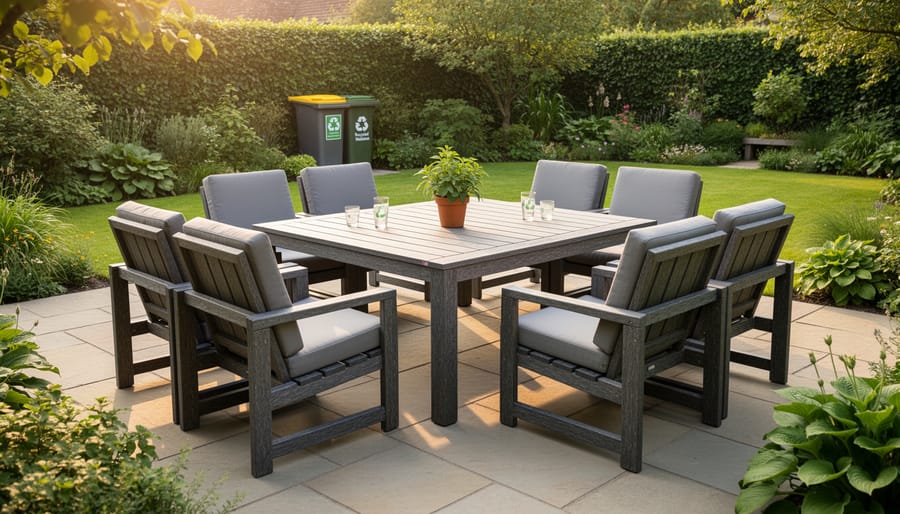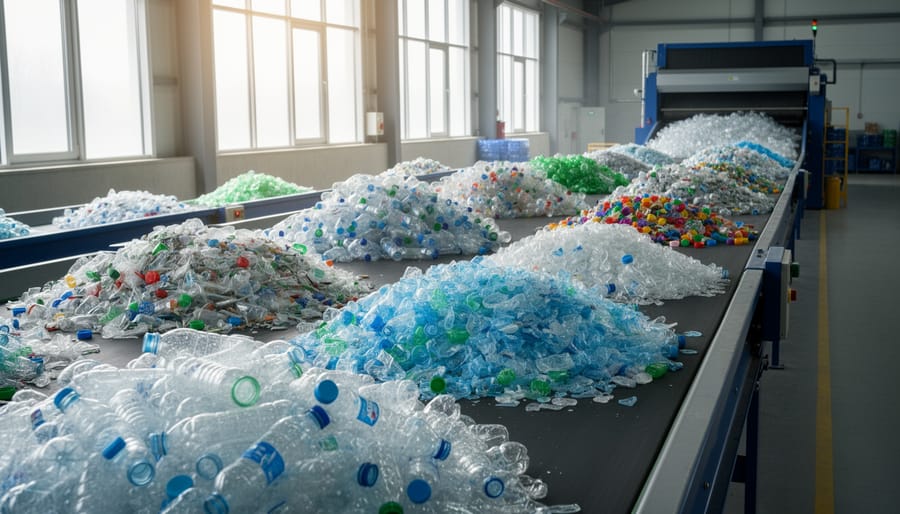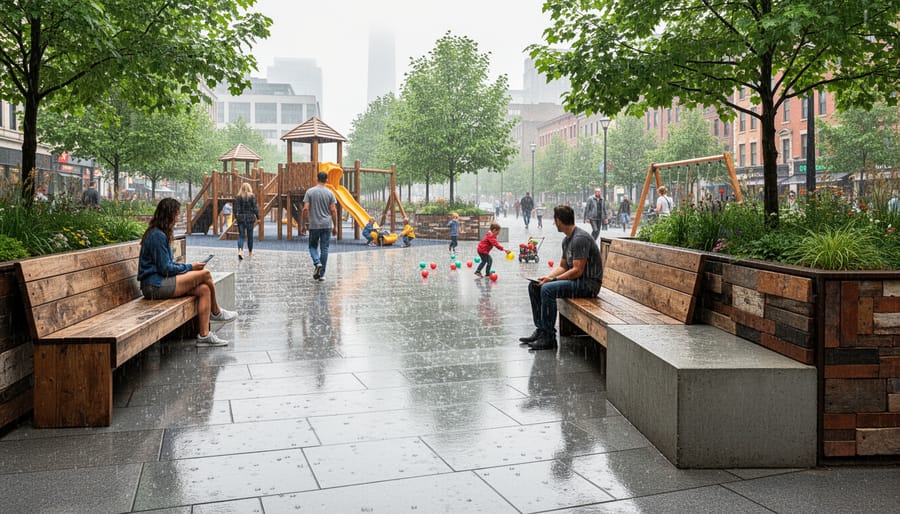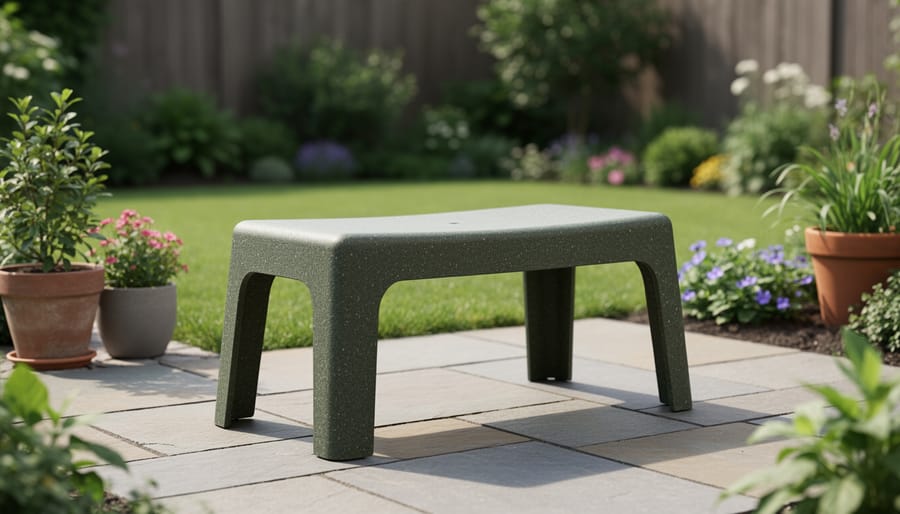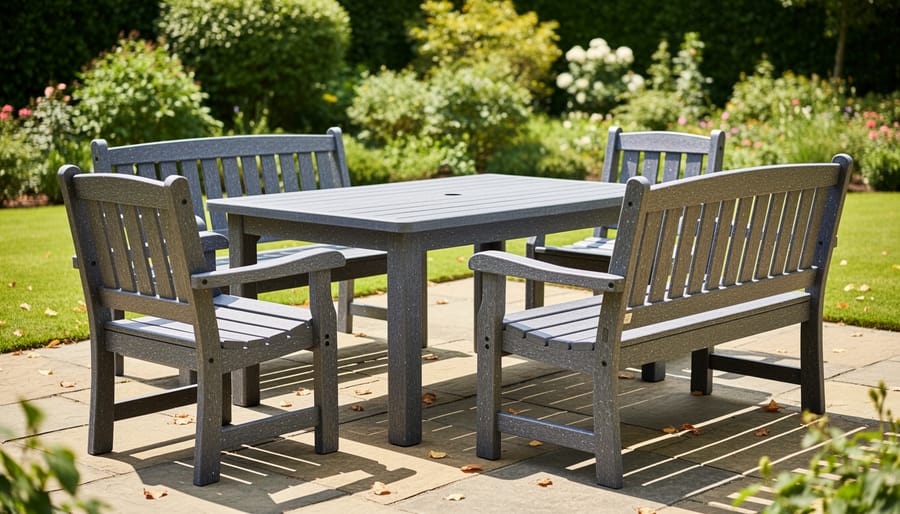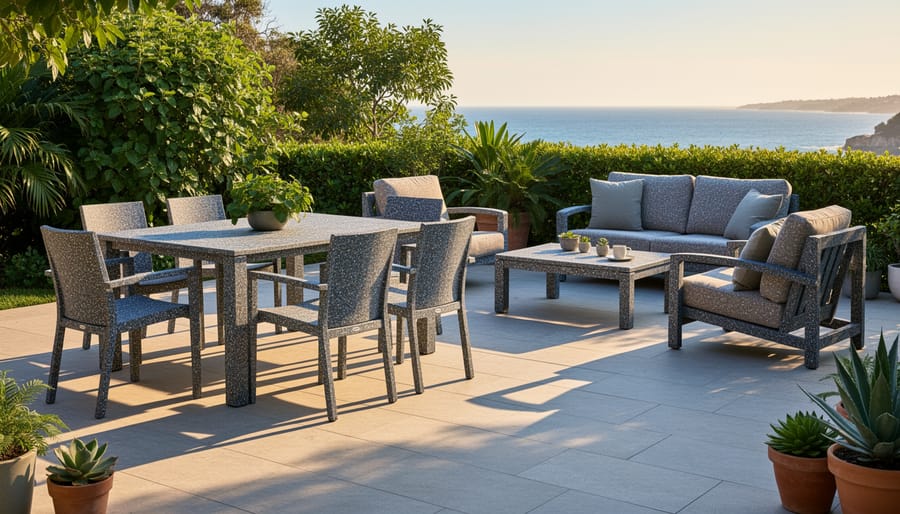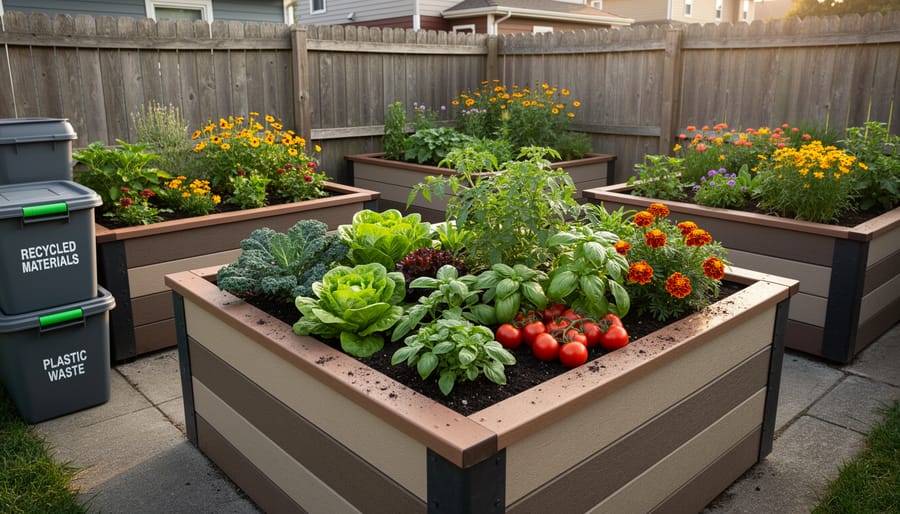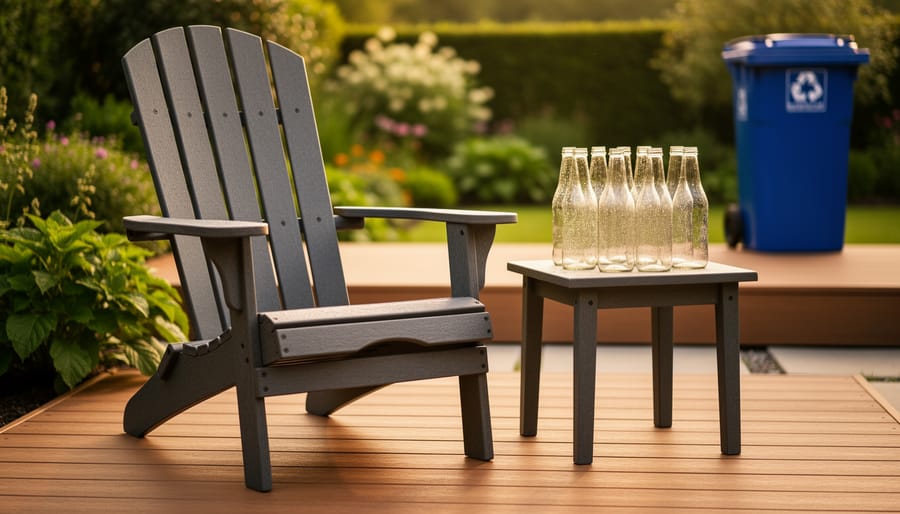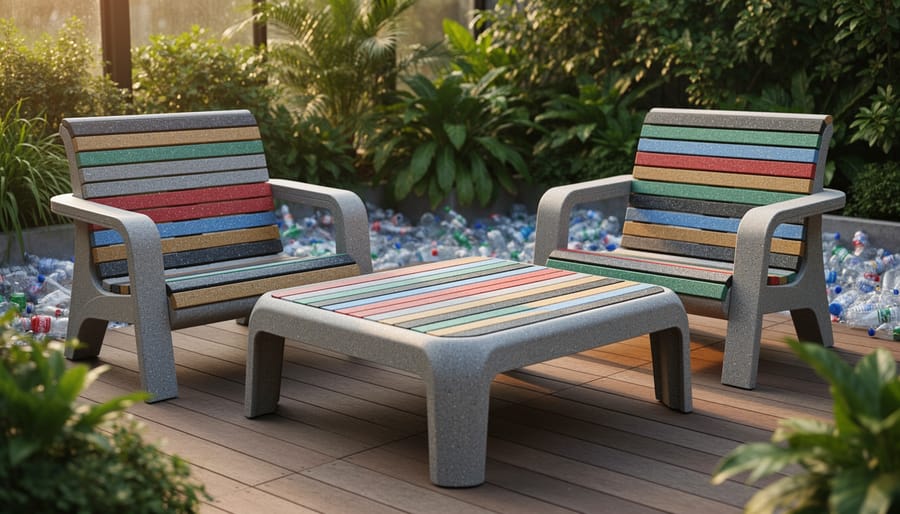
Reclaimed-plastic outdoor chair and planter next to a raised garden bed made from repurposed wooden pallets in a backyard setting.

What Is Turning Trash into Treasure? (And How It Works for a Greener Future)

Turning trash into treasure is the practice of transforming discarded materials and waste products into new items of value, whether through upcycling, recycling, or creative repurposing. Instead of sending materials to landfills where they contribute to environmental damage, this approach gives waste a second life as furniture, garden features, building materials, or household goods.

The concept matters now more than ever. Americans generate over 292 million tons of municipal solid waste each year, and only about 32% gets recycled or composted. The rest sits in landfills, releasing methane and leaching chemicals into soil and groundwater. Every plastic bottle, old tire, or scrap of wood that becomes something useful is one less item burdening our planet.

This transformation isn’t just feel-good environmentalism. Companies and individuals are building profitable businesses around waste conversion, creating durable outdoor furniture from recycled plastics, turning glass bottles into countertops, and converting old pallets into garden planters. The market for recycled and upcycled products reached $58 billion in 2025 and continues growing as consumers seek sustainable alternatives.
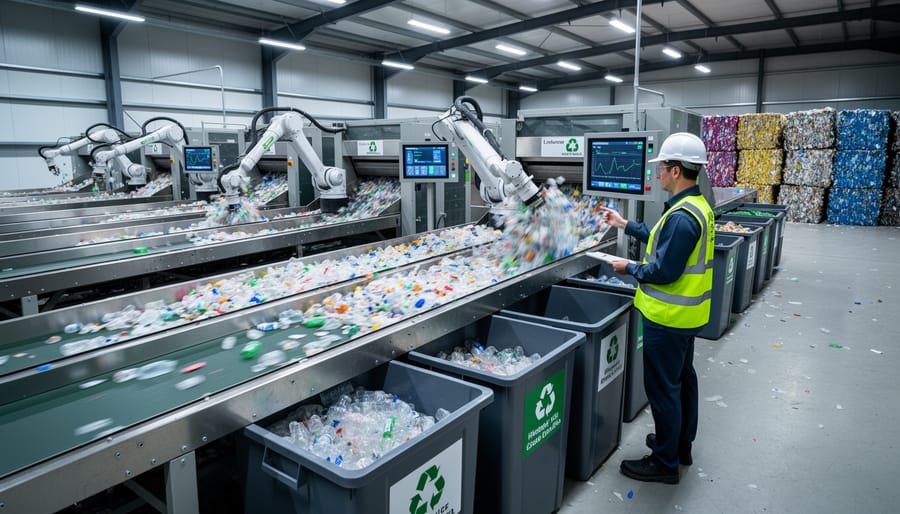
What started as a necessity during resource-scarce times has evolved into a sophisticated industry combining creativity, engineering, and environmental stewardship. Small family operations and large manufacturers alike are proving that yesterday’s waste can become today’s quality product. This article explores how waste-to-value conversion works, the different approaches available, and the real-world applications transforming both backyards and businesses across the country.

Key Takeaway: Every piece of reclaimed plastic outdoor furniture keeps an average of 500 pounds of plastic waste from landfills and oceans, while reducing carbon emissions by 60% compared to manufacturing virgin plastic or harvested wood alternatives. One residential patio set equals the environmental impact of planting approximately 40 trees.
What Turning Trash into Treasure Really Means

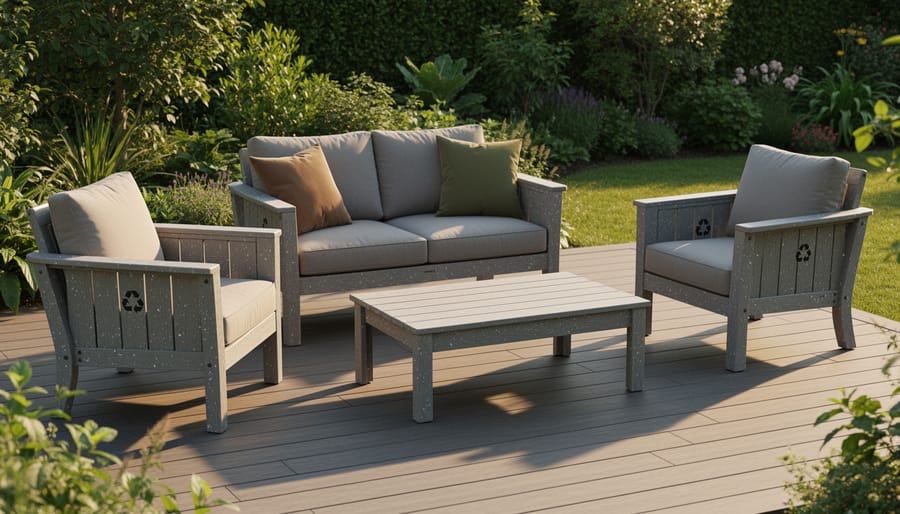
Family relaxing outdoors on durable outdoor furniture made from reclaimed plastic.
Reclaimed-plastic outdoor furniture can look great and feel durable, making sustainability part of everyday life.

At its heart, turning trash into treasure means giving discarded materials a second life as something more valuable than they were before. This isn’t just tossing bottles into a blue bin and hoping for the best. It’s a deliberate, innovative process that transforms what most people consider worthless waste into high-quality, functional products that can outlast their original counterparts.

Think of it this way: when you recycle a plastic bottle, it typically gets melted down and turned into another bottle, or perhaps carpet fibers or fleece. That’s valuable, sure. But when you turn trash into treasure, you’re creating something with equal or greater value than the original material. A collection of discarded milk jugs and detergent bottles doesn’t just become another throwaway item. Instead, they’re reborn as a sturdy dining table that’ll grace your patio for decades, never rotting, never splintering, never demanding a fresh coat of stain.

The distinction matters because it shifts our entire perspective on waste. Understanding a few key terms helps clarify this transformation:

Upcycling
The process of converting waste materials into new products of better quality or higher value, rather than simply breaking them down for basic reuse.
Plastic Polymers
The long chains of molecules that give different plastics their unique properties, from rigid milk jugs to flexible bags.
Post-Consumer Waste
Materials that have completed their intended use and been discarded by consumers, like empty containers and packaging.
Closed-Loop System
A manufacturing approach where products at the end of their life cycle can be collected and transformed into new products, creating a continuous cycle.

This transformation works beautifully with outdoor furniture because the demands perfectly match what reclaimed plastics offer. Weather resistance? Check. Durability spanning generations? Absolutely. Zero maintenance beyond occasional soap and water? You’ve got it. But the possibilities stretch beyond tables and chairs into planters, raised garden beds, decking materials, and countless other applications where strength and longevity matter.

How the Transformation Process Works

Collection and Sorting: Where It All Begins

Technician’s gloved hands inspecting colorful shredded plastic flakes in a metal tray.
The raw starting material, clean, sorted plastic, holds the potential to become something useful and long-lasting.

The transformation begins with a sophisticated global network that gathers discarded plastics from recycling centers, municipal collection programs, and coastal cleanup initiatives. This is where it starts the crucial first step that determines the quality of the final product.

Collection partners span from local recycling facilities to international waste management organizations, all feeding into a supply chain designed to capture plastics before they reach landfills or oceans. But gathering the material is only half the battle.

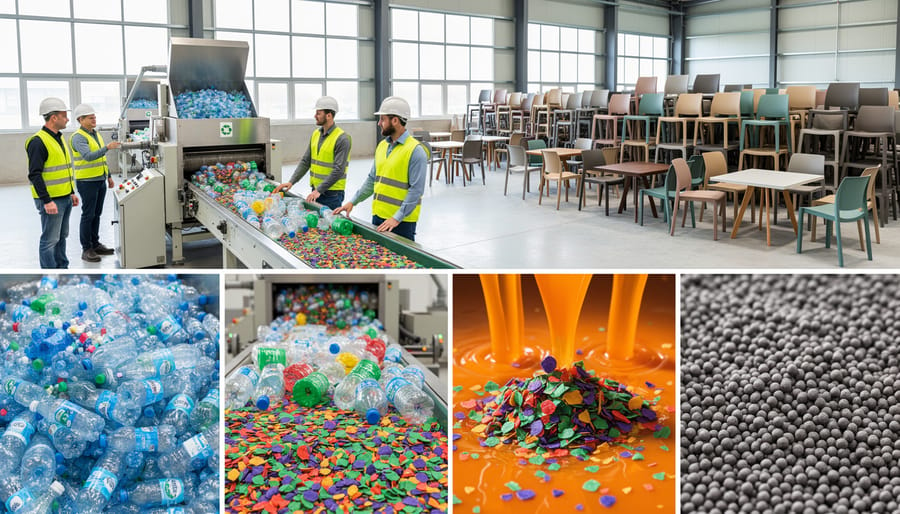
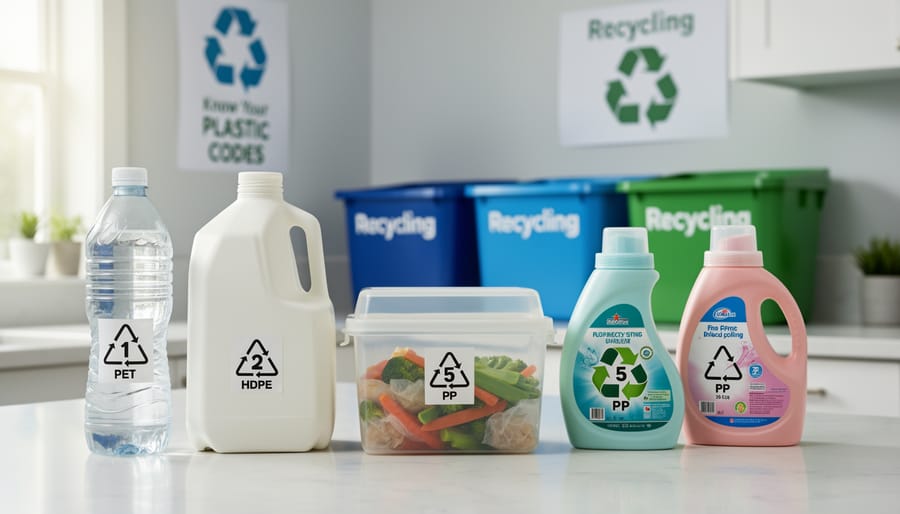
Sorting represents the critical next phase. Different plastic types, HDPE from milk jugs, PET from bottles, PP from packaging, each have distinct melting points and structural properties. Workers and automated systems separate these polymers, identifying them by resin codes and color. This meticulous sorting allows manufacturers to create precise blends, combining polymers in ratios that maximize strength and weather resistance. Skip this step, and you risk weak, brittle products. Done right, it unlocks the potential for furnishings that outperform items made from virgin materials.

The Blending Innovation

Here’s where the magic really happens. Traditional recycling typically processes one type of plastic at a time, sorting HDPE bottles separately from polypropylene containers, for instance. But breakthrough blending technology takes a different approach entirely.

This innovation allows manufacturers to combine different plastic polymers that would normally remain incompatible. Through precise temperature control and specialized equipment, various plastic types merge into a composite material that’s actually stronger than any single polymer alone. Think of it like creating an alloy, where combining different metals produces something tougher than the individual components.

The blended material resists UV damage better than virgin plastic lumber, won’t splinter like wood, and handles temperature extremes without warping or cracking. Rain, snow, salt air, none of it breaks down the molecular bonds created during blending.

What makes this particularly revolutionary? It means recycling programs can accept mixed plastics without extensive sorting. More waste gets diverted from landfills, and the resulting furniture performs better than products made from sorted, single-polymer materials. The process turns recycling’s biggest challenge, contamination from mixed plastics, into its greatest strength.

From Material to Masterpiece

Once the custom plastic blend is perfected, it’s ready for transformation. The material is heated to precise temperatures and fed into industrial molds shaped like table slats, bench backs, chair legs, and decorative elements. Unlike wood that must be cut and shaped, each piece emerges from the mold already formed to exact specifications.

This molding process creates furniture components with consistent density throughout, no weak spots, no grain to split, no knots to work around. The cooling stage locks in strength and color stability, ensuring pieces won’t fade or crack under years of sun exposure. After cooling, components are assembled using marine-grade hardware designed to handle coastal moisture and temperature swings.

The final products undergo stress testing that simulates decades of outdoor use, guaranteeing they’ll handle real-world conditions from backyard barbecues to beachfront installations.

Different Forms of Trash-to-Treasure Innovation

The transformation of discarded materials into valuable products takes many forms, each addressing different needs while tackling the same fundamental challenge: keeping waste out of landfills and oceans. While plastic-to-furniture represents the most developed and widely adopted approach, particularly the innovative ocean-to-backyard journey that captures marine plastics and reshapes them into durable outdoor pieces, it’s just one chapter in a larger story of resourcefulness.

Reclaimed plastic furnishings have evolved far beyond simple benches. Today’s trash-to-treasure innovations produce an impressive range of products:

  • Dining sets and lounge chairs designed for residential patios and poolsides
  • Commercial-grade picnic tables and seating for parks and restaurants
  • Planters, raised garden beds, and edging materials for landscaping projects
  • Decking boards and railing systems that withstand weather without splintering
  • Playground equipment and park infrastructure built for safety and longevity
  • Outdoor storage solutions like sheds and bins made entirely from recycled polymers

Garden applications represent another thriving category. Reclaimed materials create raised beds that won’t rot like wood or leach chemicals into soil, offering a safer environment for growing vegetables. These products appeal to home gardeners and urban farming initiatives alike, combining sustainability with practical growing solutions that last decades rather than seasons.

Beyond consumer products, environmental science has pushed the boundaries of what’s possible with waste transformation. Researchers and innovators are converting discarded plastics into construction materials like bricks and roof tiles, insulation with superior thermal properties, and even components for roads that prove more durable than traditional asphalt. Some communities have built entire bus shelters and outdoor structures from plastic waste collected locally.

Each approach shares a common thread: the belief that materials labeled as trash still hold tremendous value. Whether it’s a dining table made from milk jugs, a planter crafted from detergent bottles, or insulation formed from packaging waste, these innovations prove that the end of one product’s life can mark the beginning of another’s, often with better performance characteristics than virgin materials could offer.

Where Reclaimed Materials Make the Biggest Impact

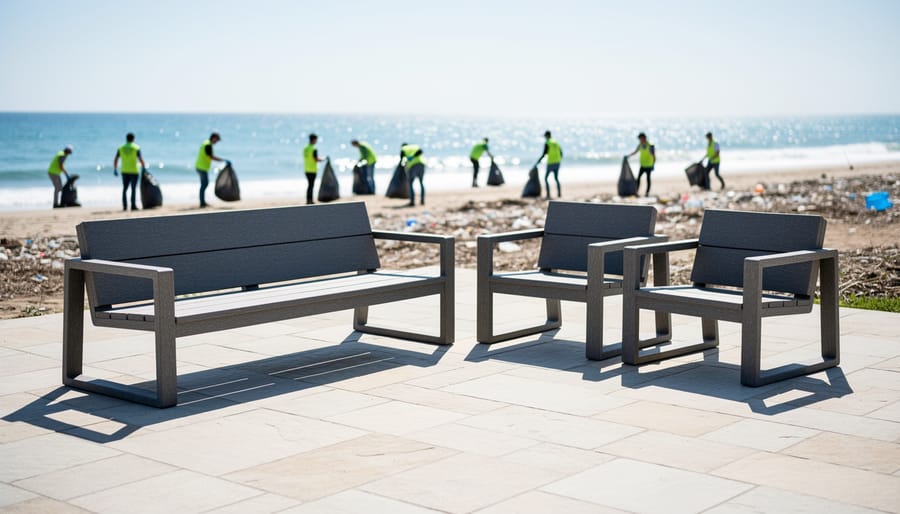
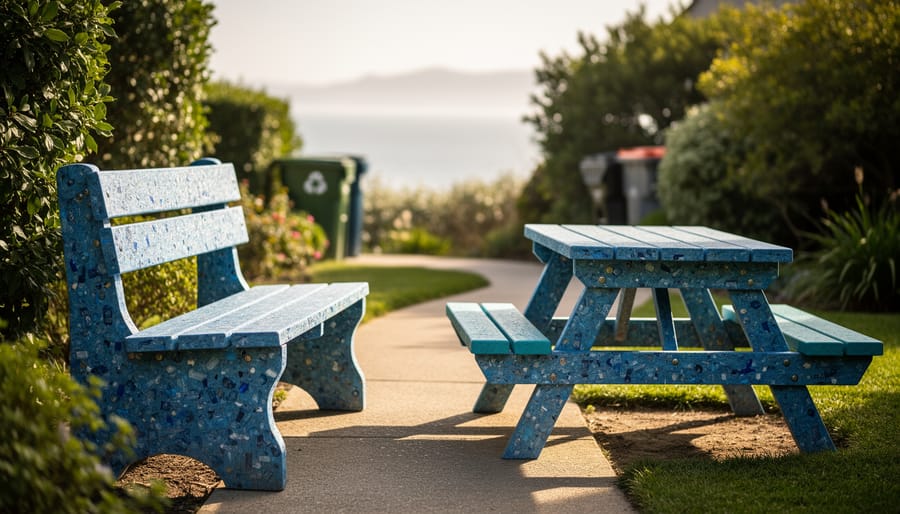
Outdoor park benches and planters made from reclaimed plastic along a walkway during golden hour.
When reclaimed materials are used in public spaces, they help keep resources in circulation while withstanding everyday weather.

The real-world applications of reclaimed plastic furniture tell a story of transformation across nearly every outdoor setting. Coastal homeowners have discovered that these pieces thrive in salt-air environments where traditional wood rots and metal corrodes within seasons. A beachside patio furnished with recycled plastic seating withstands the same harsh conditions that destroy conventional materials, all while preventing ocean-bound waste from reaching the waves in the first place.

Commercial properties and hospitality businesses choose reclaimed material furnishings for poolsides, restaurant patios, and resort grounds where heavy use demands exceptional durability. Unlike wood that splinters or warps under constant exposure, these products maintain their appearance and structural integrity through years of daily service. Property managers appreciate the long-term cost savings since replacement cycles stretch to decades rather than years.

Public parks and community gardens have embraced this transformation movement with particular enthusiasm. Municipal buyers recognize that benches, picnic tables, and raised garden beds made from reclaimed materials serve communities while demonstrating environmental stewardship. These installations educate visitors simply by existing, showing families that yesterday’s discarded bottles and containers can become today’s gathering spaces.

The most compelling applications appear where durability matters most. Playground equipment, boardwalk decking, and marina fixtures face punishing weather and constant foot traffic. Reclaimed plastic products meet these challenges without the maintenance headaches of traditional materials. No painting, no sealing, no replacing rotted boards every few seasons. The same characteristics that make plastic problematic as single-use waste become advantages when locked into permanent, functional form. Communities invest once and benefit for generations.

The Environmental and Practical Benefits

Choosing furniture crafted from reclaimed plastics delivers benefits that extend far beyond your backyard. Every piece keeps roughly 400 pounds of plastic out of landfills and oceans, transforming what would have been environmental pollution into something beautiful and functional. When you multiply that across thousands of households, the impact becomes staggering, millions of pounds of waste diverted, countless marine animals spared from ingesting plastic debris, and significantly reduced demand for petroleum-based virgin materials.

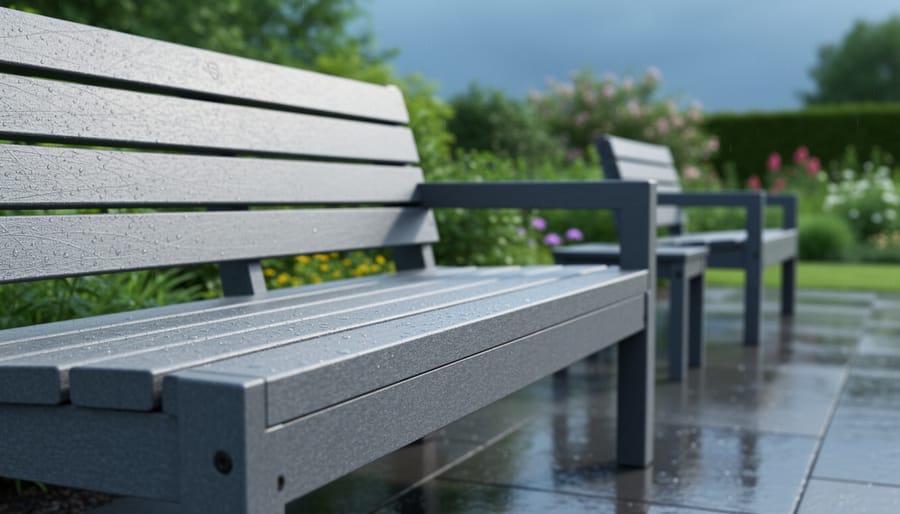
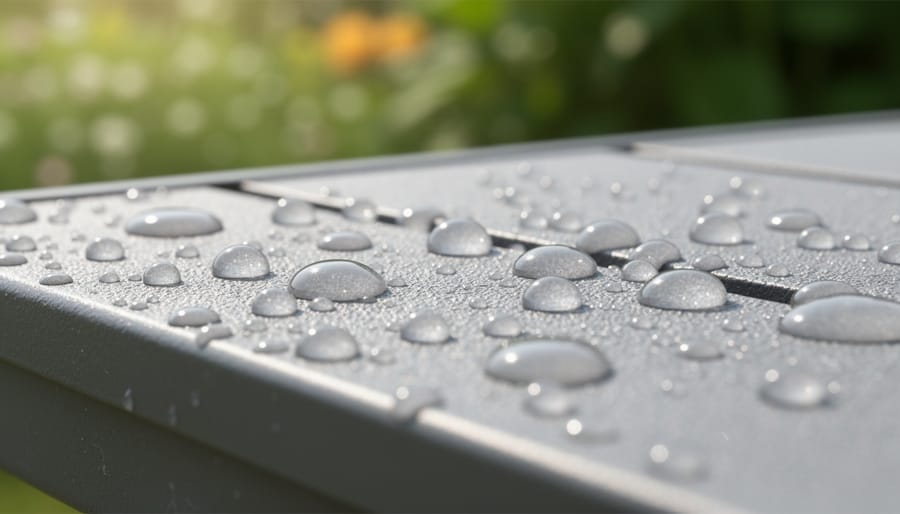
The environmental wins tell only half the story. These pieces outperform traditional wood and metal furniture in practically every measure that matters to homeowners. The plastic durability engineered into reclaimed furnishings means they resist fading, cracking, and warping through decades of sun exposure, salt air, and temperature swings that would destroy conventional materials. You won’t spend weekends sanding, staining, or resealing. No splinters threaten bare feet, and rust never appears regardless of coastal proximity or humidity levels.

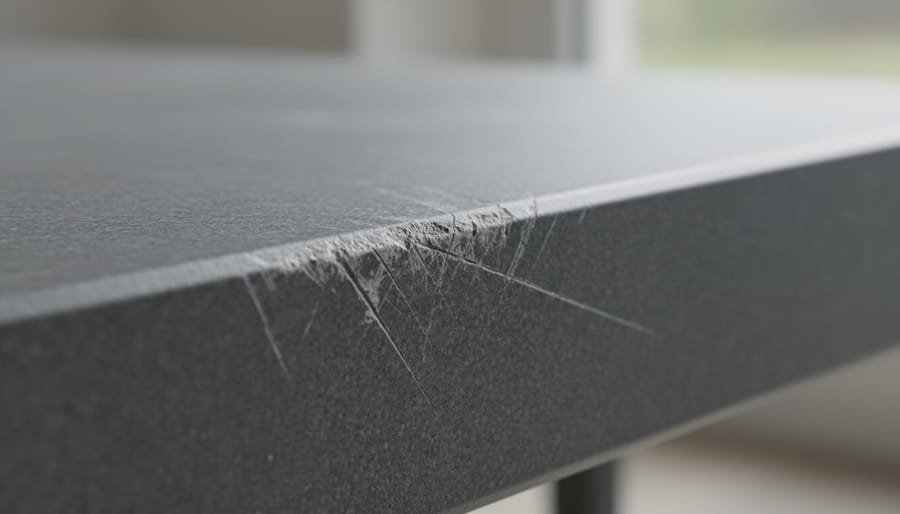
Maintenance becomes almost nonexistent, hosing off dirt or wiping with soapy water handles any cleaning needs. The material won’t absorb moisture, so mold and mildew find no foothold. Color runs throughout the material rather than sitting as surface paint, meaning scratches remain barely noticeable.

This combination of environmental responsibility and practical superiority explains why families, resorts, and municipalities increasingly choose reclaimed plastic furniture. You’re not sacrificing performance for conscience, you’re gaining both. The same innovation that solves a waste crisis delivers products that simply work better for outdoor living.

Common Questions About Trash-to-Treasure Products

Looking at trash-to-treasure products often brings up practical questions about quality, safety, and longevity. Here are the answers to the most common concerns people have when considering recycled plastic furniture and similar products.

Is recycled plastic furniture as strong as wood?

Quality recycled plastic furniture actually lasts longer than most traditional wood options because it doesn’t rot, crack, or splinter. The blended polymer technology creates materials that resist weathering, UV damage, and moisture in ways wood simply cannot match.

Are there harmful chemicals in recycled plastic furniture?

Reputable manufacturers use plastics that have already passed safety standards in their original form and add no harmful additives during processing. The recycled materials are thoroughly cleaned and tested to ensure they’re safe for residential and commercial use.

How do I maintain recycled plastic outdoor furniture?

Maintenance is remarkably simple: just wash with soap and water when needed. Unlike wood, these pieces never need sealing, staining, or painting, and they won’t harbor mold or attract insects.

What happens when recycled plastic furniture reaches the end of its life?

The beauty of these products is that they can be recycled again, keeping materials in circulation rather than heading to landfills. Many manufacturers even offer take-back programs to ensure old pieces get properly reprocessed.

How can I identify quality trash-to-treasure products?

Look for pieces with uniform color throughout (showing complete blending), smooth surfaces without inconsistencies, and manufacturer warranties of at least 10-20 years. Quality producers are transparent about their sourcing and manufacturing processes.

Do recycled plastic products look cheap or fake?

Modern manufacturing creates sophisticated textures and natural-looking finishes that rival traditional materials. You’ll find options ranging from contemporary solid colors to wood-grain textures, all designed to complement various outdoor aesthetics.

The concerns people initially have about recycled materials often disappear once they see and touch the actual products. The quality of trash-to-treasure furniture has evolved dramatically, combining environmental responsibility with genuine performance advantages that make these pieces practical investments for any outdoor space.

The journey from discarded plastic bottles to beautiful, weather-resistant outdoor furniture proves that trash genuinely becomes treasure when innovation meets purpose. What started as a family’s commitment to environmental stewardship has grown into a global movement, demonstrating that we don’t have to choose between quality and sustainability.

Every piece of reclaimed plastic furniture represents hundreds of bottles diverted from landfills and oceans. It’s tangible proof that consumer choices shape environmental outcomes. When you select a table crafted from transformed waste, you’re not just buying outdoor furnishings, you’re voting for a circular economy where nothing goes to waste.

The transformation technology continues advancing, finding new ways to blend polymers and create products that outlast conventional materials. As more manufacturers embrace this model, the possibilities expand beyond furniture into countless applications.

Your outdoor space can tell a story of innovation and conservation. Each purchase becomes part of a larger narrative where discarded materials gain new life, waterways stay cleaner, and future generations inherit a planet where resources circulate rather than accumulate in waste streams. That’s the real treasure: turning environmental challenges into lasting solutions, one reclaimed product at a time.

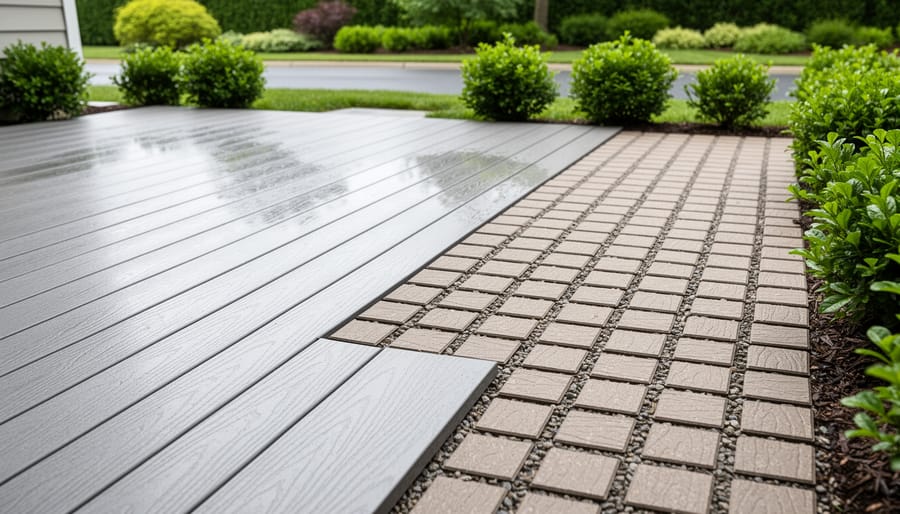
Realistic backyard patio showing smooth recycled plastic lumber impervious paving next to textured permeable pavers with lush greenery in the background.

Impervious vs. Pervious Surfaces: Key Differences and Which Fits Your Outdoor Space

For most homeowners planning a new patio, driveway, or deck in 2026, impervious surfaces made from recycled plastic lumber deliver the best low-maintenance performance, outlasting pervious options by decades with virtually no upkeep. The reason is simple: impervious materials don’t absorb water, resist mold and rot completely, and need only occasional hosing down, while pervious surfaces require regular cleaning, resealing, and repairs as moisture and debris work their way into porous structures.

But here’s where the decision gets interesting. The surface you choose isn’t just about convenience. It shapes how rainwater moves across your property, affects local ecosystems, and determines whether you’ll spend your weekends enjoying your outdoor space or maintaining it.

We’ve spent years helping families understand this choice at our family business, and we’ve seen firsthand how the right surface transforms backyards. Impervious options create clean, defined spaces that shed water quickly and stay pristine year after year. Pervious surfaces allow water to filter through, reducing runoff and recharging groundwater, but they demand consistent attention to prevent clogging and deterioration.

The good news? You don’t have to sacrifice environmental responsibility for ease of care. Modern recycled plastic impervious surfaces combine the durability and simplicity homeowners love with genuine sustainability, diverting thousands of pounds of plastic waste from landfills while creating outdoor spaces that last generations. Understanding the practical differences between these two approaches will help you build the low-maintenance, eco-conscious outdoor area you’ve been envisioning.

Key Takeaway: While pervious surfaces manage water runoff better, recycled plastic impervious surfaces tackle a different environmental crisis, diverting thousands of pounds of plastic waste from landfills and oceans while creating durable outdoor spaces that last decades without replacement.

At-a-Glance: Impervious vs. Pervious Surface Comparison

Before we explore the details, here’s a snapshot of how these two surface types stack up. This quick comparison will help you see at a glance which characteristics matter most for your outdoor project.

Feature Impervious Surfaces Pervious Surfaces
Water Permeability Blocks water; creates runoff Allows water to filter through to soil
Maintenance Needs Minimal upkeep, especially recycled plastic options Regular cleaning required to prevent clogging
Durability Highly durable; recycled plastic resists rot and UV damage Variable; prone to settling and surface breakdown
Environmental Impact Runoff concerns offset by recycled material benefits Excellent stormwater management
Best Uses Patios, decking, furniture platforms, high-traffic areas Driveways, garden paths, drainage-critical zones

Each surface type brings distinct advantages depending on your priorities. If you’re after a set-it-and-forget-it outdoor living space that won’t demand weekend after weekend of maintenance, impervious surfaces shine. Pervious options excel when water management takes center stage and you’re willing to invest time in ongoing care to keep those drainage pathways open and functioning.

Residential outdoor patio and permeable gravel path with outdoor seating and landscaping
A real-world side-by-side outdoor setting helps illustrate how impervious and pervious surfaces look and perform in everyday backyard use.

What Each Surface Type Is

Understanding Impervious Surfaces

Impervious surfaces are materials that prevent water from passing through or being absorbed into the ground beneath them. When rainwater hits these surfaces, it runs off rather than soaking in, a fundamental characteristic that distinguishes them from their pervious counterparts. Common examples include concrete sidewalks and patios, asphalt driveways, traditional composite decking, and an increasingly popular option: lumber made from recycled plastics.

Understanding why impervious surfaces block water starts with their composition. Concrete, for instance, is manufactured by mixing cement, aggregates, and water into a dense, hardened mass that leaves virtually no space for water penetration. Asphalt follows a similar principle, binding stone and sand with petroleum-based binders. Traditional plastics create complete barriers due to their molecular structure.

Recycled plastic lumber represents a different manufacturing story, one our family business knows intimately. This material transforms post-consumer waste (think milk jugs, detergent bottles, and ocean-bound plastics) into durable outdoor surfaces through a process of cleaning, shredding, and heat-fusion. The recycled plastic journey from waste stream to backyard creates impervious surfaces with exceptional longevity while diverting thousands of pounds of plastic from landfills and oceans.

Impermeability
The inability of a material to allow liquids or gases to pass through its structure, measured by how completely it blocks water infiltration.
Runoff Coefficient
A numerical value representing the percentage of rainfall that flows off a surface rather than being absorbed, with impervious materials approaching 1.0 (100% runoff).
Non-Porous Materials
Solid surfaces without interconnected spaces or holes that would permit water movement, including concrete, asphalt, and most plastics.
Recycled Plastic Composites
Engineered materials created by fusing post-consumer plastic waste into dense, weather-resistant boards used for decking, furniture, and outdoor surfaces.

These fundamental characteristics, complete water resistance, dense composition, and minimal porosity, make impervious surfaces ideal for outdoor living areas where you want control over water, zero weed growth, and surfaces that stay dry and usable immediately after rain.

Understanding Pervious Surfaces

Pervious surfaces work on a fundamentally different principle, they’re designed to let water pass through rather than resist it. Materials like permeable pavers, porous concrete, gravel driveways, and even natural ground cover allow rainwater to filter down into the soil below instead of running off into storm drains.

The engineering behind these surfaces is straightforward: they incorporate spaces, gaps, or porous structures that create pathways for water movement. Permeable pavers might have wide joints filled with gravel between solid stones. Porous concrete uses a special mix with larger aggregate and less sand, creating interconnected air pockets throughout. Gravel simply provides natural gaps between stones. Studies show permeable pavement infiltrates significant amounts of stormwater, reducing runoff that can overwhelm drainage systems.

The primary purpose of pervious surfaces isn’t structural strength or creating clean, defined outdoor living spaces, it’s environmental water management. They help recharge groundwater, reduce flooding, filter pollutants before they reach waterways, and minimize the urban heat island effect. In neighborhoods with drainage issues or areas subject to stormwater regulations, these surfaces can be valuable tools.

Think of pervious surfaces as active participants in the natural water cycle, working to return rainfall to the earth rather than channeling it away. This makes them particularly useful in specific applications where water infiltration is the priority.

Comparing Impervious and Pervious Surfaces: What Really Matters

Maintenance Requirements and Long-Term Care

The maintenance gap between impervious and pervious surfaces becomes strikingly clear once you’ve owned either for a full season. Impervious surfaces, especially those crafted from recycled plastic, demand remarkably little from you. No annual sealing. No staining every few years. No scraping out weeds from cracks each spring. You simply hose them down when they get dusty or dirty, and they’re ready for another gathering on your patio or another weekend lounging in outdoor furniture.

Pervious surfaces tell a different story. They’re engineered to let water through, which means those tiny channels and pores must stay open to function properly. When leaves, dirt, sediment, and organic debris accumulate, and they will, the surface gradually loses its permeability. Regular maintenance prevents clogging and preserves drainage effectiveness, but it requires commitment. You’ll need a pressure washer or vacuum sweeper designed for permeable surfaces, ideally twice a year at minimum.

Here’s what a typical year looks like for each:

  • Impervious recycled plastic: Occasional washing with soap and water, check for debris accumulation
  • Traditional impervious (concrete/asphalt): Sealing every 2-3 years, crack filling, weed control in joints, stain treatment
  • Pervious surfaces: Spring and fall vacuuming or pressure washing, sediment removal, joint material replenishment, drainage testing

We’ve watched customers return year after year, and the ones who chose recycled plastic impervious surfaces consistently report the same thing: they’re actually using their outdoor spaces more because they’re not spending weekends maintaining them. One family told us their old concrete patio consumed entire Saturdays with sealing and repairs. Their recycled plastic deck? Ten minutes with a garden hose, maybe three times a summer. That’s the low-maintenance advantage translating directly into more time outdoors with the people you care about.

Durability and Lifespan

Impervious surfaces typically outlast pervious alternatives by significant margins. Traditional concrete can crack within 5-10 years from freeze-thaw cycles, while asphalt develops surface deterioration even faster under UV exposure and temperature swings. Pervious surfaces face additional challenges: their drainage channels clog with sediment, grass pavers require ongoing plant maintenance, and porous concrete often needs replacement within 15-20 years as infiltration capacity diminishes.

Recycled plastic impervious surfaces change this durability equation entirely. The plastic durability engineered into these materials resists the common failure modes that plague other options. Unlike wood-based surfaces, recycled plastic won’t rot, splinter, or harbor insects. It shrugs off moisture that would destroy conventional materials, making it ideal for coastal environments where salt spray accelerates deterioration.

UV stabilizers built into quality recycled plastic products prevent the fading and brittleness that affect cheaper plastics and traditional impervious materials. Where concrete cracks and settles unevenly, properly installed recycled plastic platforms maintain their integrity for 30-50 years with minimal intervention. The material doesn’t require the periodic sealing that stone or concrete demands, and it won’t heave or shift like poorly maintained pervious pavers.

This longevity translates to fewer replacements over your lifetime, a genuine environmental win that compounds the initial benefit of diverting plastic waste from landfills.

Water Management and Environmental Impact

Water management tells one part of the environmental story, while material sourcing completes the picture. Pervious surfaces excel at managing stormwater runoff by allowing rainwater to filter naturally through the material into the ground below. This reduces pressure on municipal drainage systems, replenishes groundwater, and helps prevent flooding during heavy rainfall. For properties in areas with strict stormwater regulations or natural drainage challenges, this functionality offers genuine environmental benefits.

Traditional impervious surfaces create the opposite effect. Concrete patios and asphalt driveways force water to run off into storm drains, carrying pollutants and overwhelming drainage infrastructure during storms. This runoff challenge has given all impervious materials an environmental black eye, but the full picture is more nuanced.

Recycled plastic impervious surfaces address a parallel environmental crisis that often gets overlooked in the water management discussion. Every square foot of decking or furniture platform made from recycled materials represents plastic diverted from landfills and oceans. The journey from ocean waste to backyard transforms materials that would persist in ecosystems for centuries into functional outdoor living spaces. Unlike virgin plastic or pressure-treated lumber, these surfaces give existing waste a decades-long second life.

Smart environmental stewardship means thinking strategically about placement. Use pervious surfaces where water infiltration matters, pathways, side yards, and areas prone to puddling. Choose recycled plastic impervious surfaces for high-use outdoor living areas, furniture platforms, and spaces where you want zero maintenance and maximum durability. This combination delivers both effective water management and meaningful waste reduction, rather than treating environmental responsibility as an either-or choice.

Installation and Cost Considerations

Installing impervious surfaces typically costs more upfront than basic pervious options like gravel or mulch, but the price gap narrows when comparing quality materials. Concrete and asphalt run $3, $10 per square foot installed, while permeable pavers range from $10, $25. Recycled plastic decking and platforms fall in the $8, $15 range, competitive with mid-tier options but delivering superior longevity.

Installation complexity varies significantly. Pervious surfaces demand precise grading, drainage layers, and edge restraints to function properly. Mistakes compromise their permeability, requiring costly repairs. Impervious recycled plastic materials install straightforwardly using standard carpentry tools and techniques, with fewer variables to manage.

The real financial advantage emerges over time. Pervious surfaces need regular maintenance, power washing to clear clogged pores, replacing aggregate, releveling settled areas, adding hundreds in annual costs. They may need complete replacement within 15-20 years as drainage capacity fails.

Recycled plastic impervious surfaces eliminate these expenses. No sealing, no aggregate replacement, no drainage restoration. The material we’ve watched perform for decades requires only occasional soap-and-water cleaning. That initial investment stretches across 50-plus years without significant additional spending, making the per-year cost remarkably low and the total ownership value exceptional.

The Impervious and Low-Maintenance Advantage: Why It Matters for Your Outdoor Space

Impervious surfaces made from recycled plastic materials deliver something homeowners desperately want: more time to enjoy their outdoor spaces instead of maintaining them. Unlike wood decking that demands annual staining or pervious pavers that need seasonal cleaning to prevent clogging, recycled plastic platforms and furniture bases simply don’t require ongoing treatments. Rain washes them clean. There’s no sealing, no sanding, no weeding between boards.

When our family business started experimenting with recycled ocean plastics in the early 2000s, we honestly didn’t expect the maintenance advantage to be so dramatic. We were focused on environmental impact, keeping waste out of landfills and waterways. But our own product testing revealed something equally valuable: these surfaces just kept performing, year after year, without the upkeep rituals that consume summer weekends. A deck we installed at our workshop in 2007 still looks remarkably good today, with nothing more than an occasional hose-down.

This matters profoundly for modern lifestyles. Families juggling work, kids, and other commitments don’t want their precious outdoor time consumed by maintenance schedules. Recycled plastic impervious surfaces resist UV degradation, won’t splinter or rot, and shrug off wine spills and grease drips that would stain natural materials permanently. You can position recycled decor pieces directly on these platforms without worrying about moisture damage or ground contact issues.

The environmental alignment makes this even better. You’re choosing surfaces that required no new petroleum extraction or tree harvesting, that will last decades with minimal resource inputs, and that prove sustainability doesn’t mean sacrificing convenience. Low-maintenance and eco-conscious turn out to be natural partners, both reduce waste, both respect your time, both create outdoor spaces that genuinely enhance your life rather than demanding endless attention.

Who Should Choose Which Surface Type

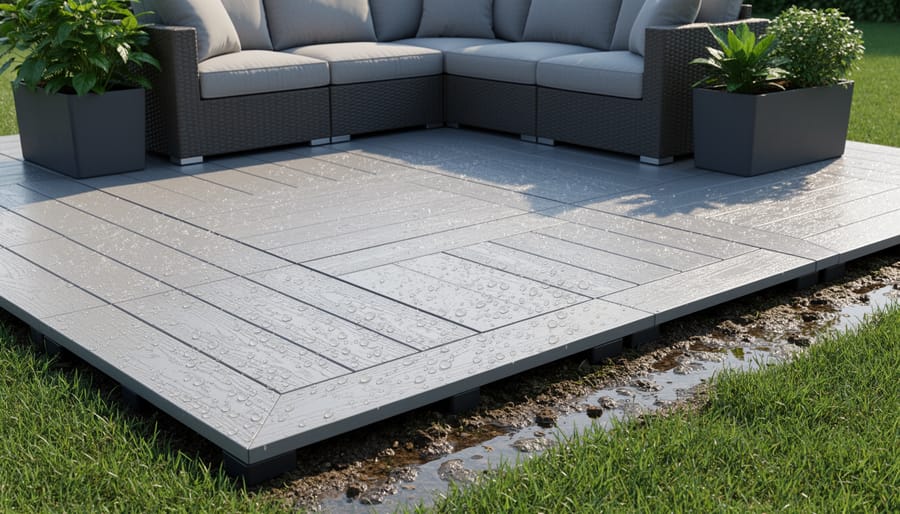
Close view of a recycled-plastic outdoor furniture base on an impervious surface with clean, dry components
The image highlights the clean, dry look and durability associated with impervious recycled-plastic outdoor foundations.

Best Applications for Impervious Surfaces

Impervious surfaces shine in situations where you need reliability, cleanliness, and minimal fuss. High-traffic outdoor living areas, think patios where family and friends gather regularly, benefit enormously from surfaces that won’t crack, settle, or sprout weeds between pavers. For furniture platforms and outdoor decor ideas that need stable, level foundations, impervious recycled plastic creates the perfect base that won’t shift or degrade over time.

Decking is another natural application. Recycled plastic decking resists moisture damage, splintering, and warping while requiring none of the sanding, staining, or sealing that wood demands. You simply rinse it clean when needed and enjoy decades of use.

Coastal properties face particular challenges, salt air, intense sun, and moisture. Impervious recycled plastic surfaces handle these conditions without corroding, fading significantly, or breeding mold. Similarly, regions with extreme weather fluctuations benefit from materials that expand and contract minimally and don’t crack from freeze-thaw cycles.

When you want absolutely zero plant growth, perhaps around pool areas, beneath outdoor kitchens, or on rooftop spaces, impervious surfaces eliminate the maintenance headache. No weeding, no root damage, no herbicide applications. For environmentally conscious homeowners, choosing recycled plastic impervious materials means you’re getting all these practical advantages while supporting ocean and landfill waste diversion.

Best Applications for Pervious Surfaces

Pervious surfaces shine in situations where managing stormwater naturally matters most. If your property struggles with drainage issues, standing water after rain, soggy patches that won’t dry, or runoff that floods neighboring areas, permeable materials offer a practical fix by letting water filter into the ground where it falls.

Driveways and parking areas represent ideal pervious applications. Vehicles don’t need the same finished aesthetic as outdoor living spaces, and permeable pavers or porous concrete handle tire traffic while reducing the massive runoff typical of traditional asphalt. Many municipalities now offer incentives or even require pervious surfaces for new driveways to ease strain on storm sewer systems.

Garden pathways work beautifully with gravel or permeable pavers. Water reaches plant roots instead of running off, and you avoid the heat retention that solid surfaces create around delicate plantings. The natural look blends into landscaping rather than fighting it.

Properties facing stormwater regulations, particularly in environmentally sensitive areas near waterways or wetlands, may find pervious surfaces aren’t just beneficial but mandatory. Check local codes before planning any hardscaping project, as some jurisdictions limit impervious coverage to protect water quality and reduce flooding downstream.

Common Questions About Impervious and Pervious Surfaces

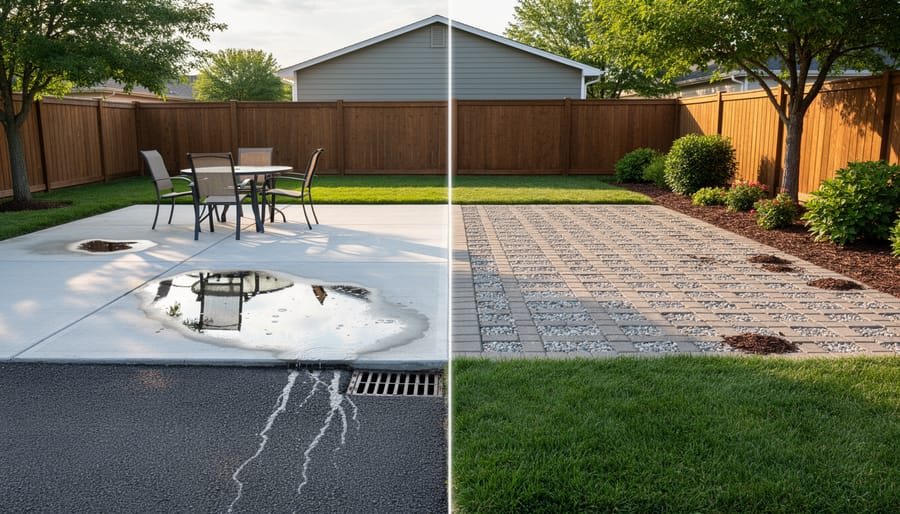
Side-by-side view of an impervious concrete surface and a permeable gravel bed showing different wetness patterns
The photo visually contrasts how impervious and pervious materials behave under similar outdoor conditions, tying to water management and upkeep.

Can I combine impervious and pervious surfaces in the same outdoor space?

Absolutely, many homeowners use both strategically. Try impervious recycled plastic decking or furniture platforms for your main living areas where you want zero maintenance, then incorporate pervious surfaces for pathways or areas surrounding plantings where water infiltration helps.

Do impervious recycled plastic surfaces get uncomfortably hot in summer?

Quality recycled plastic products are engineered to resist heat absorption better than traditional plastics or dark asphalt. They’ll warm in direct sun like any outdoor surface, but they cool down quickly and won’t scorch bare feet the way metal or some composite materials can.

How should I clean each surface type?

Impervious recycled plastic needs just soap and water, no special treatments or sealers. Pervious surfaces require more attention: you’ll need to flush them periodically with water or a pressure washer to prevent the pores from clogging with dirt and debris, which defeats their drainage purpose.

Which surface handles freeze-thaw cycles better?

Recycled plastic impervious surfaces excel here because they don’t crack, splinter, or deteriorate when water freezes and expands. Pervious concrete and some permeable pavers can break down over time in harsh freeze-thaw climates, requiring repairs or replacement.

When you’re considering recycled plastic products, look for manufacturers who share their environmental story transparently. Our family business, for instance, has always believed you should know exactly what waste stream your outdoor furniture came from, whether that’s ocean-bound plastics or post-consumer bottles. Some products carry certifications verifying recycled content percentages, which helps you make genuinely sustainable choices rather than falling for greenwashing claims.

The beauty of today’s recycled plastic options is that you’re not sacrificing performance for environmental responsibility. You get a surface that manages weather extremes, resists stains and mold, never needs refinishing, and keeps thousands of pounds of plastic out of landfills and waterways. That’s the kind of practical sustainability that fits real life, not just good intentions.

What Each Option Is

Before diving into detailed comparisons, let’s establish what we’re actually talking about when we discuss impervious and pervious surfaces.

An impervious surface is any material that prevents water from soaking into the ground beneath it. Think of traditional concrete patios, asphalt driveways, or sealed decking, when rain falls, it runs off rather than seeping through. Modern recycled plastic lumber and outdoor furniture platforms also fall into this category, creating solid, water-resistant surfaces that shed moisture while transforming what would otherwise be ocean-bound waste into durable outdoor solutions.

Pervious surfaces work the opposite way. Also called permeable or porous surfaces, they’re designed with intentional gaps or absorbent properties that let water filter through to the soil below. Permeable pavers with spacing between stones, gravel pathways, porous concrete formulated with larger aggregate, and specialized grid systems filled with grass all qualify as pervious surfaces. Their primary purpose is managing stormwater right where it falls rather than creating runoff.

Both surface types have legitimate roles in outdoor spaces, the key is matching each to the right application.

Dimension-by-Dimension Comparison

When choosing between impervious and pervious surfaces, several key factors shape your decision and long-term satisfaction.

Water handling sits at the core difference. Pervious surfaces allow rainfall to soak through, reducing runoff and recharging groundwater. Impervious surfaces shed water quickly, directing it elsewhere, which works perfectly for areas where you don’t want standing moisture near outdoor furniture or gathering spaces.

Maintenance demands tell a revealing story. Pervious surfaces need regular attention: sweeping to prevent sediment buildup, occasional power washing, and sometimes vacuum cleaning to keep pores open. Impervious recycled plastic surfaces? A quick rinse handles most cleaning, with no sealing or treatments required year after year.

Durability separates short-term fixes from lasting investments. Traditional pervious materials can settle unevenly or clog over time. Impervious recycled plastic resists cracking, won’t splinter, and handles freeze-thaw cycles without the deterioration that plagues concrete or asphalt.

Environmental footprint matters differently for each. Pervious surfaces excel at stormwater management. Impervious recycled plastic surfaces divert thousands of pounds of waste from landfills while creating spaces that last generations without replacement.

Choosing between impervious and pervious surfaces isn’t about finding a universal “best” option, it’s about matching the right material to your specific outdoor space and priorities. If stormwater management tops your list and local regulations demand it, pervious surfaces make sense for certain areas. But for the patios, decks, and outdoor living spaces where you actually spend time with family and friends, impervious surfaces deliver unmatched practicality.

We’ve seen firsthand how recycled plastic impervious surfaces transform outdoor living. No weekend hours spent staining, sealing, or pulling weeds between pavers. No worrying about cracking, splintering, or constant replacement. Just durable, beautiful spaces that let you focus on what matters, gathering around the table, watching kids play, enjoying the outdoors without the endless upkeep.

What makes this choice even better? You’re not compromising environmental values for convenience. Every recycled plastic board or piece of furniture represents waste diverted from landfills and oceans, given new purpose in your backyard. That’s the commitment our family built this business on: proving sustainability and ease can work together. Your surface choice shapes both your daily life and your environmental footprint. Choose materials that honor both.

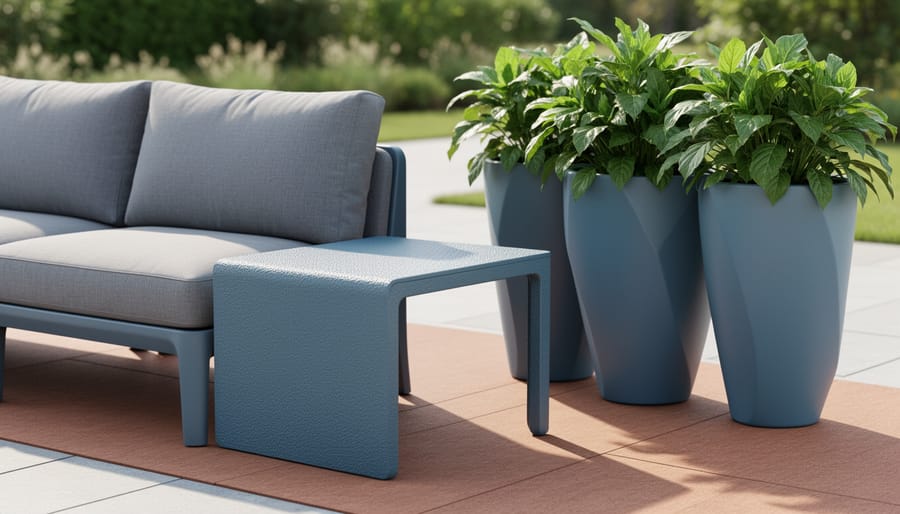
Modern outdoor seating with a sleek recycled plastic side table and sculptural planters filled with green plants in soft natural light.

7 Trendy Recycled Plastic Decor Pieces That Transform Your Outdoor Space

Recycled plastic decor has evolved far beyond flimsy patio chairs and clunky park benches. Today’s #1 recycled plastic furniture combines cutting-edge design with genuine environmental impact, transforming post-consumer waste into stylish pieces that belong in your living room, not just your backyard. We’re talking about sleek side tables crafted from ocean-bound plastic, contemporary outdoor sectionals that rival high-end teak, and sculptural planters that become conversation starters.

The transformation is remarkable. Advanced recycling processes now allow manufacturers to create furniture with rich textures, sophisticated color palettes, and durability that outlasts traditional materials. Each piece diverts pounds of plastic from landfills and oceans while delivering the aesthetic appeal modern homeowners demand.

As a family business committed to sustainable living, we’ve watched this category mature from niche eco-products into mainstream design solutions. The key is knowing what to look for. Quality recycled plastic furniture uses post-consumer content (not just factory scraps), carries clear environmental certifications, and showcases craftsmanship that honors both the material and the planet.

This guide highlights seven standout categories of recycled plastic decor that prove sustainability and style aren’t just compatible, they’re inseparable. You’ll discover pieces that work as hard as they look good, backed by the kind of environmental credentials that make every purchase feel like progress.

Key Takeaway: Each recycled plastic furniture piece diverts hundreds to thousands of bottles from landfills while lasting 20-30 years with zero maintenance treatments, eliminating the environmental cost of wood preservatives, paint, and eventual replacement.

Why We Chose These Recycled Plastic Decor Pieces

Selecting these seven pieces wasn’t about grabbing the most eco-labeled products we could find. We set out to prove that recycled plastic decor has earned its place at the design table, not just the sustainability checklist. Each piece needed to deliver on multiple fronts simultaneously, looking gorgeous in real outdoor settings, standing up to years of weather exposure, and making a measurable dent in plastic waste.

Our selection criteria were straightforward but demanding:

  • Design versatility that complements diverse outdoor aesthetics, from coastal cottages to modern minimalist patios
  • Weather resistance proven through real-world testing across different climates
  • Significant waste diversion impact, with each piece repurposing hundreds of plastic bottles or containers
  • Consistent customer satisfaction based on durability and long-term performance
  • Trendsetting appeal that positions recycled plastic as a first-choice material, not a compromise

What makes 2026’s recycled plastic offerings genuinely exciting is our advanced polymer-blending technology. We’ve moved far beyond chunky, obviously recycled furniture. The innovation happening in our facilities transforms post-consumer waste into materials that rival virgin plastics in finish quality and structural integrity. When you choose these pieces, you’re getting furniture that performs better than many traditional options while giving discarded plastic a second life. That’s the intersection of style and substance we’ve been working toward since our family started this venture.

Outdoor patio styled with multiple recycled-plastic decor pieces with colorful plastic fragments subtly blurred in the foreground
A styled outdoor space highlights how recycled-plastic decor turns everyday waste materials into cohesive, modern outdoor design.

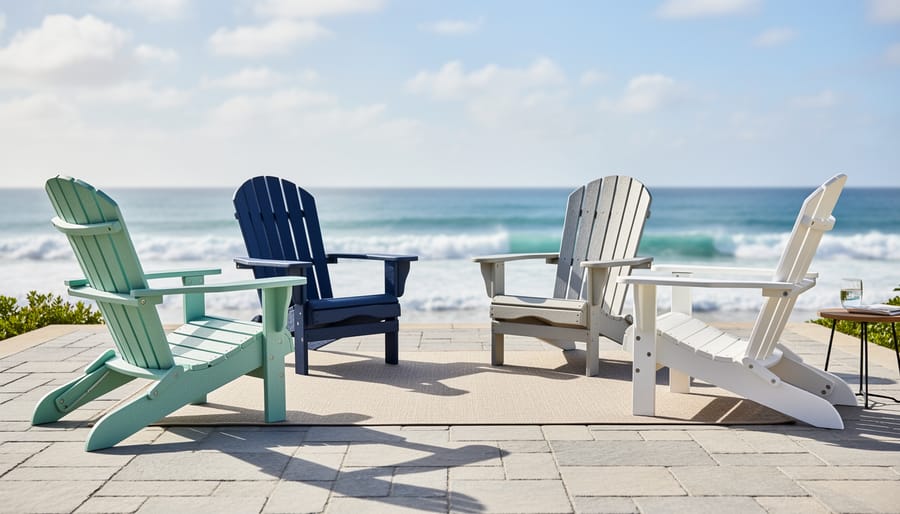
1. Statement Adirondack Chairs with Coastal Flair

Two coastal-colored recycled plastic Adirondack chairs on a patio near the ocean
Modern Adirondack chairs made from recycled plastic bring a relaxed coastal vibe while staying low-maintenance outdoors.

Picture an Adirondack chair that began its life as discarded water bottles floating in coastal waters or tossed into recycling bins across neighborhoods. Today’s statement Adirondack chairs transform this ocean waste and consumer plastic into show-stopping seating that anchors any outdoor space.

The color palette alone makes these chairs design stars. Weathered blues capture that driftwood-meets-sea-glass aesthetic everyone craves, while sandy neutrals blend seamlessly with natural stone patios and wooden decks. Crisp whites add a Cape Cod vibe that photographs beautifully against greenery or poolside settings. Unlike their wooden ancestors, these chairs won’t splinter, crack, or demand annual sanding and staining.

Comfort wasn’t sacrificed for sustainability. Modern designs feature contoured seats that cradle your body, wide armrests perfect for morning coffee or evening cocktails, and gently sloped backs that encourage hours of lounging. The material stays cool to the touch even in direct sun, and it dries quickly after summer storms.

These chairs have become genuine Instagram moments, that perfect shot where sustainability meets style. They stand up to salt air, chlorine splash, and years of UV exposure without fading or deteriorating. A quick hose-down or wipe with soapy water keeps them looking fresh season after season, making them the ultimate low-effort, high-impact addition to porches, decks, and gardens.

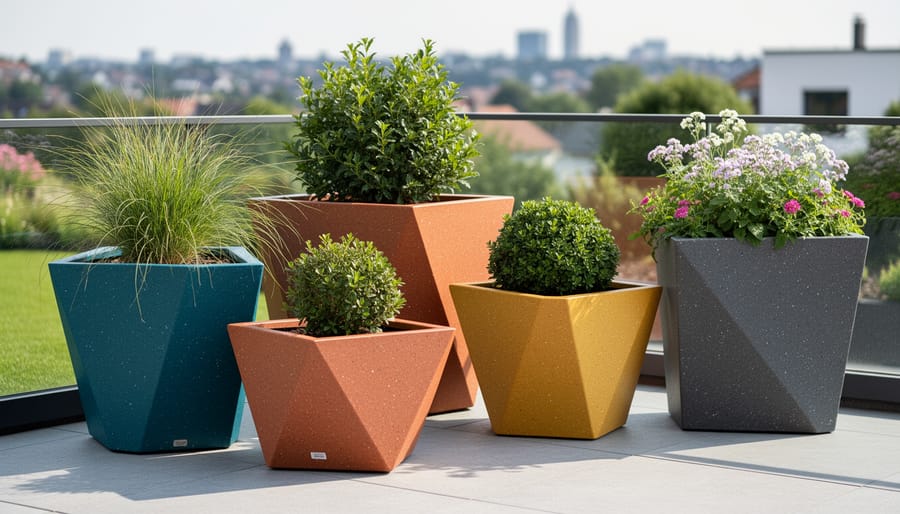
2. Geometric Planters That Make Gardens Pop

Geometric recycled-plastic planters in bold angular shapes along a garden walkway
Angular recycled-plastic planters add structure and color, making even simple plantings look instantly designed.

Angular planters in unexpected silhouettes have become the statement pieces that bridge sustainability and high design. These geometric containers, molded from recycled HDPE (high-density polyethylene), transform everyday garden beds into sculptural installations. You’ll find hexagonal towers perfect for tiered herb gardens, cube planters with clean modernist lines, and asymmetrical vessels that look lifted from a contemporary art gallery.

The color palette ranges from saturated jewel tones, emerald greens, sapphire blues, sunset oranges, to sophisticated matte blacks and soft grays that ground bolder plantings. Traditional cottage gardens gain fresh energy when classic rose bushes emerge from sleek charcoal planters, while minimalist landscapes find natural companions in crisp white geometric forms. The contrast works both ways, proving these pieces adapt rather than dictate.

What makes them genuinely practical is their featherweight construction. A large planter that would require two people to move in terracotta becomes a one-handed lift in recycled plastic, letting you chase the sun across your patio or refresh arrangements on impulse. They shrug off freezing temperatures without cracking, a winter resilience that wooden planters can’t match.

Each medium-sized planter diverts approximately 15 to 20 plastic bottles from the backyard journey that begins with collection and ends with your garden. Larger statement pieces can reclaim 40 bottles or more, turning waste streams into vessels for growth.

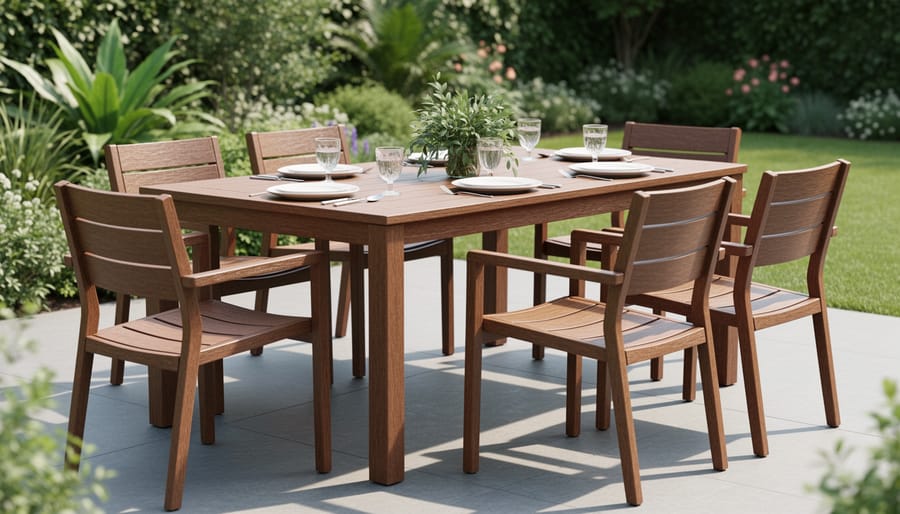
3. Elegant Dining Sets for Al Fresco Entertaining

Outdoor dining table and chairs made from recycled plastic with wood-grain texture on a patio
A recycled-plastic dining set gives you a stylish wood-like look with an easy-to-clean finish for outdoor gatherings.

Picture this: six friends gathered around your patio table, sunset casting warm light across a spread of summer dishes, and nobody worrying about wine spills or sauce splatters. That’s the reality elegant recycled plastic dining sets deliver, without the maintenance headaches of wood or the cold industrial feel of metal.

The magic happens through advanced polymer-blending technology that fuses multiple types of reclaimed plastics into composite materials with remarkable visual depth. Some tables showcase grain patterns so convincing you’ll find yourself running your hand along the “wood” texture, amazed it’s actually reclaimed milk jugs and detergent bottles. Others embrace bold contemporary finishes, charcoal grays, crisp whites, or deep navy blues, that anchor modern outdoor dining rooms with sophisticated flair.

What makes these sets genuinely dinner-party ready? They shrug off marinara drips, coffee rings, and cocktail condensation without staining. A quick wipe with soapy water restores the pristine surface. No annual sealing, no sanding, no panicked covering when rain clouds roll in. The furniture stays put through weather that would warp traditional materials.

A six-seat dining set diverts roughly 2,400 plastic bottles from landfills, that’s kitchen waste transformed into the gathering place for birthdays, Sunday brunches, and impromptu weeknight meals under the stars. Thanks to the global distribution network, these dining solutions reach homeowners worldwide who refuse to choose between environmental responsibility and the elevated aesthetic their outdoor entertaining deserves. It’s furniture that performs as beautifully as it looks.

4. Decorative Privacy Screens with Artistic Patterns

Laser-cut geometric privacy screens made from recycled plastic installed on a patio
Decorative privacy screens create a more intimate outdoor zone while adding bold, artistic texture.

Privacy screens have evolved from purely functional barriers into stunning architectural elements that define outdoor spaces. Today’s recycled plastic panels feature intricate laser-cut patterns, from organic botanical motifs to bold geometric designs, that cast captivating shadows throughout the day while still providing the privacy you need.

These modular panels excel at transforming patios into intimate conversation zones, disguising utility areas like air conditioning units or garbage bins, and creating visual boundaries between different outdoor rooms. The lattice work options offer a balance between openness and seclusion, allowing air circulation and filtered light while establishing distinct areas for dining, lounging, or gardening.

What sets recycled plastic screens apart is their remarkable color stability. Unlike wood that grays or metal that corrodes, these panels maintain their vibrancy season after season thanks to UV-resistant formulations that lock pigments into the material structure. Choose from sophisticated charcoal grays, warm terracotta tones, or crisp whites that complement any outdoor palette.

Installation couldn’t be simpler. Most systems feature interlocking posts or ground stakes that require no special tools or concrete footings. You can reconfigure panels as your needs change, adding sections or rearranging layouts without starting from scratch. This flexibility means your privacy solution grows with your vision, all while keeping hundreds of plastic bottles out of landfills with each panel installed.

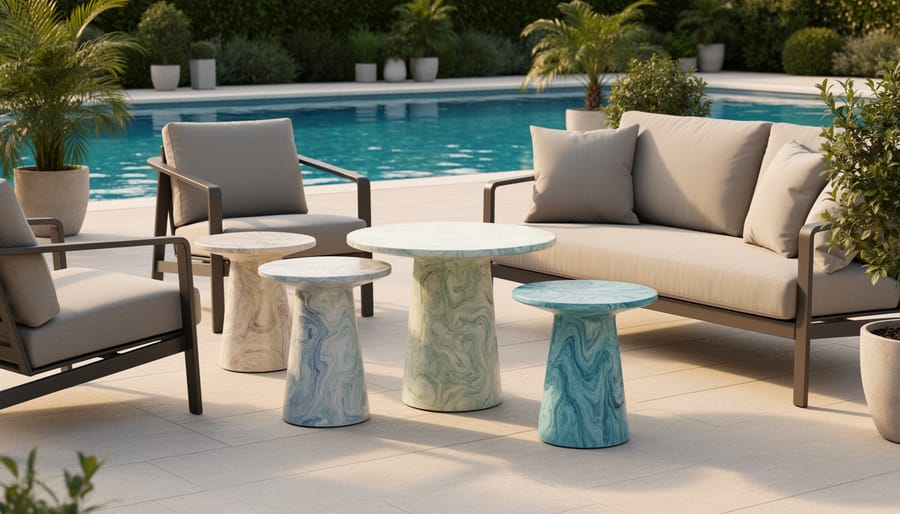
5. Chic Side Tables and Accent Pieces

Recycled plastic side table and accent stool with speckled marbled finish near a pool
Chic side tables and accent pieces with recycled-plastic marbling add distinctive character to patios and poolside areas.

The magic of outdoor design often lives in the details, and recycled plastic side tables and accent pieces deliver those finishing touches with unexpected flair. These smaller items, compact side tables perfect for poolside drinks, tiered plant stands that showcase herb gardens, and sturdy stools that double as impromptu seating, prove that sustainability doesn’t mean sacrificing personality.

What makes these pieces genuinely special is the unique aesthetic created during manufacturing. When post-consumer plastics from different sources get blended, they produce natural marbling effects and speckled patterns that mean no two pieces are identical. A side table might feature swirls of ocean blue mixed with charcoal grey, while a plant stand could showcase creamy whites threaded with sage green. These organic variations become conversation starters, guests invariably ask about the distinctive look, giving you a chance to share the recycled origins.

The versatility is remarkable. A lightweight side table moves effortlessly from patio to poolside as needed. Plant stands transition between garden focal points and porch displays without concern for moisture damage. Decorative stools serve as extra seating during gatherings, then transform into drink stations or footrests afterward.

These innovative accent designs trace back to the same small-family venture that pioneered larger recycled plastic furniture. The founders recognized that complete outdoor spaces need those functional-yet-beautiful smaller pieces that tie a look together, and they applied the same polymer-blending technology to create accent items that punch above their weight in both style and environmental impact.

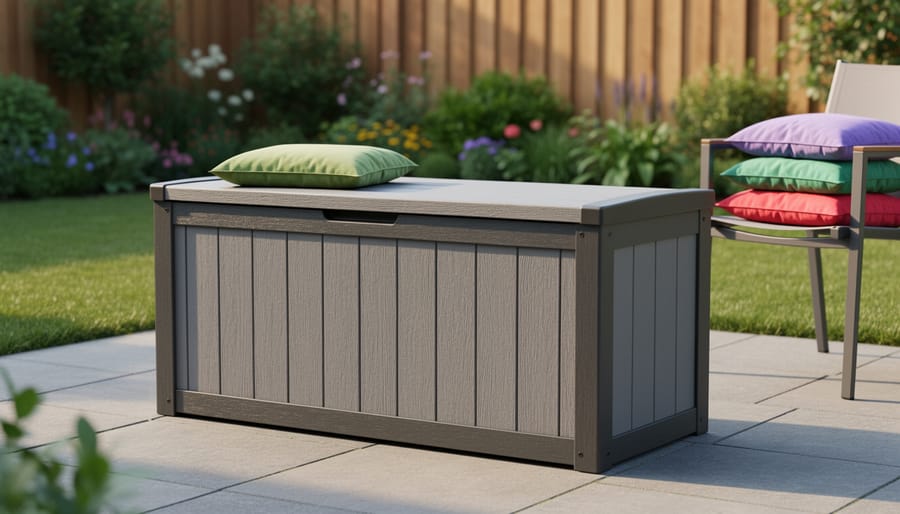
6. Weather-Resistant Storage Benches

Weather-resistant recycled plastic storage bench with open lid showing ventilated interior
A recycled-plastic storage bench keeps outdoor cushions and tools neatly contained while looking sleek and durable.

Storage benches made from recycled plastic solve the eternal outdoor dilemma: where to stash everything when the weather turns or guests arrive. These dual-purpose pieces hide pool toys, gardening gloves, and extra cushions inside while offering comfortable seating on top, no more choosing between function and style.

The plastic durability of these benches means they laugh off rain, snow, and humidity that would warp wooden alternatives. The interiors feature waterproof construction with built-in ventilation channels, preventing that musty smell that plagues traditional storage boxes. Lift the hinged lid and you’ll find generous capacity, typically 100 to 150 gallons, enough for a family’s worth of outdoor gear.

Design-wise, today’s recycled plastic storage benches have shed the utilitarian look. Clean lines, wood-grain textures, and neutral tones let them blend seamlessly with existing furniture, while some models sport contemporary slatted backs or armrests. They’re lightweight enough to reposition easily but sturdy enough to seat three adults comfortably.

The environmental win goes beyond the recycled content. These benches replace wooden versions that require yearly staining, sealing, or treatment with potentially harmful chemicals. You’re eliminating maintenance products from your routine while keeping hundreds of plastic bottles out of landfills. It’s outdoor organization that actually simplifies life instead of adding another chore to the list.

7. Modern Lounge Furniture for Poolside Luxury

Poolside modern lounge furniture made from recycled plastic with deep seating and chaise
Recycled-plastic lounge furniture delivers resort-style comfort with an upscale look that holds up around pools.

Premium recycled plastic lounge furniture has redefined what’s possible for poolside elegance. The deep-seating sectionals and adjustable chaise lounges we’re seeing in 2026 feature clean lines, textured surfaces that mimic woven rattan, and sophisticated neutral palettes that wouldn’t look out of place at a five-star resort. These pieces prove that sustainable materials can deliver luxury-level aesthetics.

What makes these loungers exceptional is their thoughtful engineering. Adjustable backrests let you shift from upright conversation to flat sunbathing with smooth mechanisms that won’t corrode. The polymer construction lasts longer than traditional materials when exposed to chlorine splashes, saltwater spray, and intense UV rays, conditions that quickly degrade wood and metal alternatives. Many designs accommodate standard outdoor cushions, so you can customize comfort and switch up colors seasonally.

The recliners we’ve tested maintain their structural integrity even with daily use, supporting weight capacities that rival commercial-grade furniture. Their chlorine resistance means no bleaching or brittleness, while saltwater exposure causes zero degradation, critical for coastal homes or salt-system pools.

Here’s where sustainability meets luxury: these lounge pieces often incorporate plastics collected through coastal cleanup initiatives and municipal recycling partnerships. Each sectional diverts hundreds of pounds of waste from oceans and landfills, transforming environmental problems into poolside sanctuaries. The material’s inherent water resistance eliminates the need for chemical sealants, and the furniture arrives fully assembled or requires minimal setup, no special tools needed.

Making Your Selection: What to Consider

Start with your space’s personality. If you’ve got a compact balcony, prioritize multi-functional pieces like storage benches or nesting side tables that won’t crowd the footprint. Larger patios can handle statement furniture, think full dining sets paired with lounge chairs that create distinct zones for eating and relaxing.

Your climate matters more than you’d think. Coastal areas benefit from recycled plastic’s saltwater resistance, while high-UV regions shine with pieces that hold color without fading. Extreme temperature swings? Look for polymer blends engineered for freeze-thaw cycles.

Match your existing style by treating recycled plastic as a chameleon material. Wood-grain finishes blend seamlessly with rustic gardens, while sleek geometric planters complement modern architecture. Don’t be afraid to mix: a contemporary dining set works beautifully alongside classic Adirondack chairs when you unify them through color, coastal blues or neutral sandy tones tie disparate styles together.

Tip: All recycled plastic furniture performs best with simple soap-and-water cleaning, no special treatments needed, unlike wood or metal alternatives that demand staining or rust prevention.

Think function first, then aesthetics. Need privacy? Start with decorative screens, then build around them. Hosting often? Prioritize dining capacity over lounge seating. The beauty of this material is its versatility, you’re never locked into one look.

The Environmental Impact That Matters

When you choose a single Adirondack chair made from recycled plastic, you’re diverting approximately 400-500 plastic bottles and containers from landfills and oceans. A complete dining set? That’s roughly 2,000 bottles transformed into something beautiful and functional. These aren’t just numbers, they represent real waste streams redirected into products that last 20-30 years without the chemical treatments, sanding, or repainting that traditional materials demand.

The circular economy magic happens through our global distribution network, which has helped recycle over 50 million pounds of plastic waste into outdoor furniture since our family started this venture. That weight equals roughly 2 billion plastic bottles kept out of the environment. Because recycled plastic furniture doesn’t rot, splinter, or fade, you’re making a one-time purchase that replaces multiple generations of conventional furniture.

The beauty of this approach is that you gain time back, no weekend maintenance routines, while supporting a system that turns pollution into products. Your outdoor space becomes both a personal retreat and a quiet statement about what’s possible when style meets sustainability.

Your Questions About Recycled Plastic Decor, Answered

Does recycled plastic furniture fade in the sun?

Modern recycled plastic decor includes UV inhibitors that protect against color fading far better than traditional materials. You’ll see minimal change even after years of direct sunlight, and many pieces come with fade warranties ranging from 10 to 20 years.

How much weight can recycled plastic furniture support?

These pieces are impressively sturdy, most dining chairs support 300-400 pounds, while benches and tables handle even more. The polymer-blending technology creates dense, durable structures that rival or exceed traditional outdoor furniture.

Is assembly complicated?

Most recycled plastic furniture arrives either fully assembled or requires minimal setup with basic tools. You’re typically looking at 15-30 minutes for pieces that need assembly, with clear instructions and pre-drilled holes that make the process straightforward.

How long will these pieces actually last?

Expect decades of use, 20 to 50 years isn’t uncommon with proper care. Unlike wood that rots or metal that rusts, recycled plastic withstands moisture, insects, and temperature swings without deteriorating, making it a true buy-it-once investment.

Can I mix recycled plastic with my existing wood or metal furniture?

Absolutely! Recycled plastic pieces blend beautifully with other materials, especially when you choose neutral tones or wood-grain textures. The key is treating them as you would any quality outdoor furniture, they’re equals, not compromises.

Does recycled plastic furniture feel cheap or flimsy?

Not at all. High-quality recycled plastic has substantial weight and solid construction that feels premium. The advanced manufacturing creates smooth finishes and authentic textures that surprise first-time buyers, you’d never guess its eco-friendly origins from touch alone.

These answers reflect what homeowners discover once they experience recycled plastic decor firsthand. The technology has advanced so dramatically that concerns about performance or appearance simply don’t match reality anymore. You’re choosing furniture that works harder and lasts longer while looking effortlessly stylish.

These seven recycled plastic decor pieces prove you don’t have to choose between environmental responsibility and stunning outdoor design. Each item transforms discarded plastic waste into furniture that rivals, and often surpasses, traditional materials in both beauty and performance. Your patio, garden, or poolside retreat can become a showcase of conscious luxury that tells a story worth sharing.

What started as a small family venture has grown into a movement, driven by innovative polymer-blending technology that reimagines waste as opportunity. Every Adirondack chair, dining set, or planter represents plastic diverted from landfills and oceans, given new life as durable, stylish furnishings that weather years of use without fading or failing.

Reimagining your outdoor space with recycled plastic decor isn’t settling, it’s upgrading. You’re investing in pieces that maintain their appeal through countless seasons while contributing to a circular economy that values resources too precious to waste. Your backyard becomes both a personal sanctuary and a quiet statement about the future we’re building, one thoughtful choice at a time.

Recycled plastic bench and picnic table made from ocean waste placed in a backyard garden under soft natural light.

How Recycled Plastic Furniture Travels from Ocean Waste to Your Backyard

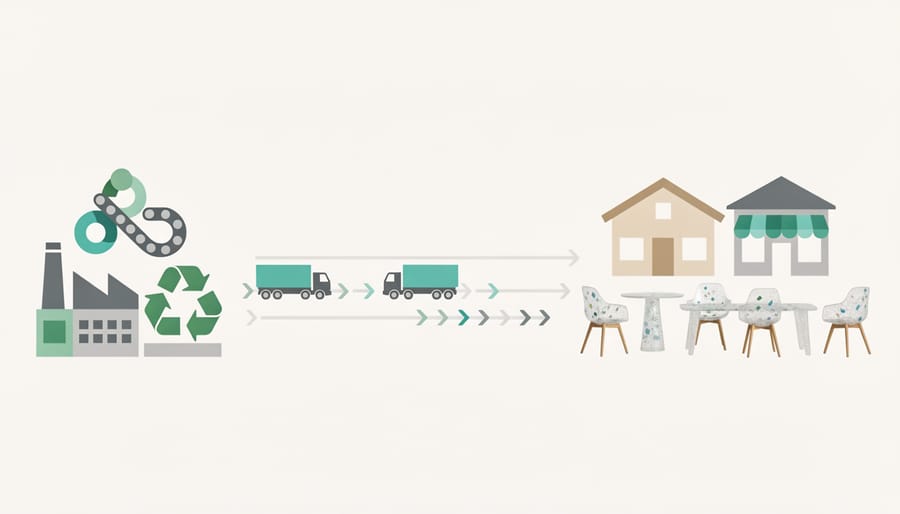
Recycled plastic furniture is manufactured primarily in North America, Europe, and parts of Asia, then distributed through a combination of regional dealer networks, direct-to-consumer shipping, and international freight partnerships that deliver these sustainable pieces worldwide. If you’re wondering whether you can get your hands on a bench or picnic table made from reclaimed ocean plastic or post-consumer bottles, the answer is almost certainly yes, though the specifics of how it reaches your doorstep depend on where you live and which manufacturer you choose.

The global journey of recycled plastic furniture begins where waste ends. Our own family business started three generations ago with a simple belief: what others throw away can become something beautiful and lasting. That philosophy has grown into an international movement. Today, recycled plastic lumber mills process millions of pounds of HDPE (high-density polyethylene) bottles, jugs, and containers annually, transforming them into weather-resistant outdoor furniture that ships to backyards, parks, and coastal properties across six continents.

Distribution networks have evolved considerably since 2020. What once required specialty eco-retailers now flows through mainstream home and garden centers, online marketplaces, and direct manufacturer websites. Shipping a 150-pound recycled plastic picnic table from Pennsylvania to Perth or from California to Copenhagen involves careful logistics planning, but modern freight consolidation and established trade routes make it surprisingly efficient. The environmental cost of transportation is real, yet when compared to the decades-long lifespan of the furniture and the waste diverted from landfills and oceans, the carbon math still favors choosing recycled plastic over virgin materials or wood that requires regular replacement.

The Journey Begins: Where Recycled Plastic Furniture Comes From

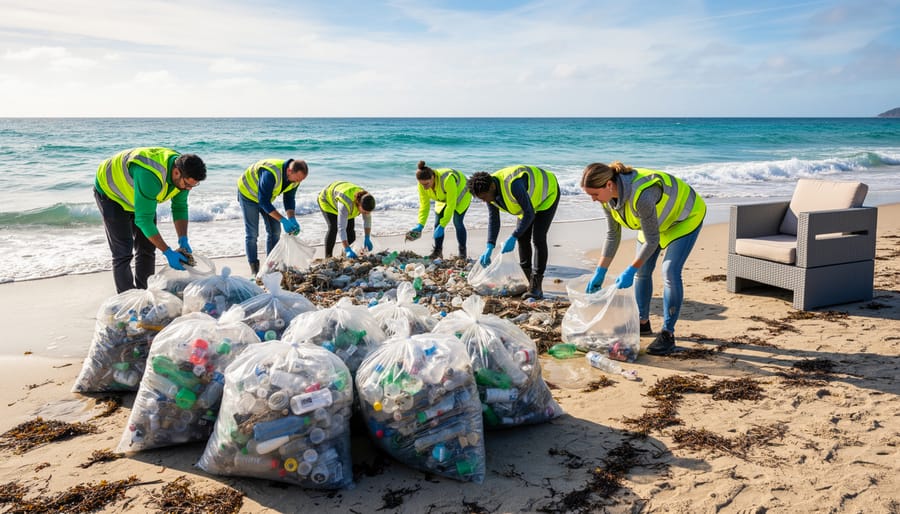
Ocean cleanup team in yellow suits hauling plastic debris net near the shoreline.
Ocean cleanup workers collect plastic waste from the shoreline before it can be recovered and repurposed into durable outdoor furniture.

Every piece of recycled plastic furniture starts its life in an unexpected place, as trash. Before that sturdy Adirondack chair graces your patio or that planter box brightens your garden, the materials journey from disposal sites, waterways, and factory floors around the world.

The sources are as diverse as the problem itself. Plastic waste destined for furniture manufacturing comes from:

  • Ocean recovery programs that collect floating debris from gyres and coastal waters
  • Curbside recycling bins in communities across North America, Europe, and increasingly, Asia
  • Post-industrial waste from manufacturing facilities that generate clean plastic scrap
  • Commercial packaging waste from distribution centers and retail operations
  • Agricultural plastic film and containers collected from farming operations

Ocean cleanup initiatives deserve special attention because they tackle some of the most visible plastic pollution. Organizations working in partnership with furniture manufacturers deploy collection vessels in areas like the Great Pacific Garbage Patch, where currents concentrate floating plastic. These efforts recover bottles, containers, fishing nets, and fragments that would otherwise break down into microplastics and harm marine life for centuries.

Municipal recycling programs form another crucial pipeline. Your milk jugs, detergent bottles, and yogurt containers can become the raw material for outdoor furniture when they’re properly sorted and processed. The challenge? These programs operate under different rules and capabilities across countries, which means furniture manufacturers must work with collection networks spanning multiple continents to secure consistent material streams.

Post-industrial plastic represents the cleanest source, offcuts and rejected products from factories that never reach consumers. This material requires less processing because it hasn’t been contaminated by food, dirt, or mixed waste, making it highly valued by manufacturers.

What ties these sources together is collaboration. A single furniture piece might contain plastic collected from California beaches, German recycling centers, and Japanese industrial facilities. This international effort transforms the global plastic crisis into a circular economy where yesterday’s waste becomes tomorrow’s beautiful, functional furniture.

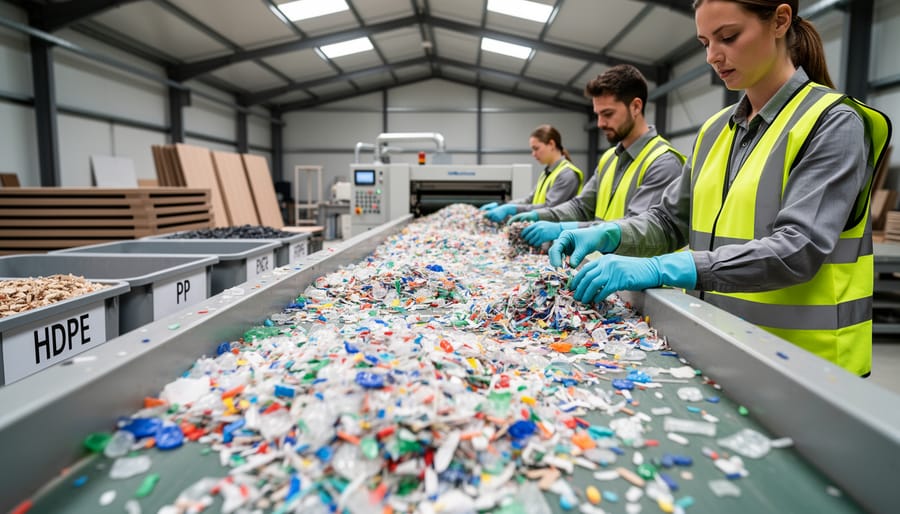
Worker sorting multicolored plastic flakes in a recycling facility.
Recovered plastics are carefully prepared at the material recovery stage, helping ensure only suitable feedstock becomes recycled furniture components.

From Family Venture to Worldwide Network: The Distribution Story

When Bob and Jim Regan started making park benches from recycled milk jugs in their Indiana garage back in 1988, they had no idea they were launching what would become a global movement. Their first “distribution network” was Bob’s pickup truck, delivering benches to local parks and playgrounds within a fifty-mile radius. Fast forward to today, and that family vision has blossomed into an industry with distribution channels spanning six continents.

The transformation didn’t happen overnight. Early adopters faced a classic chicken-and-egg problem: building manufacturing capacity required capital, but securing investment meant proving demand existed for furniture made from what most people saw as trash. The breakthrough came when environmental awareness started shifting from fringe concern to mainstream priority. Suddenly, municipalities wanted recycled benches for their sustainability initiatives. Schools sought playground equipment that taught environmental lessons. Homeowners started asking, “Where can I get one of those?”

This growing demand forced small operations to think bigger. Family businesses formed alliances, sharing shipping containers to reach overseas markets they couldn’t access alone. A Vermont manufacturer might partner with a California distributor to serve the West Coast without building a second factory. These informal partnerships gradually evolved into sophisticated logistics networks, with regional warehouses strategically positioned to minimize shipping distances while keeping products accessible.

Technology played a crucial role too. What once required weeks of phone calls and faxed orders now happens through integrated inventory systems that let a customer in Melbourne order a chair manufactured in Pennsylvania, with the system automatically routing it through the most efficient distribution channel. Container ships, freight partnerships, and last-mile delivery networks all had to align.

The infrastructure supporting this growth tells its own story of commitment. Companies invested in warehousing facilities near major ports. They negotiated long-term contracts with eco-conscious shipping partners who shared their values about offsetting carbon emissions. Some even established regional manufacturing partnerships, licensing their processes to local producers who could serve their markets more sustainably.

Throughout this evolution, the family-business heart remained. Many companies still operate with that original ethos: turn waste into something beautiful, deliver it reliably, and build relationships that last as long as the furniture itself.

How Recycled Plastic Furniture Reaches Different Continents

North American Distribution Channels

Recycled plastic patio chair and bench on a backyard deck during golden hour.
A sturdy outdoor seat made from recycled plastic brings lasting function to everyday backyards and gardens.

Recycled plastic furniture reaches North American consumers through a surprisingly diverse network of channels. In the United States, major outdoor retailers like Home Depot and Lowe’s now stock lines alongside specialty eco-retailers and garden centers. These partnerships bring recycled pieces directly to neighborhood stores, letting customers see and touch the furniture before buying.

Canada follows a similar retail model, with additional emphasis on Quebec-based eco-boutiques and western outdoor specialists who appreciate the plastic durability in harsh climates. Mexico’s market is growing through coastal resort suppliers and urban sustainability stores in cities like Mexico City and Guadalajara.

Direct-to-consumer shipping has transformed access across all three countries. Many manufacturers now ship from strategically located warehouses in Pennsylvania, California, Ontario, and Texas, reaching most addresses within five to seven business days. This dual approach means whether you prefer browsing in person or ordering online, recycled plastic furniture can reach your backyard without hassle.

European Market Networks

Europe’s distribution infrastructure for recycled plastic furniture benefits from the continent’s compact geography and interconnected transport networks. Products typically flow through major ports in the Netherlands, Belgium, and Germany before reaching regional distribution centres that serve specific countries or clusters of nations.

The European Union’s sustainability regulations have created an environment where recycled furniture thrives. Extended Producer Responsibility directives encourage companies to use recycled materials, while Green Public Procurement policies mean government facilities often prefer recycled plastic furniture for parks and public spaces. These regulations haven’t just opened doors, they’ve actively promoted adoption across both commercial and residential markets.

Most European distributors operate hub-and-spoke models, maintaining central warehouses that feed smaller regional depots. This approach reduces delivery times to typically 5-10 business days across the continent. Cross-border shipping within the EU faces minimal customs complications, making it nearly as straightforward as domestic delivery.

Many suppliers also partner with local outdoor furniture retailers in countries like the UK, France, Spain, and the Nordic nations, allowing customers to view products in person before purchasing while still accessing the full range through special order systems.

Growing Markets in Asia and Beyond

Asia-Pacific represents the fastest-growing frontier for recycled plastic furniture, driven by rising environmental awareness and expanding middle-class populations seeking quality outdoor living solutions. Countries like Japan and South Korea lead adoption, where dense urban environments make durable, low-maintenance furniture particularly appealing for balconies and compact outdoor spaces.

Australia has emerged as a powerhouse market, with consumers drawn to furniture that withstands harsh UV exposure and coastal conditions. The continent’s strong beach culture and environmental consciousness create ideal conditions for products born from ocean waste. Distribution networks now connect major cities through strategic warehousing in Sydney and Melbourne, with expanding reach to regional areas.

Singapore and Hong Kong serve as distribution hubs for Southeast Asia, where tropical climates demand furniture that resists humidity and mold. The message that recycled plastic lasts decades without rotting or warping resonates strongly in these moisture-rich environments.

Emerging markets in Thailand, Malaysia, and Indonesia show promising growth as eco-tourism and sustainable hospitality sectors invest in recycled furniture for resorts and public spaces. India presents vast potential, with environmental initiatives and government pushes toward plastic waste solutions creating opportunities for both imports and future local manufacturing.

The region’s expansion reflects not just market opportunity but a shared commitment to addressing plastic pollution where it’s most visible, in the waters and coastlines these communities cherish.

The Environmental Math: Why Global Distribution Still Makes Sense

Cargo truck arriving at a loading dock with pallets for recycled plastic furniture distribution.
Logistics connect production hubs to consumers, helping recycled-plastic furniture reach markets with less reliance on long-distance material handling.

At first glance, shipping furniture across continents seems to contradict the environmental mission behind recycled plastic products. But when you examine the complete picture, the math tells a compelling story about why global distribution actually supports sustainability rather than undermining it.

The key lies in lifecycle thinking. A traditional teak bench might have a lower shipping carbon footprint if manufactured locally, but it requires harvesting old-growth forests and replacing every eight to ten years as it weathers and splinters. Recycled plastic furniture, by contrast, diverts tons of waste from oceans and landfills, requires no virgin resources, and can make recycled products last for decades without degrading. When you spread the distribution emissions across a 25-year lifespan versus multiple replacements of conventional furniture, the recycled option comes out ahead by a significant margin.

Consider the numbers: shipping a container of recycled plastic furniture from production to destination generates roughly 0.5 to 1.5 tons of CO2, depending on distance. Meanwhile, that same shipment contains furniture made from 15 to 20 tons of plastic waste that would otherwise persist in the environment for centuries. Each piece prevents the extraction and processing of virgin materials, which carries its own substantial carbon cost. Studies show that producing virgin plastic generates three times the emissions of processing recycled plastic into furniture.

Many forward-thinking companies have implemented carbon offset programs that fund reforestation, renewable energy projects, or additional ocean cleanup efforts. Some calculate their entire distribution footprint and offset 110 to 150 percent of those emissions, effectively making their shipping carbon-negative. Others partner with carriers using cleaner fuels or optimized shipping routes that reduce empty return trips.

The environmental case strengthens further when you consider what happens without global distribution networks. Collected ocean plastic in Indonesia or beach cleanup efforts in coastal regions need processing facilities and markets. Global distribution creates the economic incentive for waste collection worldwide, turning plastic pollution into valuable raw material. Without these networks, much of that plastic simply stays in the ocean.

The real contradiction isn’t in shipping sustainable furniture globally. It’s in producing throwaway products locally that end up as tomorrow’s waste.

Regional Manufacturing Hubs: Bringing Production Closer to Home

The shift toward regional manufacturing represents one of the most exciting developments in the recycled plastic furniture industry. Rather than producing everything in a single location and shipping worldwide, leading companies are establishing manufacturing hubs strategically positioned to serve specific regions. This approach slashes transportation distances, strengthens local economies, and demonstrates that environmental responsibility extends beyond the materials themselves.

These regional facilities tap into local waste streams, transforming plastic collected from nearby communities into furniture that stays within the region. A manufacturer serving the Northeast U.S. might source plastics from New England recycling programs and coastal cleanups, while a European hub draws from Mediterranean collection initiatives. This localized sourcing creates shorter supply chains and builds community connections around the recycling mission.

Regional Hub Primary Materials Sourced Markets Served
Mid-Atlantic U.S. HDPE from curbside recycling, fishing gear Eastern seaboard, Midwest
Central Europe Post-consumer plastics, agricultural film EU countries, UK
Western Australia Ocean plastics, industrial packaging Australia, New Zealand, Pacific islands
Southern California Mixed recyclables, bottle plastics Western U.S., parts of Canada and Mexico

The benefits multiply beyond reduced shipping emissions. Regional facilities create manufacturing jobs in their communities and often partner with local recycling programs to secure consistent material supplies. Some hubs train workers specifically in recycled plastics processing, building expertise that strengthens the entire circular economy infrastructure.

Quality remains consistent across locations because the fundamental process stays the same, and outdoor furniture durability doesn’t vary by manufacturing site. Companies maintain strict standards and shared designs, so a bench made in Oregon performs identically to one produced in Germany. This decentralized approach proves you can scale sustainably without sacrificing the craftsmanship that makes recycled plastic furniture last decades.

What This Means for You: Accessing Recycled Plastic Furniture Wherever You Live

Finding recycled plastic furniture in your area starts with a simple online search, but knowing what you’re looking for makes all the difference. Most established manufacturers now ship directly to consumers worldwide, with delivery timelines ranging from 2-3 weeks for domestic orders to 4-8 weeks for international shipments. Check the company’s website for authorized dealers in your region, these local partners often stock popular items and can significantly cut your wait time.

When evaluating products, ask specific questions. What percentage of the furniture is made from recycled content? Can the company trace where their plastic came from? Genuine recycled plastic furniture should feel substantial and show consistent color throughout (no thin veneers or surface coatings). Our durability guide explains what construction details signal a piece that’ll last decades rather than years.

Supporting local distributors does more than speed up delivery. Regional partners often provide assembly services, understand local weather conditions, and can advise on the best pieces for your climate. They’re also invested in warranty support and returns, which matters when you’re making a significant purchase.

Watch for greenwashing. Phrases like “eco-friendly” or “sustainable” mean nothing without specifics. Look for certifications, recycled content percentages, and transparent supply chain information. Companies proud of their environmental impact will readily share where their plastic comes from and how much waste they’ve diverted from landfills.

Don’t hesitate to request samples or visit showrooms when possible. Recycled plastic furniture varies in quality, and seeing the construction firsthand, checking joint strength, examining surface finish, testing stability, tells you more than any product description. The right piece should feel like an investment in both your outdoor space and the planet’s future.

Every piece of recycled plastic furniture tells a story that spans continents. It starts with plastic waste pulled from oceans, collected from recycling bins, and recovered from industrial processes around the world. Through innovation, dedication, and global collaboration, that waste transforms into stunning benches, tables, and chairs gracing backyards from Boston to Barcelona.

What began as small family ventures has grown into a worldwide movement proving that sustainability and beauty aren’t mutually exclusive. The furniture industry has discovered something remarkable: the very material we once viewed as pollution creates outdoor pieces more durable, weather-resistant, and low-maintenance than traditional alternatives. Each chair diverts roughly 400 plastic bottles from landfills and waterways. Multiply that across thousands of products, and the environmental impact becomes undeniable.

Yes, these pieces travel distances to reach your home. But the math overwhelmingly favors this approach. The carbon saved by giving plastic waste new life, preventing virgin material production, and creating furniture that lasts decades far outweighs distribution emissions. Regional manufacturing hubs continue emerging, bringing production closer while maintaining the global vision that started it all.

When you choose recycled plastic furniture, you’re not just buying outdoor seating. You’re casting a vote for cleaner oceans, supporting family businesses built on environmental passion, and joining an international community committed to turning yesterday’s waste into tomorrow’s legacy. Your backyard becomes part of a solution that circles the globe.

Outdoor recycled-plastic bench with detailed slat texture under soft daylight, suggesting durability against weather and UV exposure.

What Is Plastic Durability (and How Does It Make Recycled Products Last)?

Plastic durability refers to a material’s ability to resist wear, weathering, and degradation over time while maintaining its structural integrity and appearance. In recycled plastics, this durability comes from the inherent properties of the polymer chains combined with modern manufacturing processes that stabilize and strengthen the material for decades of use.

If you’re wondering whether that outdoor bench made from recycled milk jugs will actually last through years of rain, snow, and harsh sun, you’re asking the right question. The durability of recycled plastic products determines whether they’re truly a smart investment or just a well-intentioned purchase that won’t stand the test of time. Here’s the good news: properly manufactured recycled plastic furniture and outdoor products can outlast traditional wood by 30 years or more, with virtually no maintenance required.

As a family business that’s been working with recycled plastics since the early days of the industry, we’ve watched the science of plastic durability evolve from basic extrusion techniques to sophisticated engineering that rivals any outdoor material on the market. The transformation happens at the molecular level, where UV stabilizers, impact modifiers, and color-fast pigments work together to create products that won’t rot, splinter, crack, or fade the way conventional materials do.

This article breaks down exactly what makes recycled plastics durable, from the chemistry that bonds polymer chains together to the real-world performance you can expect from different product types. Whether you’re considering outdoor furniture for your patio or commercial site furnishings for a public park, understanding these durability factors helps you make confident choices that benefit both your space and the planet.

Understanding Plastic Durability: What It Really Means

When we talk about plastic durability in recycled products, we’re describing a material’s ability to maintain its integrity and function over time despite exposure to harsh conditions. For outdoor furniture and garden products, this means standing up to relentless sun, driving rain, freezing winters, and constant use without cracking, fading, or falling apart.

Durability isn’t just about lasting a long time. It’s the combination of resistance to environmental stresses and the retention of structural properties that make a product genuinely useful year after year. A durable recycled plastic bench won’t just survive outdoors, it’ll keep its vibrant color, hold weight safely, and resist the warping that ruins lesser materials.

Durability
The capacity of a material to resist degradation and maintain performance characteristics when subjected to normal use and environmental exposure over an extended period.
Polymer Degradation
The breakdown of plastic’s molecular chains through chemical reactions triggered by UV light, oxygen, heat, or mechanical stress, leading to brittleness and failure.
UV Resistance
A material’s ability to withstand damage from ultraviolet radiation without experiencing color fading, surface chalking, or loss of mechanical strength.
Impact Strength
The measure of how much sudden force or shock a plastic product can absorb before cracking or breaking, crucial for furniture that experiences daily use.
Weatherability
The overall capacity to endure outdoor conditions including temperature fluctuations, moisture cycles, and atmospheric pollutants while maintaining appearance and function.

What makes recycled plastics remarkably durable is the transformation they undergo during processing. When post-consumer plastic waste arrives at our facility, it doesn’t simply get melted and reshaped. Through careful polymer blending, we combine different plastic types to create hybrid materials that actually outperform their original forms. High-density polyethylene brings rigidity, while other polymers contribute flexibility and impact resistance.

The processing stage introduces stabilizers and protective additives that shield the material from UV damage and oxidation, the two biggest enemies of outdoor plastics. This isn’t coating the surface; it’s engineering protection throughout the entire structure. The result is furniture that genuinely lasts decades, not seasons, proving that environmental responsibility and exceptional longevity go hand in hand.

Weathered recycled-plastic patio dining table and chairs in a sunny outdoor setting
A durable set of recycled-plastic outdoor furniture shows how well it holds up to everyday outdoor exposure.

How Plastic Durability Works in Recycled Products

The Polymer Blending Process

When recycled plastics arrive at manufacturing facilities, they rarely consist of a single type of polymer. Instead of treating this variety as a limitation, manufacturers harness it as an opportunity to create stronger materials through strategic blending.

The process works by combining compatible plastic polymers, often HDPE (high-density polyethylene) and LDPE (low-density polyethylene), which bond at the molecular level during reprocessing. HDPE contributes rigidity and impact resistance, while LDPE adds flexibility and prevents brittleness. This complementary relationship produces furniture that can withstand sudden impacts without cracking yet flex slightly under stress rather than snapping.

Controlled mixing occurs during the melting phase, where precise temperature management ensures the different polymers fuse uniformly. Modern facilities monitor blend ratios to achieve consistent properties across production batches, guaranteeing that a bench purchased today will match the durability standards of one made six months earlier.

The result mirrors how alloying creates stronger metals. Just as bronze outperforms pure copper, blended recycled plastics often exceed the performance of single-polymer products, transforming collected waste bottles and containers into garden furniture built to last decades rather than years.

UV Stabilization and Weather Protection

UV radiation presents one of the greatest threats to outdoor plastic products. Without proper protection, sunlight breaks down polymer chains at the molecular level, causing brittleness, cracking, and that telltale faded appearance of neglected garden furniture.

This is where UV stabilizers earn their keep. These specialized additives work like microscopic bodyguards for the plastic. Some absorb harmful UV rays before they can damage the polymer structure, converting that energy into harmless heat. Others interrupt the degradation process once it starts, stopping chain reactions that would otherwise spread throughout the material.

For recycled plastic furniture, manufacturers carefully select stabilizer packages during production. The additives get thoroughly mixed into the molten plastic, creating uniform protection throughout every inch of the material, not just a surface coating that might wear away.

The most effective formulations combine multiple UV stabilizers with antioxidants. While UV stabilizers handle sun damage, antioxidants tackle the oxidation that occurs when plastic interacts with oxygen and moisture. Together, they create comprehensive weather protection that lets your recycled plastic bench sit outdoors for twenty years or more without losing structural integrity or turning that unfortunate chalky gray.

Manufacturing Innovations That Enhance Longevity

Modern recycling facilities have moved far beyond simple melting and remolding. Today’s advanced extrusion processes control temperature and pressure with precision, creating uniform material density that eliminates weak points where cracks might start. Our family business invested in rotational molding technology specifically because it distributes material evenly through thick sections, producing furniture components without the thin spots that plague cheaper manufacturing.

Co-extrusion techniques layer different recycled plastic formulations together, combining the best properties of each. A hard, UV-resistant outer layer protects a dense, impact-resistant core. This wasn’t possible ten years ago with recycled content.

The real breakthrough came from computer-controlled cooling systems that prevent the internal stresses which cause warping over time. By managing how quickly extruded profiles cool, manufacturers create molecular alignment that actually increases strength beyond what the raw polymer properties suggest. We’ve tested benches that sat outdoors for fifteen years showing no structural degradation, that’s manufacturing precision turning waste plastic into genuine heirloom-quality furnishings.

Types of Durability in Recycled Plastic Products

Structural and Load-Bearing Durability

Recycled plastic outdoor furniture proves its worth where it counts: under real weight, every day, for years. The secret lies in how manufacturers compress and mould the processed plastic pellets into solid pieces that resist deflection even when people sit, lean, and stack items on them. Unlike furniture that gradually sags or weakens at joints, properly engineered recycled plastic maintains its shape because the material’s molecular chains interlock during manufacturing, creating uniform density throughout each piece.

The load-bearing capacity stays remarkably consistent over time. A recycled plastic bench that holds 400 pounds in its first month will hold the same weight a decade later, barring extreme misuse. This stability comes from the polymer structure’s resistance to long-term flexural creep the gradual deformation that plagues some materials under constant stress. Where wood eventually splits at stress points and metal fatigues, recycled plastic distributes weight evenly across its structure, preventing weak spots from developing.

This strength isn’t just about weight limits, it’s about maintaining structural integrity through countless cycles of use, from children jumping on benches to heavy planters resting on tables season after season.

Macro close-up of a recycled-plastic decking plank corner showing texture and color retention
Close-up texture and edge details help readers visualize how durability preserves surface quality over time.

Environmental Durability

Recycled plastic furniture faces nature’s full arsenal, scorching summer sun, winter freeze-thaw cycles, driving rain, coastal salt spray, and everything between. Environmental durability measures how well these products withstand prolonged outdoor exposure without cracking, warping, or losing structural integrity.

Temperature fluctuations prove particularly challenging for outdoor materials. Quality recycled plastic maintains dimensional stability across a remarkable range, typically from -40°F to 160°F. Unlike wood that swells with moisture and contracts when dry, or metal that expands and contracts with temperature changes, properly formulated recycled plastic maintains consistent form. This thermal stability prevents the joint failures and surface cracks that plague other materials.

Moisture resistance sets recycled plastic apart from traditional outdoor furniture options. The material neither absorbs water nor provides a hospitable environment for mold, mildew, or rot. Garden furniture left outside through months of rain emerges ready to use, without the waterlogging issues wood faces or the rust concerns of metal pieces.

Wind-driven debris, hail storms, and accidental impacts test physical resilience. Recycled plastic’s slight flexibility absorbs these shocks rather than shattering like brittle materials, while its density prevents the denting that mars aluminum furniture. This combination of weather resistance and impact tolerance delivers furniture that genuinely earns its decades-long warranty.

Aesthetic Durability

When you invest in recycled plastic furniture, you’re not just choosing durability, you’re choosing pieces that maintain their appearance year after year. Aesthetic durability means your vibrant garden bench won’t fade to a washed-out ghost of its former self after a single summer.

The secret lies in UV-stable pigments integrated throughout the material, not just painted on the surface. Unlike wood that grays and splinters or metal that rusts and peels, quality recycled plastic furniture retains its color because the pigments are locked within the polymer matrix itself. Scratches reveal the same color underneath, eliminating the need for touch-ups or refinishing.

Surface quality remains smooth and consistent through freeze-thaw cycles and intense sun exposure. The non-porous nature of recycled plastic prevents the hairline cracks and surface degradation that plague other materials. You won’t see the chalky residue, flaking, or discoloration that can make outdoor furniture look tired and neglected.

This means your outdoor space maintains its welcoming appearance without constant maintenance. The vibrant blues, greens, and earth tones you choose today will still look fresh a decade from now, contributing to both the aesthetic value of your home and the environmental value of products designed to last generations rather than seasons.

Real-World Applications: Where Plastic Durability Matters Most

Outdoor Furniture and Seating

Garden benches crafted from recycled plastic bottles can sit outside for twenty-five years without rotting, splintering, or losing their shape. That’s the promise of structural durability meeting environmental resistance in outdoor seating.

Tables made from reclaimed HDPE withstand constant sun exposure while supporting family meals, potted plants, and summer gatherings. The polymer chains resist moisture penetration, so rainwater beads off rather than soaking in like wood would. No annual sanding, staining, or sealing required.

Chairs designed for patios handle temperature swings from winter freeze to summer heat without cracking. The material expands and contracts minimally compared to traditional options, maintaining joint integrity season after season. UV stabilizers embedded during manufacturing prevent the brittleness that plagues unstabilized plastics.

When a park bench serves hundreds of visitors weekly for decades, that’s thousands of plastic bottles diverted from landfills proving their worth through genuine longevity. The furniture doesn’t just last, it keeps performing at the same level year fifteen as year one.

Garden and Landscaping Products

Garden settings test plastic durability in ways that reveal its true environmental value. Planters made from recycled plastic face constant moisture from damp soil while simultaneously baking under direct sunlight, conditions that rot wood within seasons and corrode metal over a few years. Quality recycled plastic planters handle both extremes without breaking down, maintaining their structure through freeze-thaw cycles that would crack ceramic containers.

Landscape edging showcases another durability advantage. Unlike timber borders that splinter and shift, recycled plastic edging holds its shape through years of soil pressure and seasonal ground movement. The material won’t leach chemicals into garden beds, and it resists the fungal growth that degrades natural materials in moist earth.

Garden accessories like compost bins and raised bed frames demonstrate how material longevity amplifies environmental benefits. A single recycled plastic raised bed diverts bottles from landfill while lasting decades without replacement, multiplying its positive impact. The material handles nutrient-rich soil and constant watering without the rot, rust, or maintenance that conventional garden products demand.

Rain-soaked recycled-plastic garden planters and edging with water beading on surfaces
Water beading and intact surfaces illustrate moisture resistance, one key aspect of plastic durability for outdoor products.

Commercial and Public Spaces

Walk through any modern city park, school playground, or outdoor shopping center and you’ll likely encounter recycled plastic furnishings working hard in demanding environments. These high-traffic spaces test durability in ways home gardens never could, constant use by hundreds or thousands of people, exposure to vandalism, minimal maintenance budgets, and the expectation that installations will last decades, not years.

Municipal benches made from recycled plastic routinely serve communities for 20-30 years without replacement, eliminating the annual repainting cycles wood requires and the rust concerns of metal. School playgrounds benefit from splinter-free picnic tables and equipment that stays cool to the touch in summer heat while resisting the daily wear of energetic children. Transit shelters, boardwalks, and marina decking withstand continuous foot traffic and salt exposure that would destroy traditional materials within a few seasons.

The environmental math becomes compelling at scale: one park’s worth of recycled plastic furniture diverts tons of waste from landfills while delivering maintenance-free service that saves taxpayer money year after year. When durability meets sustainability in public spaces, entire communities benefit from the choice.

Common Questions About Recycled Plastic Durability

When you’re considering recycled plastic furniture for your garden or patio, questions naturally arise about how these products hold up over time. Let’s address the most common concerns directly.

How long does recycled plastic furniture actually last?

Quality recycled plastic outdoor furniture typically lasts 20-30 years or more with minimal maintenance, often outlasting wood and matching or exceeding the lifespan of virgin plastic products. The polymer blending and UV stabilization processes create a material that resists the environmental factors that break down other materials.

Does recycled plastic require special maintenance?

Recycled plastic furniture needs remarkably little care compared to alternatives. A simple wash with soap and water a few times per year keeps it looking fresh, and there’s no need for staining, sealing, or protective treatments that wood demands.

Will recycled plastic crack or fade in the sun?

Properly manufactured recycled plastic products include UV stabilizers that prevent sun damage and color fading. While very cheap products might show wear, quality recycled plastic furniture maintains its appearance and structural integrity through years of direct sunlight exposure.

Is recycled plastic as durable as virgin plastic?

Modern recycled plastic products match or exceed virgin plastic durability because the recycling process often involves blending multiple polymer types, which can create a stronger, more resilient material than single-source plastics.

The warranty question often reveals manufacturer confidence. Many family businesses producing recycled plastic furniture offer warranties of 10-20 years, reflecting genuine faith in their products’ longevity. This stands in sharp contrast to the 1-2 year warranties typical for wood or metal outdoor furniture.

Temperature extremes raise another common concern. Recycled plastic furniture performs reliably from freezing winters through scorching summers without the cracking, warping, or splitting that plagues wood. The material expands and contracts slightly with temperature changes, but the manufacturing process accounts for this movement, preventing structural damage.

Some wonder whether recycled plastic becomes brittle over time like certain other plastics do. The answer lies in the material composition. Quality recycled plastic products use high-density polyethylene and other polymers that maintain flexibility and impact resistance throughout their lifespan, unlike the brittle degradation you might see in cheap single-use plastics left outdoors.

Types or components

When we talk about what makes recycled plastic products truly durable, we’re really discussing four essential components working together. Think of these as the building blocks that determine whether your outdoor furniture will still look great in ten years or start deteriorating after one season.

Base polymer quality forms the foundation, the type and condition of recycled plastics used directly affects strength and longevity. High-density polyethylene (HDPE) from milk jugs, for instance, offers different durability characteristics than polypropylene from bottle caps.

UV stabilizers and additives act as the product’s sunscreen, protecting against the relentless breakdown from ultraviolet rays. Without these, even the strongest plastic would become brittle and fade within months.

Manufacturing process integrity determines how thoroughly materials bond and how uniform the final product becomes. Consistent heat and pressure during processing create furniture that won’t separate or crack at weak points.

Surface treatments and finishes provide the final protective layer while maintaining color vibrancy. These specialized coatings resist moisture penetration and make cleaning effortless, extending both functionality and appearance over decades of use.

When you choose durable recycled plastic products, you’re making a decision that echoes through decades. That garden bench won’t just sit in your yard for a few seasons, it’ll be there for your grandchildren, weathering storms and sunshine without cracking, fading, or demanding replacement. Every piece diverts waste from landfills while eliminating the need for virgin materials, and because these products last so remarkably long, you’re not cycling through cheap alternatives every few years.

We’ve built our family business on the belief that sustainability and quality aren’t competing values, they’re inseparable. When we transform discarded plastic into furniture that outlasts nearly everything else on the market, we’re proving that environmental responsibility can be practical, beautiful, and genuinely long-lasting.

The next time you’re choosing outdoor furniture or garden products, consider what durability really means. It’s not just about saving money on replacements or avoiding maintenance headaches. It’s about investing in pieces that reduce environmental impact through their very longevity, turning yesterday’s waste into tomorrow’s heirlooms. That’s the kind of sustainability that actually works, for your home, your budget, and the planet.

Curated eco-friendly goods—recycled-glass vase with greenery, wheat-straw phone case, plant-fiber basket, cork lamp, unbranded stainless steel bottle—on a reclaimed-wood table, softly lit, with a blurred modern living room and houseplants behind.

Transform Waste Into Wonder: Real Products Born From Eco-Friendly Production

Every product you bring into your home tells a story—and increasingly, consumers want that story to include sustainable harvesting, ethical production, and a lighter footprint on our planet. The good news? The eco-friendly marketplace has exploded beyond basic canvas tote bags and bamboo toothbrushes into a world of beautifully crafted, functional products that don’t ask you to compromise on quality or style.

From reclaimed wood furniture that transforms century-old barn beams into stunning dining tables to biodegradable phone cases made from wheat straw and plant fibers, sustainable alternatives now exist for nearly everything in your daily life. These aren’t niche products hidden in dusty health food stores anymore—they’re mainstream, accessible, and often competitively priced with their conventional counterparts.

What makes a product truly eco-friendly? It starts with responsible sourcing of raw materials, continues through low-impact manufacturing processes, and extends all the way to end-of-life disposal or composting. Many of today’s green products come from family-owned businesses who’ve spent decades perfecting their craft, using techniques passed down through generations that naturally minimize waste and honor natural resources.

Whether you’re furnishing your first home, searching for the perfect gift, or simply tired of contributing to landfills with disposable goods, understanding real product examples helps you make informed choices. The following categories showcase tangible items you can actually purchase today—each one proving that environmental responsibility and everyday functionality can coexist beautifully. Let’s explore products that work for you and the planet.

The Magic Behind Turning Trash Into Treasure

Ever wonder what happens to that plastic bottle after you toss it in the recycling bin? The answer is more exciting than you might think. Modern eco-friendly manufacturing has transformed how we view “waste,” turning yesterday’s trash into today’s treasure through innovative production techniques that are reshaping entire industries.

At the heart of this revolution is upcycling, where discarded materials get a complete makeover into products that are actually better than their original form. Think of it as giving materials a promotion rather than just recycling them. Companies are collecting ocean-bound plastics, old fishing nets, and post-consumer waste, then transforming them into durable outdoor furniture, stylish accessories, and sturdy home goods. This plastic waste transformation keeps millions of pounds of materials out of landfills and oceans each year.

Note: Upcycling technologies can divert up to 90% of manufacturing waste from landfills, with some facilities achieving zero-waste production within their first year of implementation.

Polymer blending takes this further by mixing recycled plastics with other materials to create composites that are weather-resistant, fade-proof, and incredibly long-lasting. These blends often outperform traditional materials while using fewer virgin resources.

Then there’s closed-loop manufacturing, where nothing goes to waste. Picture a factory where production scraps immediately get fed back into the manufacturing line, creating a continuous cycle. Any extra material from cutting or shaping simply becomes raw material for the next batch. Some family-owned manufacturers have perfected this approach over generations, fine-tuning their processes to minimize waste while maximizing quality.

The beauty of waste-to-product transformation is that it’s happening right now, at scale. Your next patio chair might contain reclaimed milk jugs. That garden planter could be made from recycled automotive parts. These aren’t experimental products; they’re practical, proven solutions that help families create beautiful, sustainable spaces while protecting the planet for future generations.

Modern outdoor patio furniture set made from recycled ocean plastic in blue and beige colors
Recycled plastic outdoor furniture combines durability with environmental responsibility, transforming ocean-bound waste into long-lasting patio sets.

Outdoor Furniture That Saves Oceans

Why Recycled Plastic Furniture Outlasts Traditional Options

Here’s the thing about traditional outdoor furniture: it demands constant attention. Wooden pieces need annual sealing, metal chairs rust at the first sign of moisture, and wicker? Let’s just say it doesn’t handle unexpected rainstorms gracefully. But polymer-blended furniture tells a completely different story.

This innovative furniture is built from recycled plastics that have been engineered to withstand whatever nature throws at them. Unlike wood that splinters and rots or metal that corrodes, recycled plastic furniture shrugs off rain, snow, salt air, and intense UV rays without breaking a sweat. The polymer blend resists fading, so those vibrant colors stay brilliant year after year, not just through one summer season.

What makes this particularly exciting is the material’s density. The recycled plastics are compressed and blended to create furniture that’s remarkably sturdy yet surprisingly lightweight. You won’t find cracks forming in winter or warping happening during summer heat waves. There’s no need for painting, staining, or treating with chemicals to maintain its appearance.

For families who actually use their outdoor spaces, this translates to real freedom. Set it up once, and you’re done. No covering furniture when storms roll in, no dragging everything into the garage each fall. Your recycled plastic pieces simply stay put, looking great season after season while quietly reducing the demand for virgin materials.

The Environmental Numbers That Matter

Let’s talk real numbers, because choosing recycled furniture creates measurable change. Every patio set crafted from reclaimed ocean-bound plastics diverts approximately 400 milk jugs from our waterways and landfills, where plastic waste accumulates at millions of tonnes annually. When you compare the carbon footprint of recycled HDPE furniture to virgin plastic alternatives, the difference is striking—recycled manufacturing saves at least 30 percent in greenhouse gas emissions.

Key Takeaway: A single recycled plastic patio set prevents roughly 400 plastic bottles from polluting our oceans while cutting carbon emissions by 30 percent compared to new plastic production—that’s tangible environmental impact from one furniture purchase.

What makes this even more exciting is the longevity factor. Because quality recycled outdoor furniture lasts decades without degrading, you’re not just making one eco-friendly choice—you’re preventing future waste cycles. That Adirondack chair isn’t heading to a landfill in five years like cheaper alternatives. For our family business, these numbers represent more than statistics; they’re the legacy we’re building, one transformed milk jug at a time.

Garden Products Growing From Recycled Materials

Raised garden bed made from recycled materials filled with growing vegetables and herbs
Raised garden beds crafted from recycled materials support sustainable gardening while closing the loop on plastic waste.

Composters and Garden Beds That Close the Loop

Here’s where gardening gets really exciting—and truly circular! Composters and raised garden beds made from recycled plastic demonstrate sustainable living at its finest. These products don’t just sit in your garden looking pretty; they actively participate in nature’s most beautiful cycle while giving new life to materials that might otherwise clog our landfills.

Think about it: a composter crafted from recycled plastic bottles transforms your kitchen scraps into nutrient-rich soil amendment, which then feeds your vegetables growing in a raised bed also made from recycled materials. It’s a complete loop that would make any environmentalist smile! These products typically use HDPE (high-density polyethylene) sourced from post-consumer plastics like milk jugs and detergent bottles, diverting hundreds of pounds of waste from landfills.

What makes these garden essentials particularly smart is their durability. Unlike traditional wooden composters and beds that rot, warp, or require chemical treatments to survive the elements, recycled plastic versions can last 20-30 years without maintenance. No painting, no staining, no replacing rotted boards. They’re completely weather-resistant, won’t crack in freezing temperatures, and actually improve with age.

Many family-owned businesses have built their reputations on manufacturing these circular economy champions right here in North America, supporting local jobs while reducing transportation emissions. When you invest in recycled plastic garden products, you’re not just growing tomatoes—you’re cultivating a healthier planet, one season at a time.

Accessories and Accents That Make a Statement

Sometimes it’s the smaller touches that transform a space from ordinary to extraordinary—and when those details come with environmental benefits, they tell a story worth sharing. Eco-friendly accessories and accent pieces prove that sustainability doesn’t require grand gestures; it thrives in the thoughtful details that catch your eye and spark conversation.

Take decorative planters, for instance. Crafted from recycled plastic lumber using the same extrusion process that creates decking boards, these containers withstand weather extremes while keeping plastic bottles out of landfills. They’re available in styles ranging from classic urns to modern geometric designs, showing how versatile recycled materials can be at smaller scales. The beauty is that the manufacturing process remains efficient even for these compact items—the same heated extrusion that shapes a deck board can create an elegant planter that’ll last for decades.

Bird feeders and birdhouses made from eco-friendly composites demonstrate another wonderful application. These pieces combine recycled wood fibers with recycled plastics, creating products that won’t rot, crack, or splinter like traditional wood. Your feathered visitors get a safe haven, and you get a maintenance-free accent that enhances your garden year after year.

Outdoor decorative accents like address plaques, garden stakes, and lattice panels showcase how smaller-scale production allows for intricate details and custom touches. Many family-run businesses have perfected these techniques over generations, bringing craftsmanship traditions into the sustainable age. They understand that people want products that reflect their personal style while honoring their environmental values.

What makes these accessories particularly special is their accessibility. They’re perfect starting points for anyone beginning their sustainability journey—affordable, visible reminders that every eco-friendly choice matters, no matter how small.

Close-up of eco-friendly outdoor accessories and planters made from recycled materials
Smaller eco-friendly accessories demonstrate how sustainable production techniques create beautiful products at every scale.

What Makes These Products Truly Eco-Friendly

Not all products wearing a green label are created equal. Here’s how to spot the real environmental champions from the imposters just riding the sustainability wave.

Genuinely eco-friendly products start their journey with transparent sourcing. When companies openly share where their materials come from—whether it’s reclaimed ocean plastic, sustainably harvested wood, or certified organic cotton—you’re looking at a brand that has nothing to hide. The best manufacturers trace every step of their supply chain, from raw material to finished product. Take patio furniture production from recycled plastics, for instance—companies that detail exactly how many plastic bottles go into each chair and where those bottles originated are showing real commitment.

Production processes matter just as much as materials. Look for brands that minimize water usage, rely on renewable energy, and avoid toxic chemicals during manufacturing. Many family-owned businesses have perfected traditional techniques that naturally reduce environmental impact because they’ve been passed down through generations focused on quality over quantity.

Note: Check for third-party certifications like B Corp, Cradle to Cradle, or Fair Trade—these stamps indicate independent verification of sustainability claims.

The longevity factor separates truly sustainable products from disposable greenwashed alternatives. A product designed to last decades, even if it costs more upfront, beats a cheaper version you’ll replace repeatedly. This is where craftsmanship shines—items built with repairable designs, replaceable parts, and timeless aesthetics keep resources out of landfills.

End-of-life planning reveals a company’s true environmental values. The best eco-friendly products either decompose naturally, like compostable packaging, or can be fully recycled back into new products. Some innovative companies even offer take-back programs, ensuring their products never become waste.

Finally, look for measurable environmental benefits. Vague claims like “earth-friendly” mean little without data. Products reducing carbon emissions by specific percentages, diverting quantifiable amounts of waste from landfills, or conserving measurable water volumes demonstrate authentic impact you can believe in.

From Family Garage to Global Impact

Some of the most inspiring eco-friendly products on the market today didn’t start in corporate boardrooms or massive factories. They began in family garages, backyard workshops, and small community spaces where passionate individuals decided to turn their environmental concerns into action.

Take the story of several pioneering families who started sustainable furniture manufacturing operations from their homes. What began as collecting plastic waste from local beaches and neighborhoods evolved into sophisticated production systems that now process tons of recyclable materials monthly. These family ventures proved that you don’t need millions in startup capital to make a difference—just creativity, determination, and a commitment to the planet.

The beauty of these success stories lies in their replicability. Many of these businesses openly share their processes, creating networks of small-scale eco-entrepreneurs worldwide. They’ve partnered with municipal recycling programs, schools, and environmental organizations to create collection systems that feed their production lines while cleaning up communities.

These family-run operations demonstrate that sustainable business models actually work financially. By keeping operations lean, focusing on local materials, and building genuine connections with environmentally conscious customers, they’ve achieved profitability while staying true to their values. Their children often join the business, creating multi-generational commitments to environmental stewardship.

What makes these stories truly powerful is their message: you can start small and still create meaningful change. Whether it’s transforming ocean plastic into outdoor furniture or converting agricultural waste into household products, these families show that global impact begins with local action and personal dedication.

The beauty of eco-friendly products is that they’re not some far-off dream or abstract idea—they’re real items you can hold in your hands, use in your daily life, and feel good about bringing into your home. From the dining table where your family gathers to the raised bed where you grow tomatoes, these products prove that sustainable living isn’t about sacrifice. It’s about making thoughtful choices that ripple outward in ways we might not immediately see.

Every time you choose a piece of reclaimed wood furniture or a plant-based accessory, you’re casting a vote for cleaner production methods. You’re supporting craftspeople and family businesses who’ve dedicated themselves to working with the earth rather than against it. You’re keeping materials out of landfills and reducing the demand for resource-intensive manufacturing processes.

Here’s the inspiring truth: we don’t need everyone doing sustainability perfectly. We need millions of people doing it imperfectly. Your single purchase might seem small, but when multiplied across communities and generations, these choices create the momentum for real change. Start with one eco-friendly product that speaks to you, and watch how that decision naturally leads to the next. The planet you’re helping to protect will thank you for it.

Modern backyard patio with a recycled-plastic Adirondack chair and small table holding rinsed plastic bottles, with a plain blue recycling bin and leafy garden softly blurred in the background at golden hour.

Your Plastic Waste Could Become Tomorrow’s Patio Furniture

Every plastic bottle you toss into that blue bin embarks on a remarkable journey—one that could transform it into the deck chair gracing your backyard next summer. But here’s the truth most people don’t realize: nearly 75% of recyclable plastic never makes it through the system, not because recycling doesn’t work, but because we’re doing it wrong.

The plastic recycling process is straightforward once you understand it, yet most of us fumble at the starting line. That yogurt container? It needs to be rinsed. That plastic bag? It doesn’t belong in your curbside bin. These small mistakes contaminate entire batches of recyclables, sending thousands of pounds straight to landfills instead of giving them new life as outdoor furniture, playground equipment, or construction materials.

Learning to recycle plastic correctly isn’t just about following rules—it’s about understanding what happens after your bin gets emptied. When you know that your water bottles get sorted, shredded, melted, and reformed into durable products that can last decades, the extra thirty seconds of rinsing suddenly feels worthwhile. The recycling symbols stamped on every container aren’t decorative; they’re your roadmap to making a genuine environmental impact.

This guide walks you through the complete plastic recycling journey, from your kitchen counter to the manufacturing facility, while giving you the practical knowledge to become part of the solution. Because the difference between plastic pollution and sustainable materials often comes down to one thing: knowing exactly what to do.

Why Plastic Recycling Actually Matters (And Where It Goes Wrong)

The Plastic Problem in Your Backyard

Here’s a number that might surprise you: the average American family tosses out about 185 pounds of plastic waste every single year. That’s roughly the weight of a full-grown adult sitting in your trash bin, year after year! Even more eye-opening? Only about 9% of all plastic waste ever produced has been recycled.

Think about your own home for a moment. Between milk jugs, shampoo bottles, takeout containers, and grocery bags, plastic sneaks into nearly every corner of our daily lives. Those innocent-looking yogurt cups and water bottles add up faster than you’d imagine. In fact, if you lined up just one week’s worth of plastic waste from a typical household, it would stretch across your entire backyard.

The impact reaches far beyond our property lines, though. Millions of tons of plastic end up in our oceans each year, affecting the wildlife we love and the natural spaces where we hike, fish, and play. But here’s the inspiring part: when we understand how to properly recycle plastic, each of us holds real power to change these statistics. Your recycling bin isn’t just a container—it’s your direct connection to creating a healthier planet and even the sustainable products you bring into your outdoor spaces.

When Recycling Programs Fall Short

Here’s the reality: even when you do everything right, your plastics might not actually get recycled. It’s frustrating, but understanding why helps us become better recyclers.

The biggest culprit? Contamination. That yogurt container with residue still clinging to the sides can contaminate an entire bale of recyclables, sending thousands of pounds straight to the landfill. When grease, food, or liquids mix with clean recyclables, they compromise the quality of the recycled material. Think of it like trying to bake with flour that’s gotten wet—it just doesn’t work the same way.

Market economics play a role too. Some plastics cost more to recycle than they’re worth as raw material. When recycled plastic prices drop below collection and processing costs, facilities may stockpile materials or, unfortunately, send them to landfills instead.

Then there’s the technical challenge: plastics degrade slightly each time they’re recycled. While this doesn’t mean we shouldn’t recycle—every cycle延ays landfill waste and reduces new plastic production—it does mean that plastic can’t be infinitely recycled like glass or aluminum.

The good news? Your efforts still matter tremendously. Clean, properly sorted plastics give recycling programs their best shot at success, and that makes all the difference in keeping valuable materials in circulation.

The Journey from Bottle to Bench: How Plastic Gets Recycled

Collection: Where Your Recycling Bin Leads

Once you toss that plastic bottle into your recycling bin, an impressive journey begins right at your curb! Most communities offer curbside pickup programs where collection trucks gather recyclables weekly or bi-weekly, transporting them to sorting facilities. It’s like a neighborhood relay race where every household plays a crucial part.

If your area doesn’t have curbside service, drop-off centers provide another fantastic option. These community hubs accept various plastic types, often located at municipal buildings or grocery stores. Many accept materials that curbside programs won’t, giving you more recycling opportunities.

Here’s something to get excited about: specialized plastic recycling programs have expanded tremendously in recent years. Some retailers now collect plastic bags and films, while mail-back programs handle items like shipping materials and bubble wrap. Think of these programs as safety nets, catching materials that might otherwise slip through the cracks.

The key is knowing what’s available in your community. A quick call to your local waste management office or checking their website reveals which programs serve your neighborhood. When more families participate actively, collection routes become more efficient, reducing transportation emissions and strengthening the entire recycling ecosystem. Your participation genuinely matters!

Sorting: The Human and Machine Tag-Team

Once your recyclables arrive at a Material Recovery Facility, the real detective work begins. Think of these sorting facilities as bustling coordination centers where human expertise meets cutting-edge technology in an impressive tag-team effort.

The process starts with workers manually removing obvious contaminants—those grocery bags, garden hoses, and pizza boxes that sneak into recycling bins. Then the magic happens: optical scanners identify different plastic types by reading their resin identification codes, those little numbers inside the triangle symbol on plastic containers.

Here’s what those numbers mean: Number 1 (PETE) includes water bottles and food containers, while Number 2 (HDPE) covers milk jugs and detergent bottles. These are the recycling superstars—widely accepted and easily processed. Number 5 (PP) includes yogurt containers and bottle caps, which are increasingly recyclable. Numbers 3, 4, 6, and 7 get trickier, with limited recycling options in many communities.

Advanced machines use air jets to separate plastics by weight and density, creating distinct streams of material. It’s like watching an orchestra where every instrument knows exactly when to play. This careful separation is crucial because mixing different plastic types creates a weaker end product—imagine trying to bake a cake with the wrong ingredients! The result? Clean, sorted materials ready for their transformation into new products.

Industrial recycling facility conveyor belt sorting plastic bottles and containers
Modern recycling facilities use sophisticated sorting systems to separate different types of plastic for processing into new products.

Transformation: From Flakes to Furniture

Here’s where the magic happens! Once those clean plastic flakes arrive at the manufacturing facility, they embark on an incredible transformation journey that turns yesterday’s bottles into tomorrow’s patio furniture.

The process begins in massive industrial melters, where the sorted plastic flakes are heated to precise temperatures—typically between 350 to 450 degrees Fahrenheit, depending on the plastic type. As the material melts into a thick, honey-like consistency, manufacturers can blend different recycled plastics together, creating custom formulations that deliver the exact strength and weather-resistance needed for outdoor applications.

What makes this transformation truly special is how third and fourth-generation family businesses have perfected this craft over decades. These aren’t faceless factories—they’re operations where generational knowledge meets modern innovation. Experienced craftspeople monitor every batch, adjusting temperatures and blend ratios based on years of hands-on expertise passed down through their families.

The molten plastic is then injected into precision molds or extruded through specialized dies, forming everything from chair slats to table legs. As the material cools and solidifies, it locks into shapes that will withstand sun, rain, and snow for decades without rotting, splintering, or requiring harsh chemical treatments like traditional wood.

The best part? This process can happen again and again. That recycled plastic park bench could eventually become a new Adirondack chair, creating a continuous cycle that keeps materials out of landfills while reducing our dependence on virgin plastics made from fossil fuels.

Hands holding various plastic containers showing recycling identification codes
Understanding resin identification codes on plastic containers helps you determine which items can be recycled in your local program.

What You Can Actually Recycle (And What’s Just Wishful Thinking)

The Fabulous Five: Plastics That Love a Second Life

Think of plastic recycling like a dating app for materials—some plastics are definitely more desirable than others! Meet the fabulous five that recycling facilities absolutely love to see coming through their doors.

First up is PET, or plastic number 1, the rock star of recyclable plastics. You’ll find it in your water bottles, soda bottles, and those clear clamshell containers from your grocery store salads. PET is incredibly versatile in its second life, transforming into everything from fleece jackets to carpeting. Here’s something that might surprise you: just five recycled soda bottles contain enough fiber to create the insulation for a ski jacket!

Next, we have HDPE, plastic number 2, the workhorse of your household. Look for it in milk jugs, shampoo bottles, detergent containers, and those sturdy grocery bags. HDPE comes back as piping, outdoor furniture, and even more bottles. That park bench you’re sitting on? There’s a good chance it started life as your laundry detergent container.

PVC (number 3), PP (number 5), and PS (number 6) round out our fabulous five, though they’re pickier about where they’ll go for their second act. PP shows up in yogurt containers and medicine bottles, while PS appears in disposable coffee cups and takeout containers. The catch? Not every recycling program accepts all five, so checking your local guidelines is essential. When these plastics do get recycled, they can become amazing products like outdoor decking and storage bins.

The Troublemakers: What to Avoid

Not all plastics are recycling superstars, and knowing which ones to avoid tossing in your bin can save recycling facilities from serious headaches. Think of these troublemakers as the party crashers of the recycling world—they might look recyclable, but they’ll gum up the works.

Plastic bags and film packaging top the troublemaker list. These lightweight wanderers wrap around sorting equipment like unwanted holiday decorations on a ceiling fan, forcing facilities to shut down for manual removal. Instead, check if your local grocery store has a bag collection program—many do! These bags get recycled separately into composite lumber for decking and outdoor furniture.

Styrofoam (expanded polystyrene) is another notorious offender. Its lightweight, bulky nature makes it economically impractical to recycle in most municipal programs. Your best bet? Reuse it for shipping or check if specialty drop-off locations exist near you.

Here’s the golden rule that trips up even the most well-intentioned recyclers: contamination kills recyclability. That greasy pizza box? Trash it. Food-contaminated plastic containers? Give them a quick rinse first, or they’ll contaminate entire batches of otherwise recyclable material. Even a single dirty item can turn pounds of good recyclables into landfill-bound waste.

Black plastic presents a sneaky problem too—sorting equipment often can’t detect it due to the carbon black pigment. When in doubt, contact your local facility about their specific capabilities. Remember, responsible recycling means knowing when not to recycle just as much as knowing when to toss something in the bin.

How to Become a Plastic Recycling Champion at Home

The Clean and Dry Rule

Here’s the truth that might surprise you: a peanut butter jar with residue still clinging to the sides can contaminate an entire batch of recycling. That’s why the clean and dry rule exists, and honestly, it’s one of the simplest ways you can make a real difference in the recycling process.

Before tossing any plastic into your recycling bin, give it a quick rinse with water. You don’t need to run it through the dishwasher or scrub until it sparkles—just remove food particles, liquids, and obvious residue. Think of it as giving your recyclables a fighting chance at their next life, whether that’s becoming outdoor furniture or a new water bottle.

After rinsing, let items air dry or give them a quick shake. Moisture can lead to mold growth during storage and transportation, and it adds unnecessary weight to recycling trucks, increasing fuel consumption. Plus, wet paper labels can create a sludgy mess that gums up sorting equipment at recycling facilities.

This simple habit takes just seconds but dramatically improves the quality of recycled materials. Clean plastics are easier to sort, process more efficiently, and yield higher-grade recycled content that manufacturers actually want to use.

Finding Your Local Plastic Recycling Programs

Finding your local plastic recycling options is easier than you might think, and it starts right in your own neighborhood. Your municipal curbside program is your first stop – simply visit your city or county’s official website and search for their recycling guidelines. You’ll discover which plastics they accept (usually marked with those little triangle numbers on the bottom) and any specific preparation requirements.

But here’s where it gets exciting: many plastics that can’t go in your curbside bin still have a second life waiting! Major retailers like grocery stores and home improvement centers often host drop-off stations for plastic bags and film packaging. These soft plastics get transformed into composite materials – yes, including durable outdoor furniture that can grace your backyard for decades.

For harder-to-recycle items, check out specialized programs through Earth911.com or your local recycling center’s website. Many communities host periodic collection events for items like plastic toys, electronics cases, and garden containers. Some forward-thinking areas even partner with private recycling companies to expand their capabilities beyond standard programs. Taking these extra steps means you’re not just recycling – you’re actively participating in the circular economy that keeps valuable materials out of landfills and transforms them into products that enhance our outdoor living spaces.

Beyond the Bin: Reducing Before Recycling

Here’s the truth: the best plastic to recycle is the plastic you never use in the first place. Before you even think about tossing something in that blue bin, consider how you can reduce plastic from entering your life altogether.

Start with the simple swaps that make the biggest difference. Invest in a quality reusable water bottle and coffee cup—you’ll be amazed how quickly single-use bottles pile up when you’re not using them. Those reusable shopping bags gathering dust in your car? Keep a few rolled up in your purse or backpack so they’re always within reach.

In your kitchen, glass containers replace plastic wrap beautifully for food storage. Beeswax wraps offer another fantastic alternative that actually looks pretty on your counter. When shopping, seek out products with minimal packaging or packaging made from recycled materials—your purchasing power sends a powerful message to manufacturers.

Think of it this way: every plastic item you refuse is one less thing the recycling system has to process. It’s like preventing pollution before it starts. And when you do need to use plastic, choosing recyclable options and properly sorting them completes the circle. Together, reducing and recycling create a powerful one-two punch for protecting our planet’s future.

The Beautiful Afterlife: What Recycled Plastic Becomes

From Waste to Wonder: Outdoor Furniture That Lasts

Here’s what makes recycled plastic outdoor furniture truly remarkable: it can outlast traditional wood furniture by decades while looking beautiful year after year. Unlike wood that splinters, warps, or requires annual staining, recycled plastic furniture stands up to rain, snow, intense sun, and salty coastal air without breaking down. You won’t find yourself sanding, painting, or replacing pieces every few seasons.

The transformation from discarded milk jugs and detergent bottles into stunning patio sets is nothing short of amazing. Modern manufacturing techniques create furniture with rich, fade-resistant colors and textures that rival natural materials. Whether you’re drawn to classic Adirondack chairs or sleek contemporary dining sets, recycled plastic furniture delivers both style and substance.

For our family business, this connection between waste and beauty has always been personal. My grandfather started collecting recyclables in the 1970s, long before curbside programs existed. He believed those plastic containers held untapped potential. Today, we’re proud to see that vision realized in products that grace backyard patios and beach houses across the country.

The durability factor means fewer resources consumed over time. While the initial investment might be slightly higher than cheap alternatives, recycled plastic furniture pays for itself through longevity. You’re not just buying outdoor seating; you’re investing in a sustainable solution that keeps plastic out of landfills while creating a comfortable, attractive outdoor living space that truly lasts.

Modern outdoor patio furniture set made from recycled plastic on residential deck
Durable outdoor furniture crafted from recycled plastic demonstrates how discarded bottles and containers gain beautiful new life as long-lasting patio pieces.

The Ripple Effect of Your Recycling Efforts

Every plastic bottle you toss in the recycling bin creates a ripple effect that extends far beyond your curbside. The numbers tell an inspiring story: recycling just one ton of plastic saves approximately 5,774 kilowatt-hours of energy—enough to power the average home for six months. That’s the kind of impact we’ve witnessed firsthand as a family business committed to transforming recycled materials into quality outdoor furniture.

When you recycle plastic properly, you’re directly preventing roughly 2,000 pounds of that material from sitting in landfills for up to 1,000 years. Even more compelling? Studies show that increased recycling rates have diverted millions of tons of plastic from entering our oceans, where it would otherwise harm marine life and contaminate ecosystems for generations.

The energy savings alone make recycling worthwhile. Producing new plastic from recycled materials uses 88% less energy than creating virgin plastic from petroleum. That translates to fewer carbon emissions and a smaller environmental footprint for products you use every day. Your recycling efforts contribute to this cycle of conservation, turning yesterday’s waste into tomorrow’s sustainable solutions—from park benches to patio furniture that stands the test of time.

Every time you rinse out that yogurt container or sort that plastic bottle, you’re not just disposing of waste—you’re casting a vote for the kind of world you want to live in. Think about it: that humble water bottle in your hand could become part of a beautiful outdoor bench where your grandchildren might sit someday, or the sturdy lumber that frames a community garden. This isn’t just recycling; it’s transformation in action.

The journey from your curbside bin to these remarkable new products might seem like magic, but it’s actually powered by something more extraordinary—millions of people like you making conscious choices every single day. When you take those few extra seconds to check recycling symbols, rinse containers, or separate plastics properly, you’re joining a global movement that’s literally reshaping our planet’s future. Your kitchen counter becomes a launching pad for environmental change.

We’ve been in the recycled plastic lumber business for three generations, and here’s what we’ve learned: the system only works when people believe their actions matter. Because they do. Every properly recycled plastic piece reduces demand for virgin materials, saves energy, and keeps our natural spaces cleaner for the next adventure, the next campfire, the next family memory.

So here’s your moment. Don’t let this knowledge sit idle. Find your local Plastic Recycling Program today—most communities have excellent resources waiting for you to tap into them. Sign up for curbside pickup if you haven’t already. Become that person who inspires neighbors, teaches kids, and proves that individual actions create collective transformation. Your next recycled item isn’t waste—it’s possibility waiting to be unlocked.

Four recycled HDPE Adirondack chairs around a stone outdoor fireplace with a bright flame on a flagstone patio at dusk, warm firelight contrasting with cool blue twilight, landscaped backyard and soft string lights in the background.

Why Recycled Plastic Seating Transforms Your Outdoor Fireplace Into a Year-Round Haven

Picture this: You’re gathered around a crackling outdoor fire on a cool evening, settled into comfortable seating that’s not only stylish and weather-resistant but also made entirely from recycled ocean-bound plastics. It sounds too good to be true, but welcome to the revolution in sustainable outdoor living spaces where environmental responsibility meets exceptional design. For proper safety guidelines and expert advice on creating these spaces, visit masonchimneyrepair.com to learn more about best practices.

The marriage of recycled plastic furniture and fire features might raise eyebrows at first. After all, plastic near flames? Here’s the reality: High-quality recycled plastic outdoor furniture maintains safe distances from fire features just like any traditional seating material would. These premium seating pieces crafted from HDPE (high-density polyethylene) perform beautifully for decades while resisting fading, cracking, and extreme temperatures. These aren’t flimsy lawn chairs, and they divert thousands of plastic bottles from landfills.

The transformation happening in backyards across the country tells a compelling story. Homeowners are discovering they don’t have to choose between their environmental values and creating stunning outdoor retreats. Recycled plastic seating offers the warmth and character of natural materials without the maintenance headaches, the deforestation concerns, or the constant refinishing. It’s furniture with a purpose, a conversation starter, and a testament to innovation – proving that sustainability can be both practical and absolutely gorgeous.

The Perfect Marriage: Fire Features and Sustainable Seating

Recycled plastic Adirondack chairs arranged around outdoor stone fireplace with burning fire
Recycled plastic seating creates an inviting gathering space around outdoor fire features while withstanding heat and weather exposure.

What Makes Fireplace Seating Different

Gathering around a fire creates magical moments, but it also creates unique challenges for your outdoor furniture. The heat radiating from flames, the occasional wayward ember, and smoke drifting on an evening breeze all demand seating that can truly handle the elements.

Unlike regular patio furniture that sits comfortably away from heat sources, fireplace seating faces direct thermal exposure. Traditional materials like fabric cushions can absorb smoke odors, while untreated wood may dry out and crack from repeated heat cycles. Metal furniture becomes uncomfortably hot to touch, and wicker can pose a fire hazard when embers escape.

Temperature fluctuations add another layer of complexity. Your fireplace seating experiences extreme contrasts – from the intense warmth of a crackling fire to freezing winter nights when the flames die down. Then there’s the seasonal challenge of storing or maintaining furniture that’s been repeatedly heated and cooled.

This is where recycled plastic seating proves its worth. The material naturally resists heat damage at safe seating distances from fire features, won’t absorb smoke smells, and handles temperature swings without warping or becoming brittle. Plus, an occasional ember landing on the surface won’t leave permanent damage like it would on fabric or natural materials. You get peace of mind knowing your sustainable choice is also the practical one.

How Recycled Plastic Rises to the Challenge

You might wonder how plastic and fire can coexist safely, and that’s exactly the smart thinking that led to today’s innovative recycled plastic seating. Here’s the exciting part: modern recycled plastic furniture designed for outdoor spaces isn’t your everyday plastic. These materials undergo specialized manufacturing processes that give them impressive heat resistance, making them perfectly suited for placement around fireplace areas.

The recycled plastic used in quality outdoor seating maintains its structural integrity in temperatures that would make traditional plastics sweat. While it’s not fireproof, high-grade recycled plastic resists warping and melting at the ambient temperatures found around outdoor fireplaces when positioned at recommended safe distances. Think of it as having a comfort zone that aligns perfectly with your own seating preferences near the warmth.

What really sets recycled plastic apart is its remarkable stability. Unlike wood that can dry out and crack from heat exposure, or metal that becomes uncomfortably hot to touch, recycled plastic maintains consistent performance. It won’t splinter, rust, or deteriorate from the temperature fluctuations that fireplace areas experience.

The material’s density and composition create natural resistance to the challenges outdoor fire features present, giving you peace of mind while you enjoy those memorable evenings gathered around the flames.

From Waste to Warmth: The Journey of Recycled Plastic Seating

The Upcycling Process Explained

The journey from discarded plastic bottle to beautiful outdoor seating is honestly pretty amazing. It starts with collection, where post-consumer plastics like HDPE (high-density polyethylene, the sturdy stuff in milk jugs) and PETE (polyethylene terephthalate, found in soda bottles) arrive at recycling facilities. These materials are sorted by type because different plastics have different melting points and properties, kind of like how you wouldn’t bake cookies and roast vegetables at the same temperature.

Once sorted, the plastics go through an intensive cleaning process to remove labels, adhesives, and any contaminants. This step is crucial because any impurities can weaken the final product. Think of it like preparing ingredients for a family recipe – you want everything clean and ready before you start.

Next comes the transformation. The clean plastics are shredded into small flakes, then melted and blended together. Many manufacturers add UV stabilizers at this stage, which protect the material from sun damage and prevent fading. This blended mixture is then extruded into pellets or directly molded into furniture components.

What makes this process particularly exciting for outdoor fireplace seating is that manufacturers can engineer the blend for heat resistance. By adjusting the polymer ratios and adding specific additives, they create material that withstands temperature fluctuations without warping or releasing harmful chemicals. The result is furniture that looks beautiful, performs reliably, and keeps approximately 400 plastic bottles per chair out of landfills.

Close-up detail of recycled plastic lumber material showing texture and color variations
Recycled plastic furniture is crafted from upcycled plastic waste, transforming discarded materials into durable outdoor seating.

Our Family’s Mission: From Small Venture to Global Impact

Our story began fifteen years ago in a small workshop, where our grandfather saw plastic waste not as garbage, but as opportunity. What started as a weekend project—transforming discarded bottles into garden furniture—has blossomed into a mission that touches communities across three continents. We’re still a family operation at heart, now led by the third generation who grew up sorting recyclables at the kitchen table.

Every piece of seating we create represents our commitment to proving that sustainability doesn’t mean compromise. We’ve diverted over 2 million pounds of plastic from landfills and oceans, transforming what would have polluted our planet for centuries into beautiful, functional outdoor furniture. Our grandmother always said, “Waste is just creativity waiting to happen,” and that philosophy guides everything we do.

Today, families gather around outdoor fireplaces on seating that tells a story of redemption—where yesterday’s water bottles become tomorrow’s cherished gathering spaces. We measure success not just in sales, but in the tons of plastic kept from our oceans and the conversations sparked around sustainable living. This isn’t just business for us; it’s our family’s legacy of environmental stewardship.

Design Styles That Complement Your Outdoor Fireplace

Adirondack Chairs for Classic Chimney Designs

There’s something timeless about settling into an Adirondack chair beside a crackling fire, and now you can embrace that tradition with a clear conscience. Classic Adirondack-style stylish recycled plastic chairs beautifully complement rustic stone chimneys and traditional brick outdoor fireplaces while keeping plastic waste out of landfills and oceans. Each chair diverts roughly 500 milk jugs from the waste stream, transforming yesterday’s containers into tomorrow’s cherished gathering spots.

The wide armrests are perfect for resting your hot cocoa or s’mores ingredients, while the contoured seat encourages long conversations under the stars. These chairs maintain the beloved slanted back and broad slats of the original design, but unlike their wooden predecessors, they won’t splinter, crack, or require annual staining. The natural texture options in earth tones blend seamlessly with stone and brick, creating that cozy cabin aesthetic homeowners adore. Position them around your chimney fireplace to create an inviting circle where family traditions flourish season after season.

Modern Bench Seating for Contemporary Fire Features

Contemporary fire features deserve equally sophisticated seating, and recycled plastic delivers that modern aesthetic beautifully. Today’s minimalist bench designs feature clean lines, low profiles, and seamless construction that perfectly complement sleek fireplaces and geometric fire pits. Picture streamlined benches in sophisticated charcoal or warm taupe, creating stunning visual continuity with your outdoor architecture.

What makes these recycled plastic decors particularly exciting is how they enhance rather than compete with your fire feature’s design. Backless benches maintain sightlines across your space, while floating styles with hidden mounting systems create that coveted contemporary look. The material’s ability to achieve crisp edges and smooth surfaces rivals concrete or metal, yet it’s far more comfortable and environmentally responsible.

These benches work wonderfully in modern courtyards and rooftop spaces where every element contributes to a cohesive design story. You’re choosing furniture that looks incredible while transforming ocean-bound plastic into functional art.

Curved Sectionals for Conversation Around the Fire

There’s something magical about gathering in a circle around dancing flames, and curved sectionals made from recycled plastic make these moments even more special. Unlike traditional straight benches that create barriers, curved seating naturally brings everyone together, fostering the kind of face-to-face connection that makes firepit gatherings unforgettable.

Recycled plastic sectionals offer incredible flexibility for circular fire features. You can arrange individual curved pieces to create a complete circle for larger gatherings or configure a cozy semi-circle for intimate evenings with close friends and family. The modular design means you’re never locked into one arrangement, adapting as your entertaining needs change through the seasons.

What makes this choice particularly rewarding is knowing that every curve of your seating represents plastic bottles, containers, and packaging diverted from landfills and oceans. These pieces maintain their shape and vibrant color year after year, resisting the warping and fading that plagues traditional materials exposed to fire’s radiant heat. The low-maintenance nature means more time enjoying conversations and less time refinishing or replacing furniture, creating lasting memories while honoring your commitment to sustainable living.

Contemporary curved recycled plastic sectional seating arranged around circular fire pit in backyard setting
Curved sectional recycled plastic seating complements modern fire pit designs and creates intimate conversation areas.

The Environmental Impact You’re Making

Plastic Diverted from Landfills and Oceans

Here’s the real-world impact that makes us proud: every single piece of recycled plastic seating typically diverts between 200 to 400 plastic bottles from ending up in landfills or, worse yet, our oceans. That’s hundreds of bottles per chair that get a second life instead of taking centuries to decompose in nature.

When you think about it, choosing just four chairs for your fireplace seating area means you’ve helped repurpose up to 1,600 plastic bottles. Now multiply that by the thousands of families making similar choices, and you’re looking at millions of bottles transformed into beautiful, functional furniture. It’s the kind of ripple effect that genuinely changes things.

What really excites us is watching this impact grow. Since we started focusing on recycled plastic furniture as a family business, we’ve seen the cumulative numbers climb into the tens of millions of bottles diverted. Each customer becomes part of this larger story of environmental restoration. You’re not just buying a bench or chair, you’re casting a vote for cleaner oceans and less overwhelmed landfills. That decision matters, and it creates momentum that inspires manufacturers to keep innovating with sustainable materials.

The Ripple Effect: Supporting Global Recycling Networks

Every time you choose recycled plastic seating for your outdoor fireplace area, you’re doing something bigger than upgrading your patio. You’re casting a vote that echoes across continents, strengthening the very infrastructure that makes recycling possible.

Here’s how it works: When demand for recycled plastic products increases, recycling facilities receive a powerful economic incentive to expand their operations. Communities invest in better sorting technology. Collection programs reach more neighborhoods. Suddenly, that plastic bottle you tossed in the recycling bin has a guaranteed second life, transforming into beautiful, functional furniture rather than ending up in landfills or oceans.

This creates what economists call a “circular economy,” where materials flow in continuous loops rather than following a straight path to disposal. Your purchase supports collection workers, sorting facilities, processing plants, and manufacturers who specialize in transforming waste into value. It’s everyday sustainability in action, making environmental responsibility accessible and achievable.

The ripple extends globally too. As Western markets embrace recycled plastic furniture, developing nations gain incentive to establish their own recycling infrastructure, creating jobs while reducing pollution. Your backyard seating choice genuinely contributes to worldwide waste reduction, proving that individual decisions, multiplied across thousands of households, create meaningful environmental change.

Durability That Outlasts Traditional Materials

Weather Resistance You Can Count On

Mother Nature throws everything she’s got at outdoor furniture, and recycled plastic seating takes it all in stride. Unlike traditional materials that deteriorate over time, recycled plastic furniture genuinely thrives in challenging conditions.

Rain and snow? They simply slide right off. The non-porous surface means water can’t seep in to cause rot or swelling like it does with wood. During winter months, snow accumulation won’t leave behind the warping and cracking that plague other materials.

The intense UV rays that fade cushions and crack conventional plastics barely affect high-quality recycled plastic furniture. Advanced UV stabilizers built into the material during manufacturing protect against sun damage, keeping your seating looking vibrant year after year. Those scorching summer afternoons by the fireplace won’t compromise the color or structural integrity.

Temperature swings from freezing winters to sweltering summers present no problem either. The material expands and contracts minimally, maintaining its shape and strength through extreme conditions. There’s no rust, no splintering, and no maintenance headaches. When you’re investing in new outdoor furniture, choosing recycled plastic means choosing peace of mind alongside environmental responsibility.

Minimal Maintenance, Maximum Enjoyment

Here’s something that’ll make you smile: while your neighbors spend their weekends sanding, staining, and sealing their outdoor furniture, you’ll be relaxing by the fire with a good book. Recycled plastic seating requires virtually zero maintenance beyond an occasional rinse with the garden hose or a quick wipe-down with soap and water.

Unlike wood furniture that demands seasonal treatments and protective coatings, or metal pieces that need rust prevention care, recycled plastic simply doesn’t ask much of you. There’s no painting, no refinishing, and no worrying about leaving cushions out in unexpected rain. The color runs throughout the material, so scratches barely show, and UV stabilizers built into the manufacturing process mean your seating won’t fade or crack under harsh sun exposure.

For families who’ve chosen sustainable living, this low-maintenance quality means more time enjoying your outdoor space and less time working on it. A few minutes of simple cleaning twice a year keeps your seating looking fresh for decades, making it the perfect match for your busy, eco-conscious lifestyle.

Choosing the Right Seating for Your Space

Finding the perfect seating arrangement for your outdoor fireplace gathering spot is like putting together pieces of a puzzle – everything needs to fit just right. The good news? Recycled plastic seating comes in such amazing variety that you’ll have plenty of options to create your ideal setup.

Start by measuring your space and considering your fireplace size. For smaller fire pits, two or three Adirondack chairs positioned in a cozy semicircle create an intimate conversation area. Got a larger fireplace and more room to work with? Consider a combination of benches and individual chairs that can accommodate your typical crowd while maintaining that comfortable 3-4 foot distance from the flames.

Think about how you actually use your outdoor space. Do you host large gatherings where flexibility matters? Lightweight recycled plastic chairs are easy to rearrange as your guest list grows. Prefer quiet evenings with just your family? Deeper seating with ottomans might be your perfect match. Many of our customers love mixing different seating styles – perhaps a loveseat flanked by rocking chairs – to give everyone their preferred perch.

Your personal style absolutely matters here. Recycled plastic seating now comes in colors ranging from classic neutrals that blend beautifully with natural surroundings to vibrant hues that make a statement. Some prefer the traditional look of wood-grain textures, while others embrace the sleek, modern aesthetic of smooth finishes.

Don’t forget practical considerations like storage. Many recycled plastic pieces stack easily, and since they’re weatherproof, you can leave them out year-round without worry. That convenience means more time enjoying your fireplace and less time hauling furniture in and out. Whatever you choose, you’re making a choice that’s good for both your outdoor living dreams and our planet.

Picture this: as twilight falls, your family gathers around the warmth of your outdoor fireplace, settled comfortably on beautiful seating that tells a story of second chances. Every bottle diverted from landfills, every pound of ocean-bound plastic transformed into something lasting and useful. This is where comfort meets conscience, where your outdoor sanctuary becomes a living testament to the choices that matter.

Choosing recycled plastic seating for your fireplace area isn’t just about furnishing a space. It’s about creating a legacy. When your grandchildren ask about those handsome Adirondack chairs or that inviting bench, you’ll share more than a furniture purchase story—you’ll tell them about stewardship, about businesses built on family values and environmental dedication, about making decisions that honor both the people we love and the planet we share.

The fireplace has always been humanity’s gathering place, a symbol of warmth, community, and home. By surrounding yours with sustainable seating, you’re honoring that tradition while writing a new chapter—one where beauty, durability, and environmental responsibility rise together like sparks into the night sky. Your outdoor living space is waiting. Make it extraordinary. Make it sustainable. Make it yours.

Contemporary outdoor dining table and chairs made from recycled plastic on a wooden deck at golden hour, with a lush native garden and faint ocean horizon softly blurred in the background.

How Editable Backlinks Transform Your Recycled Plastic Furniture Business

Build authority for your recycled plastic furniture business by strategically placing editable backlinks across partner sites, eco-blogs, and sustainable living directories where your target customers naturally gather. When you buy backlinks online, prioritize platforms that share your environmental mission and allow you to update anchor text as your product lines evolve—this flexibility means your three-piece patio set link today can become a full outdoor dining collection link tomorrow without losing the SEO equity you’ve built.

Focus your editable backlinks on high-intent pages showcasing your furniture’s unique story: how ocean-bound plastics transform into weather-resistant benches, or how your family business diverts thousands of bottles from landfills monthly. Partner with environmental nonprofits, green home improvement blogs, and sustainable lifestyle influencers who welcome guest contributions where you can embed updatable links pointing to seasonal collections or new product launches.

Track which backlinks drive actual furniture sales versus mere traffic by connecting your link management platform to conversion data, then double down on placements that attract customers ready to furnish entire outdoor spaces. This approach respects both your marketing budget and your commitment to authentic partnerships within the sustainability community.

What Makes a Backlink ‘Editable’ (And Why It Matters for Your Green Business)

Modern outdoor furniture set made from recycled plastic on wooden deck with garden background
Recycled plastic furniture combines environmental responsibility with attractive, durable outdoor living solutions.

The Difference Between Static and Editable Links

Think of traditional static backlinks like furniture carved from solid wood—they’re permanent, unchangeable, and once they’re set, that’s it. If the website linking to your recycled plastic furniture business changes direction or closes down, that connection stays frozen in time, potentially leading nowhere or to outdated information.

Editable backlinks, on the other hand, work more like our modular outdoor furniture pieces. They’re flexible and adaptable to changing needs. Imagine you’ve partnered with an environmental blog that writes about your sustainable patio sets. With an editable backlink, if you launch a new collection of recycled plastic dining furniture next season, that same link can be updated to showcase your latest innovations without bothering the original publisher.

Here’s a real-world example: A garden design website might link to your general homepage today. But as your business grows and you develop specialty lines—perhaps recycled plastic Adirondack chairs or planters—that editable link can evolve to direct visitors to exactly what they’re searching for. It’s like having a living, breathing connection that grows alongside your family business, ensuring every visitor finds the most relevant, up-to-date information about your eco-friendly furniture solutions.

Why Flexibility Matters When You’re Building Something Better

Here’s the thing about running a sustainable furniture business: you’re constantly evolving. Last month, you might have partnered with a new recycling facility that processes ocean-bound plastics. This month, you’ve earned a sustainability certification you’ve been working toward for years. Next quarter, you’re launching a whole new line of garden benches made from post-consumer milk jugs.

Your story keeps getting better, and your website needs to keep pace.

That’s where editable backlinks become your secret weapon. Unlike traditional backlinks that lock you into yesterday’s content, editable links let you update your message as your business grows. When you develop a breakthrough in material processing or switch to an even more eco-friendly production method, you can refresh those existing links without starting from scratch.

Think of it like the furniture you create: adaptable, durable, and designed to stand the test of time. Your family business has probably weathered countless changes over the years, always finding ways to improve while staying true to your values. Your backlink strategy should do the same. As you innovate and expand your environmental impact, your online presence can evolve right alongside you, keeping your audience informed about your latest achievements without losing the credibility you’ve already built.

Five Ways Editable Backlinks Amplify Your Recycled Furniture Story

Update Your Impact Numbers as They Grow

Here’s the exciting part: your environmental impact keeps growing, and your marketing should celebrate that journey! With editable backlinks, you can update those impressive numbers without asking every website to republish your content.

Think about it. Last year, you might have diverted 5,000 pounds of plastic from landfills. This year? Maybe it’s 15,000 pounds. Instead of outdated statistics floating around the internet, simply update your master link destination with current numbers. Every backlink automatically shares your latest achievements.

Update your carbon footprint reduction metrics quarterly. When you hit a milestone like preventing 10 tons of CO2 emissions, let the world know through your existing backlinks. Share the number of ocean-bound plastic bottles transformed into beautiful furniture pieces. These aren’t just statistics; they’re stories of real environmental change that resonate with your customers.

This approach keeps your brand narrative fresh and authentic while showcasing the growing impact of choosing recycled plastic furniture. Your family business isn’t just making furniture; you’re building a legacy of environmental stewardship that deserves to be accurately represented everywhere your name appears online.

Close-up of recycled plastic pellets and finished furniture showing material transformation
The journey from recycled plastic material to beautiful furniture pieces demonstrates sustainable innovation in action.

Evolve Product Links as Your Collection Expands

As your recycled plastic furniture collection grows, your backlinks should grow with it. Think of this as nurturing a living ecosystem rather than setting up static signposts. When we launched our dining chair collection last spring, we simply updated our existing backlinks from partner blogs to reflect the expanded range. Instead of links pointing to “outdoor seating,” we edited them to highlight “complete outdoor dining sets”—maintaining all that hard-earned SEO authority while showcasing our newest pieces.

The beauty of editable backlinks shines when product lines evolve. Perhaps you’re discontinuing a particular bench style but introducing modular seating. Rather than losing those valuable backlinks, you redirect them to the upgraded collection. This approach honors both your sustainability mission and your digital presence. We’ve found that transparency works wonders here—when reaching out to partners about link updates, we share the environmental story behind our product evolution. It’s not just about SEO; it’s about keeping everyone aligned with your growth journey while preserving the link equity you’ve built together.

Keep Your Family Story Fresh and Relevant

Your family business has a story worth telling, and that story naturally evolves. Maybe you’ve just diverted your millionth plastic bottle from landfills, or your daughter joined the company to continue your environmental legacy. With editable backlinks, you can keep these milestones visible without starting from scratch each time you reach a new achievement.

Think of editable backlinks as living testimonies to your growth. When a sustainability blog linked to your “About Us” page three years ago, that link built valuable credibility. Now, instead of watching that page become outdated, you can refresh it with current family stories, updated environmental impact numbers, and recent certifications while keeping that precious link equity intact. The original backlink remains active and powerful, but now it points visitors to your most inspiring, current narrative.

This approach helps environmentally conscious customers connect with your authentic journey. They see a thriving family business that’s genuinely making a difference, not a static website frozen in time. Your heritage stays relevant, your impact stays measurable, and your online authority keeps growing naturally.

Adjust Seasonal Messaging for Outdoor Furniture

Your backlinks should breathe with the seasons, just like your customers’ outdoor spaces. When spring arrives and homeowners start planning their patios, update your anchor text to emphasize “spring patio furniture” or “weather-resistant garden seating.” As summer peaks, shift focus to “poolside loungers” or “backyard entertaining essentials.” These seasonal adjustments keep your links fresh and relevant while maintaining their SEO value.

The beauty of editable backlinks is that you can redirect them to different landing pages without losing the link equity you’ve built. During winter months, when outdoor furniture sales naturally slow, point those same backlinks to content about year-round durability or indoor-outdoor versatility. This flexibility lets you align with outdoor living trends without sacrificing your hard-earned link authority.

Think of it as being nimble stewards of both your digital presence and environmental message. By timing your backlink adjustments with actual consumer behavior patterns, you demonstrate the same thoughtful resourcefulness that makes recycled plastic furniture such a smart choice for sustainable living.

Refine Your Sustainability Partnerships

Your sustainability story is always evolving, and your backlinks should too. As your recycled plastic furniture business grows, you’ll likely forge new partnerships with recycling facilities, collaborate with ocean cleanup initiatives, or join forces with environmental organizations. These exciting developments deserve to be showcased.

Think about it like this: when we first started our family business, we worked with just one local recycling center. Today, we partner with five facilities across three states, and we’re proud members of the Ocean Plastics Alliance. Each new collaboration tells a powerful story about expanding your environmental impact.

Keep your backlinks fresh by regularly updating partnership pages. When you begin sourcing materials from a new recycling program, create content about that relationship and link to their website. If a sustainability certification you mentioned gets upgraded or renamed, adjust those links accordingly. This practice not only keeps your information accurate but also strengthens relationships with partners who appreciate being featured on your site.

Consider creating a dedicated “Our Impact Network” page where you can easily add new collaborations as they develop, making updates seamless and keeping your environmental journey transparent for customers who care deeply about where their furniture comes from.

Building Your Editable Backlink Strategy: Where to Start

Family enjoying outdoor living space with recycled plastic furniture in garden setting
Recycled plastic furniture creates comfortable, sustainable outdoor spaces where families can gather and enjoy nature.

Partner Sites That Welcome Flexibility

The beautiful thing about the sustainable furniture community? It’s filled with passionate people who genuinely want to help amplify your mission. Environmental blogs are natural allies—they’re constantly seeking fresh stories about innovative eco-solutions, and your recycled plastic furniture fits perfectly into their narrative. These sites typically welcome updates as your product lines evolve or your environmental impact grows.

Gardening and outdoor living websites represent another goldmine of opportunity. Their audiences are already invested in creating beautiful, sustainable outdoor spaces, making them ideal partners. Many of these publications maintain resource sections and buying guides that they regularly refresh with new information.

Sustainability directories and green business platforms actively encourage their listed companies to keep information current. They understand that the eco-friendly marketplace moves quickly, and outdated links don’t serve anyone well.

Lifestyle publications focusing on conscious living, home design, and family spaces often feature evergreen content about sustainable choices. They appreciate partners who can provide updated statistics about plastic waste diversion or new design innovations. As a family business committed to environmental stewardship, you’ll find these communities remarkably receptive to collaboration—they’re not just hosting your link, they’re supporting a shared vision for a healthier planet.

Creating Content Worth Linking To (And Worth Updating)

The secret to earning backlinks that stand the test of time? Create content so valuable that others can’t help but reference it—and give you reasons to keep it fresh.

Start with transparency about your environmental impact. Annual sustainability reports showing exactly how many plastic bottles you’ve diverted from landfills or the carbon footprint you’ve reduced resonate deeply with eco-conscious audiences. These numbers tell a compelling story that bloggers, journalists, and environmental advocates want to share. Update them quarterly or yearly, and you’ve got a perfect reason to reach back out to everyone who’s linked to your report.

Innovation stories are link magnets. Document your journey developing new recycling processes or discovering better ways to transform ocean plastic into durable furniture. Behind-the-scenes content about your family business heritage and how you’re evolving traditional craftsmanship with sustainable materials creates emotional connections. These stories naturally evolve as your techniques improve, giving you legitimate reasons to refresh the content and notify your linking partners.

Educational resources about plastic recycling work beautifully for sustainable business growth. Create comprehensive guides explaining which plastics can be recycled, how the transformation process works, or tips for identifying quality recycled furniture. Make these genuinely helpful for homeowners and outdoor enthusiasts who care about making informed choices. As recycling technology advances or new research emerges, you’ll have natural opportunities to update these resources—and each update gives you a compelling reason to contact sites linking to your content, keeping those backlinks active and relevant.

Common Mistakes to Avoid (So Your Links Keep Working for You)

Let me share some wisdom we’ve gathered from years in this business—mistakes we’ve seen (and honestly, made ourselves) that can turn a helpful strategy into a headache.

The biggest pitfall? Over-editing your anchor text like you’re rearranging furniture every weekend. We had one enthusiastic partner who changed their backlink anchor text five times in three months, completely confusing search engines about what their page was actually about. Think of it this way: if you kept changing your business name, customers would struggle to remember you. The same goes for backlinks. Make thoughtful changes when truly necessary—like when your focus shifts from outdoor chairs to entire patio collections—but don’t tinker just because you can.

Another trap is the “set it and forget it” approach with your link partners. Remember, these are relationships, not just digital connections. If you’ve built a backlink with a sustainability blog that featured your recycled plastic benches, keep that relationship warm. A quick email checking in, sharing updates about your environmental impact, or celebrating their new content keeps trust alive. We’re a family business, and we’ve learned that authenticity matters more than algorithms.

Here’s something many folks miss: making changes that prioritize keywords over readability. Yes, “eco-friendly recycled outdoor furniture” might seem perfect for SEO, but if it reads awkwardly in context, it actually hurts you. Search engines have gotten incredibly smart—they reward natural, helpful content that serves real people making real decisions about sustainable living.

Finally, don’t panic-edit based on short-term ranking fluctuations. SEO is a marathon, not a sprint. Give your changes time to work their magic, usually at least several weeks, before deciding something isn’t working.

Just like transforming discarded plastic into beautiful, functional furniture, building your online presence through editable backlinks is about seeing potential where others see waste. It’s about adapting, innovating, and growing with purpose. This flexible approach to SEO doesn’t require massive budgets or complicated strategies right from the start. Instead, it mirrors the very spirit of what makes recycled plastic furniture special: taking something simple and making it extraordinary through thoughtful effort.

Start small. Reach out to one local environmental blog. Update one seasonal promotion. Share one customer’s story about how your furniture transformed their patio while keeping plastic out of landfills. Each editable backlink you create is a seed planted in the digital landscape, ready to grow and change as your business evolves.

The beauty of this strategy is that it grows with you, just as our family business has grown by staying true to sustainable values while embracing new opportunities. Your mission to protect the environment doesn’t have to compete with your need for visibility. They can work hand in hand, building something lasting and meaningful. So take that first step today, knowing that every link, like every piece of recycled plastic, has the potential to become part of something bigger.

Modern outdoor lounge chair and side table made from colorful recycled plastic derived from tiny vape bottles on a garden patio at golden hour, with blurred planters and a bin of small unlabeled dropper bottles in the background

These Tiny Vape Bottles Are Becoming Beautiful Outdoor Furniture

Every year, millions of small plastic bottles from vape flavours end up in landfills, where they’ll persist for centuries. But what if these discarded containers could transform into something beautiful and functional for your backyard? That’s exactly what’s happening in a revolutionary approach to outdoor furniture design that’s turning environmental eyesores into durable, weather-resistant pieces you’ll actually want to show off.

The concept sounds almost too creative to be practical, yet these once-disposable bottles possess surprisingly ideal qualities for outdoor use. Their high-density plastic composition resists UV damage, moisture, and temperature extremes far better than traditional materials. When processed correctly, they create furniture components that won’t crack, fade, or deteriorate through harsh seasons.

This isn’t just another feel-good recycling story. It’s a genuine solution addressing two critical problems simultaneously: reducing plastic waste that clogs our ecosystems while creating affordable, long-lasting outdoor furniture. Each chair or table diverts hundreds of bottles from landfills, giving them purposeful second lives in your garden, patio, or deck.

As a family business committed to environmental stewardship, we’ve witnessed firsthand how simple innovations can create meaningful change. The transformation from waste to wonder doesn’t require complex technology—just creativity, dedication, and a willingness to see potential where others see trash. Your outdoor space deserves furniture with a story worth telling.

The Vape Bottle Waste Crisis No One’s Talking About

Here’s something most people don’t realize: every single day, millions of small plastic vape flavour bottles end up in landfills across North America. These compact containers, typically made from PET (polyethylene terephthalate) or HDPE (high-density polyethylene), might seem insignificant on their own. But when you consider that the average vape user goes through roughly two to three bottles per week, the numbers become staggering.

Picture this: a single city block in any urban area generates enough discarded vape bottles in just one month to fill several large garbage bags. Multiply that across entire cities, and we’re looking at a waste crisis that’s literally piling up beneath our feet.

The problem isn’t just the volume. These bottles pose unique disposal challenges because they often contain residual flavouring and nicotine, making them unsuitable for standard recycling streams. Municipal recycling facilities frequently reject them, sending perfectly recyclable plastic straight to landfills where it’ll sit for up to 450 years before breaking down.

What makes this particularly frustrating is that both PET and HDPE are among the most recyclable plastics available. They’re durable, heat-resistant, and can be transformed into countless useful products when processed correctly. Yet the vaping industry’s explosive growth has outpaced our waste management infrastructure, creating a gap that creative solutions desperately need to fill.

This is where innovative thinking comes into play. Just as cartridges become patio furniture through thoughtful upcycling, vape bottles hold tremendous potential for transformation. Their consistent size, quality plastic composition, and sheer availability make them ideal candidates for reimagining as something beautiful and functional rather than environmental burdens. The question isn’t whether we can reuse them but rather how quickly we can scale solutions that keep these materials out of our landfills and oceans.

Collection of colorful discarded vape flavour bottles scattered on ground
Discarded vape flavour bottles represent a growing waste stream that most recycling programs cannot handle effectively.

Why Vape Bottles Make Perfect Furniture Material

The Plastic Advantage

Here’s what makes vape flavour bottles such a hidden gem for outdoor furniture creation. These little containers are typically made from high-density polyethylene (HDPE) or food-grade polypropylene—both plastics that were specifically engineered to protect sensitive liquids from UV rays, temperature changes, and general wear and tear. Think about it: if these bottles can safely store concentrated flavour compounds without breaking down, they’re naturally built to withstand the elements your patio furniture faces daily.

The beauty of these materials lies in their surprising durability. HDPE, the same plastic used in milk jugs and heavy-duty storage containers, resists cracking even in freezing temperatures. It’s also naturally resistant to mould and mildew, which is exactly what you need for furniture that might catch morning dew or afternoon rain showers. Meanwhile, polypropylene offers exceptional flexibility and impact resistance, meaning furniture pieces can handle the bumps and shifts of outdoor living without becoming brittle over time.

What really excites us about working with these materials is their UV resistance. Unlike cheaper plastics that fade and deteriorate under constant sun exposure, vape bottles were designed to maintain their integrity in various storage conditions. This built-in protection translates directly to outdoor furniture that keeps its structural strength season after season, reducing the need for replacements and keeping more waste out of landfills.

Built to Last Outdoors

Here’s something that might surprise you: those colorful vape bottles that once seemed destined for landfills are actually perfect candidates for outdoor furniture that can handle whatever Mother Nature throws at them. The secret lies in the material itself.

Vape flavor bottles are typically made from high-density polyethylene or polypropylene, the same hardy plastics used in everything from kayaks to commercial outdoor equipment. These materials were engineered to protect liquids from UV degradation and temperature fluctuations, which means they already come pre-equipped with weather-resistant superpowers. When transformed into furniture, these properties don’t disappear—they become the foundation of incredibly durable outdoor pieces.

Unlike traditional wood furniture that can warp, crack, or rot when exposed to rain and humidity, upcycled vape bottle furniture maintains its structural integrity through seasons of use. The plastic won’t absorb moisture, so you don’t have to worry about mold or mildew taking hold. Sun exposure, which can fade and damage conventional outdoor furniture, has minimal impact because these bottles were designed to resist UV rays from day one.

The color stability is particularly impressive. Those vibrant hues that made the bottles eye-catching on store shelves remain vivid even after years outdoors. And when winter arrives, the material’s flexibility prevents the cracking that plagues rigid plastics in freezing temperatures.

This isn’t just about creating something beautiful from waste—it’s about creating something that genuinely performs. When you invest in upcycled outdoor furniture, you’re choosing pieces built to withstand the elements while keeping plastic out of our environment.

From Disposal to Design: The Upcycling Process

Collection and Sorting

The journey from disposable waste to beautiful outdoor furniture begins with collection—and that’s where community partnerships make all the difference. We’ve built relationships with local vape shops who’ve become enthusiastic allies in our sustainability mission. Rather than watching thousands of colorful bottles end up in landfills, these retailers now provide collection bins where customers can responsibly dispose of their empty containers.

Beyond retail partnerships, we’ve tapped into grassroots community recycling programs that bring neighbors together around a shared environmental goal. Schools, community centers, and environmental groups have joined the movement, organizing collection drives that educate participants about creative upcycling possibilities. It’s incredible to see how a simple collection bin can spark conversations about waste reduction and inspire families to rethink what “trash” really means.

The sorting process is equally important. Volunteers and our small family-run team carefully separate bottles by color, size, and plastic type. This meticulous approach ensures we can create furniture pieces with intentional color schemes and structural integrity. What started as a modest garage operation has blossomed into a community-wide effort, proving that environmental solutions work best when everyone pitches in together.

Innovative Polymer Blending Technology

Here’s where the magic really happens. Those colorful vape bottles don’t just get melted down and reshaped—they go through a sophisticated blending process that transforms them into something far stronger than their original form.

Think of it like creating the perfect smoothie. Just as you wouldn’t throw random ingredients together and hope for the best, our polymer blending process carefully combines different types of plastics found in vape bottles to create an optimal mixture. Most vape bottles are made from PETG (polyethylene terephthalate glycol), a durable plastic that’s already weather-resistant. But here’s the challenge: PETG alone can become brittle over time when exposed to constant UV rays and temperature swings.

That’s where the innovation comes in. Through careful testing—something our family business has perfected over three generations of working with recycled materials—we’ve developed a proprietary blend that adds specific polymer additives to enhance the material’s strength and flexibility. These additives act like molecular reinforcement, creating stronger bonds between the plastic chains. The result? A composite material that can withstand harsh weather conditions, from scorching summer heat to freezing winter temperatures.

The blending happens in specialized equipment that heats the plastics to precise temperatures, ensuring complete integration without degrading the material. This process creates a homogeneous mixture, meaning the strength and weather resistance is consistent throughout every piece of furniture we produce. The end product is actually more durable than many conventional outdoor furniture materials, proving that upcycled doesn’t mean compromised quality.

Crafting Your Outdoor Pieces

Once we’ve collected and cleaned enough bottles, the real magic begins. We melt down the plastic and carefully mold it into practical outdoor pieces that’ll transform your space. The heating process eliminates any residual flavoring while maintaining the plastic’s durability—perfect for withstanding harsh weather conditions.

Our family operation specializes in creating sturdy dining tables, comfortable chairs, colorful planters, and decorative accessories. Each piece is crafted with precision, ensuring the recycled material forms smooth surfaces and strong joints. The natural variations in bottle colors create unique patterns in every item, meaning no two pieces are exactly alike.

What makes this furniture special isn’t just its eco-friendly origin—it’s genuinely built to last. The same properties that made these bottles ideal for storing liquids make them resistant to moisture, UV rays, and temperature changes. You’re getting furniture that can handle rainstorms and sunny days while keeping thousands of plastic bottles out of landfills.

Modern outdoor patio furniture set made from recycled vape bottle plastic
Outdoor furniture crafted from upcycled vape bottles combines durability with environmental responsibility.

What You Can Create for Your Outdoor Space

Seating That Makes a Statement

Picture this: you’re lounging in your garden on a sturdy bench that once lived a completely different life as colorful vape bottles. These recycled plastic chairs, benches, and loungers prove that sustainability doesn’t mean sacrificing style or comfort. The transformation is remarkable—what was once destined for landfills becomes weather-resistant seating that can withstand years of sun, rain, and outdoor use. The plastic from vape bottles is surprisingly durable, making it ideal for furniture that needs to brave the elements. From sleek modern chairs to ergonomic loungers, designers are discovering that this upcycled material offers incredible versatility in shape and color. Many families are choosing these pieces not just for their eco-credentials, but because they’re practically maintenance-free and tell a story worth sharing with guests.

Tables and Surfaces

Transformed vape bottles create surprisingly sturdy and weather-resistant surfaces that rival traditional outdoor furniture. Picture gathering around a mosaic-style table where each colorful bottle cap tells a story of waste diverted from landfills—that’s the magic of upcycled outdoor dining solutions.

These innovative plastic dining tables and work surfaces combine durability with environmental responsibility. The high-density plastic from vape bottles withstands rain, sun, and temperature fluctuations without warping or fading, making them ideal for year-round patio use. Side tables crafted from these materials offer practical solutions for holding drinks, books, or potted plants while adding conversation-starting aesthetics to your garden.

What makes these surfaces particularly appealing is their lightweight yet stable construction. You can easily rearrange your outdoor space without heavy lifting, while the non-porous material resists staining and requires minimal maintenance—just a quick wipe-down keeps them looking fresh. By choosing upcycled surfaces, you’re not just furnishing your patio; you’re participating in a circular economy that gives discarded materials new purpose.

Garden Accessories with Purpose

Your garden deserves more than just furniture—it needs those special touches that transform it into your personal outdoor sanctuary. This is where upcycled vape flavour bottles truly shine, offering an incredible array of accessories that combine function with environmental responsibility.

Planters might be the most obvious application, but they’re also among the most delightful. The naturally colourful plastic creates vibrant containers for herbs, succulents, and trailing plants. String several together to create a vertical garden wall that maximizes small spaces while minimizing waste. The bottles’ weather-resistant properties mean your planters will maintain their appearance season after season.

Trellises crafted from these materials bring structure to climbing roses and clematis while adding a contemporary edge to traditional gardens. By cutting and weaving the plastic into geometric patterns, designers create supports that are both sturdy and visually striking. Bird feeders, garden stakes, and decorative wind chimes round out the possibilities.

What started as a family passion project for many artisans has blossomed into a full range of garden accessories that prove sustainability doesn’t mean sacrificing style. Each piece diverts waste from landfills while bringing personality to your outdoor space. These aren’t just decorations—they’re conversation starters that showcase your commitment to creative environmental solutions.

The Environmental Impact You’re Making

Every piece of upcycled vape bottle furniture tells a story of redemption. When you choose a bench crafted from reclaimed flavour bottles, you’re not just buying outdoor seating—you’re actively rescuing approximately 500 bottles from their journey to a landfill or ocean. Let that sink in for a moment. Five hundred plastic bottles that would have persisted in the environment for centuries now serve a beautiful, functional purpose in your backyard.

The numbers become even more inspiring when you zoom out. A standard patio furniture set might incorporate between 1,500 and 2,000 bottles, depending on the design. That’s nearly a ton of plastic waste transformed into something you’ll use and love for years. And here’s the remarkable part: by choosing upcycled materials over virgin plastic production, you’re helping eliminate the carbon emissions equivalent to driving a car roughly 300 miles. Each furniture piece prevents those emissions from ever entering our atmosphere.

Consider the Johnson family from Portland, who furnished their entire deck with upcycled vape bottle furniture last spring. They calculated they’d diverted approximately 3,000 bottles from waste streams—bottles that might otherwise have ended up in the Pacific Ocean or sat decomposing in a landfill for 450 years. Their furniture represents not just everyday sustainable choices, but a tangible legacy of environmental stewardship they’re proud to share with visiting friends and family.

The ripple effect extends beyond your own purchase too. When neighbors and guests ask about your unique outdoor furniture, you’re sparking conversations that inspire others to rethink waste. You’re demonstrating that sustainability doesn’t require sacrifice—it can be stylish, durable, and deeply satisfying. Every time you sit on that upcycled chair, you’re part of a growing movement proving that yesterday’s waste can become tomorrow’s treasure, one rescued bottle at a time.

A Family Business Leading the Way

What started in a small garage in Portland five years ago has blossomed into something the Martinez family never imagined possible. Maria and Carlos Martinez were running a modest recycling consultancy when their teenage daughter Sofia came home from school with a disturbing statistic: over 2 million disposable vape bottles end up in landfills every single day in North America alone.

“We couldn’t sleep that night,” Maria recalls. “Here we were, advising businesses on sustainability, yet this massive waste stream was completely overlooked.” The family spent their weekends collecting discarded vape bottles from local shops and experimenting with cleaning and processing methods at their kitchen table.

Carlos, a former furniture maker, recognized the durability of the high-grade plastic used in these bottles. “The material is designed to be impact-resistant and withstand temperature changes. It struck me that these same qualities make it perfect for outdoor furniture,” he explains. Their first creation was a simple garden bench made from 200 recycled bottles, which they donated to their community park.

The response was overwhelming. Neighbors wanted to know where they could buy one. Local news picked up the story. Within months, the family had transformed their garage into a small workshop, developing proprietary cleaning and molding processes that maintained the plastic’s integrity while creating beautiful, weather-resistant furniture pieces.

Today, their company partners with vape retailers across twelve countries, diverting over 50,000 bottles from landfills monthly. Despite their growth, it remains a family operation at heart. Sofia, now studying environmental engineering, leads their innovation team, while Maria and Carlos ensure every piece meets their original vision: proving that one family’s concern can spark meaningful environmental change.

Making the Switch: What to Consider

If you’re thinking about investing in outdoor furniture and the idea of upcycled vape bottle pieces has caught your attention, you’re probably wondering how they stack up against traditional options. Here’s what you need to know before making the switch.

First, let’s talk maintenance. The beauty of furniture crafted from repurposed vape bottles is that the materials are already designed to withstand exposure to various elements. These bottles are made from durable plastics and metals that resist moisture, UV rays, and temperature fluctuations. A simple wipe-down with mild soap and water keeps them looking fresh. Unlike wood that needs regular sealing or metal that can rust, these pieces demand far less fuss.

Longevity is another strong suit. We’ve seen pieces last five years and counting with minimal wear, even in coastal areas where salt air typically wreaks havoc on outdoor furniture. The materials were built to protect e-liquids, so they’re naturally resistant to degradation. That said, like any outdoor furniture, extreme weather conditions will eventually take their toll, but you’re looking at years of reliable use.

Aesthetically, you might be surprised by the options available. Many artisans embrace the colorful, modern look of the original bottles, creating vibrant, contemporary pieces perfect for bohemian or eclectic outdoor spaces. Others prefer a more refined approach, painting or coating the materials to achieve sleek, monochromatic designs that blend seamlessly with traditional garden settings.

Compared to conventional materials, upcycled vape bottle furniture offers a unique middle ground. It’s lighter than solid wood or wrought iron, making it easier to rearrange your space. It’s also typically more affordable than high-end teak or powder-coated aluminum, while still delivering impressive durability. Plus, you get the satisfaction of knowing your furniture diverts waste from landfills and tells a story about creativity and environmental responsibility. For homeowners seeking sustainable solutions without sacrificing style or function, it’s genuinely worth considering.

Transforming discarded vape bottles into beautiful outdoor furniture isn’t just a clever recycling trick—it’s a powerful statement about the future we’re building together. Every chair, bench, or planter created from these repurposed materials represents thousands of bottles diverted from landfills and oceans, giving new life to what would otherwise pollute our planet for centuries.

What started as a family mission to tackle a growing waste crisis has blossomed into a movement that proves innovation and environmental responsibility can go hand in hand. When you choose upcycled outdoor furniture, you’re not just buying a product—you’re investing in a circular economy where waste becomes a valuable resource rather than a burden on future generations.

The beauty of this solution lies in its simplicity and scalability. As more families and businesses embrace these sustainable alternatives, we’re collectively rewriting the story of plastic waste. Each piece of furniture becomes a conversation starter, a teaching moment, and a visible commitment to environmental stewardship right in your own backyard.

The journey from disposable vape bottle to durable garden bench might seem unlikely, but it perfectly captures the creativity we need to solve our environmental challenges. By supporting these innovations and making conscious choices about the products we bring into our homes, we’re proving that sustainable living doesn’t require sacrifice—it simply requires imagination and commitment to transforming waste into wonder.