What Is Waste-to-Energy Technology (and How Does It Turn Trash into Electricity)?
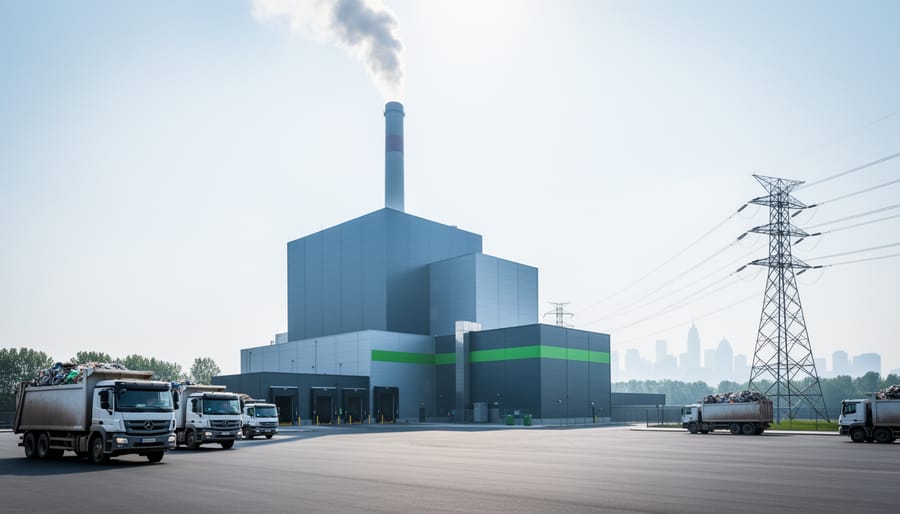
Turning trash into electricity is the process of converting municipal solid waste into usable energy through combustion, gasification, or other thermal and biological methods. Instead of letting garbage decompose in landfills where it releases methane and takes up valuable land, waste-to-energy facilities burn or break down trash to generate heat, which then powers turbines to produce electricity or provides direct heating for homes and businesses.
This technology tackles two pressing environmental challenges at once. It reduces the volume of waste heading to landfills by up to 90% while simultaneously generating clean energy that can power thousands of homes. For communities struggling with limited landfill space and rising energy demands, waste-to-energy systems offer a practical solution that transforms an environmental burden into a resource.
The concept echoes the broader philosophy of turning trash into treasure but takes it a step further by creating actual power from materials that would otherwise sit in the ground for decades. Modern facilities equipped with advanced emission controls can process waste far more cleanly than traditional landfills, capturing pollutants before they reach the atmosphere.
In this article, you’ll discover exactly how waste-to-energy systems work, from the initial sorting of trash to the final production of electricity. We’ll explore the different technologies behind these facilities, examine real-world applications across the globe, and address the environmental questions that matter most to families and communities considering this approach to waste management.
What Waste-to-Energy Really Means
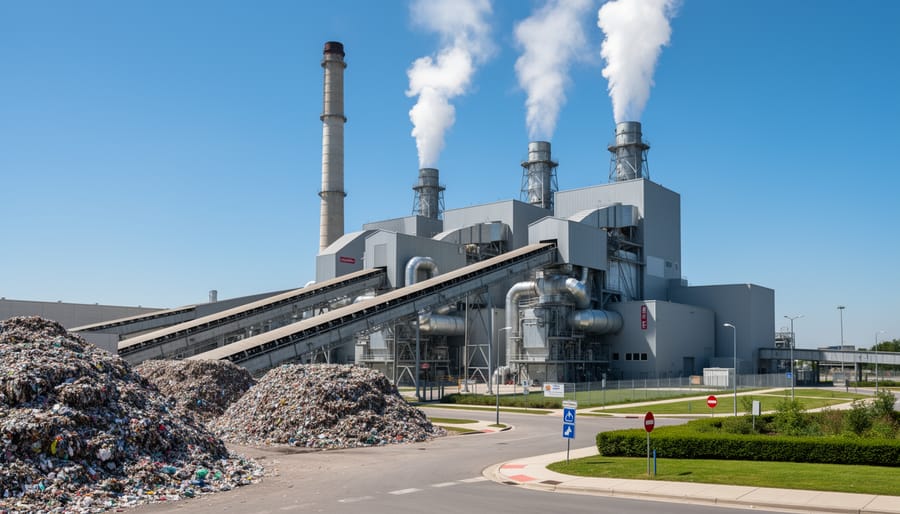
Waste-to-energy technology transforms the garbage we can’t recycle into power we can use. Instead of burying non-recyclable materials in landfills where they sit for decades, WTE facilities harness the energy locked inside that waste through controlled processes that generate electricity, produce steam for heating, or create alternative fuels.
Think of it as the ultimate form of getting value from what others throw away. When recycling reaches its limits and materials can’t be repurposed into new products, waste-to-energy steps in as the next best option. The process captures energy that would otherwise be lost while dramatically reducing the volume of trash headed to landfills, often by 90 percent or more.
- Waste-to-Energy (WTE)
- The process of generating electricity, heat, or fuel from the treatment of solid waste through various thermal and biological methods.
- Incineration
- The combustion of waste materials at high temperatures in a controlled environment, converting trash into ash, gas, and heat that can power generators.
- Thermal Treatment
- Any heat-based process used to break down waste materials, including incineration, gasification, and pyrolysis.
- Energy Recovery
- The capture and use of energy that would otherwise be wasted, turning heat from trash into usable power or fuel.
- Residual Waste
- The leftover garbage that remains after recycling, composting, and reuse efforts, materials with no other recovery option except energy conversion or landfilling.
This approach fits squarely within the circular economy mindset. Rather than following the old take-make-dispose model, waste-to-energy closes the loop on materials that have reached the end of their useful life. It recognizes that even items destined for disposal contain value worth capturing. For environmentally conscious families looking to reduce their footprint, understanding WTE means seeing waste management as part of a complete resource recovery strategy where nothing truly goes to waste.
How Waste-to-Energy Technology Works
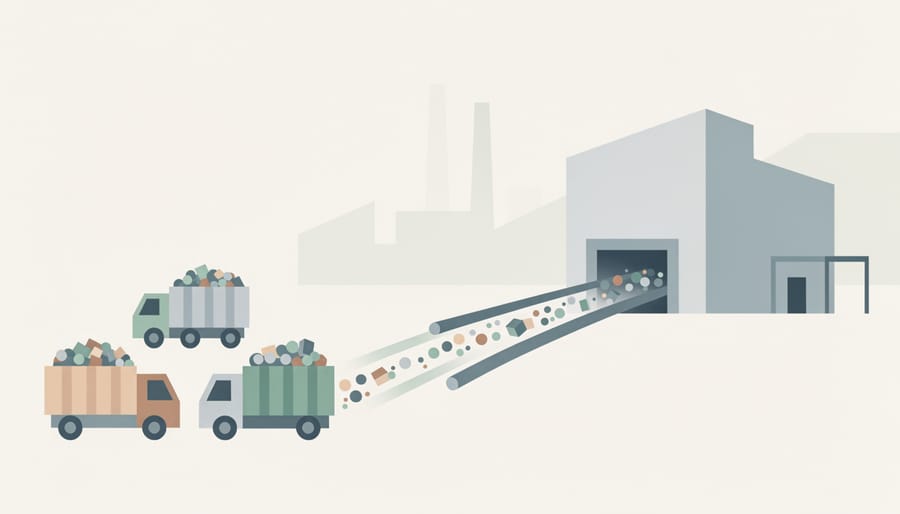
Picture a garbage truck backing up to a waste-to-energy facility on an ordinary Tuesday morning. The trash you tossed last night is about to start a transformation that’ll power homes by dinnertime.
The journey begins at the tipping floor, where trucks dump their loads into a massive bunker, think of it as a temporary storage warehouse for waste. This isn’t a random pile. Crane operators grab enormous mechanical claws to mix and move the waste, ensuring a consistent fuel mixture. Too much wet organic matter or bulky items can affect how efficiently everything burns, so this mixing stage matters more than you’d think.
From the bunker, the waste travels up a conveyor into the combustion chamber. Here’s where things get seriously hot, we’re talking temperatures between 1,800 and 2,000 degrees Fahrenheit. At these extreme temperatures, the waste doesn’t just burn; it transforms. Metals melt, organic materials vaporize, and the entire mass reduces to about 10% of its original volume.
The intense heat from combustion does more than destroy trash. It boils water flowing through a network of tubes lining the furnace walls. This creates high-pressure steam, the real workhorse of the facility. That steam rushes toward turbines connected to generators, spinning them at thousands of rotations per minute. It’s the same basic principle that powers coal and natural gas plants, except the fuel source rode in on a garbage truck.
As the turbines spin, they drive generators that produce electricity. Some facilities generate enough power for 50,000 homes or more from waste that would otherwise pile up in landfills. The electricity flows into the local grid, indistinguishable from power generated any other way.
Meanwhile, gases from the combustion process pass through a sophisticated air pollution control system. Scrubbers remove acid gases, filters capture particulate matter, and selective catalytic reduction tackles nitrogen oxides. The exhaust that finally leaves the stack is cleaner than most people expect, modern facilities meet strict environmental standards.
What’s left behind is ash, which gets separated into bottom ash and fly ash. The bottom ash often contains metals that can be recovered and recycled. The remaining material sometimes gets used in construction applications, finding yet another purpose instead of simply taking up landfill space.
From truck to turbine to transmission line, the entire process takes hours, not days. Your morning trash could literally be powering your evening lights.
Different Methods of Turning Trash into Power
Traditional Incineration
Mass burn incineration facilities are the workhorses of waste-to-energy technology, handling about 90% of the waste converted into electricity worldwide. These plants accept mixed municipal waste, everything from food scraps to furniture that can’t be salvaged, without requiring extensive sorting beforehand.
Here’s how they operate: garbage trucks deliver waste directly to a massive storage bunker, where crane operators mix and feed materials into combustion chambers. These chambers burn at temperatures between 1,800 and 2,000 degrees Fahrenheit, hot enough to break down most materials and destroy harmful pathogens. The intense heat boils water in surrounding pipes, creating high-pressure steam that spins turbines connected to generators.
Modern incineration facilities include sophisticated pollution control systems with multiple layers of scrubbers, filters, and catalysts. These remove acid gases, heavy metals, and particulates before releasing cleaned exhaust. The journey from waste to energy takes just a few hours, and one ton of trash typically generates enough electricity to power a home for about a month. What remains is approximately 25% of the original volume as bottom ash, which many facilities now recycle into road base and construction materials rather than landfilling it.
Advanced Thermal Technologies
Beyond traditional incineration, advanced thermal technologies offer a more sophisticated approach to breaking down waste. These methods starve the process of oxygen, creating entirely different chemical reactions that produce cleaner outputs.
Gasification heats waste to extreme temperatures, typically 700 to 1,200 degrees Celsius, in a low-oxygen environment. Instead of burning materials completely, this process converts them into syngas, a mixture of hydrogen and carbon monoxide that burns remarkably clean. It’s like transforming your trash into a new fuel before it ever produces electricity.
Pyrolysis takes a similar approach but operates at slightly lower temperatures without any oxygen present. The waste literally breaks down into its chemical building blocks, yielding oil-like liquids, combustible gases, and solid char. Think of it as reverse manufacturing, taking complex products and reducing them back to raw energy components.
Plasma arc technology pushes things to the extreme. Using temperatures hotter than the surface of the sun (up to 14,000 degrees Celsius), advanced thermal plasma gasification obliterates molecular bonds in waste materials, turning nearly everything into syngas and an inert glass-like slag. It’s the closest thing to making waste disappear completely while capturing its energy value.
These oxygen-controlled methods produce far fewer air pollutants than conventional burning and can handle trickier waste streams, including medical waste and hazardous materials.
Biological Conversion Methods
Unlike thermal methods that apply intense heat, biological conversion harnesses nature’s own recycling system. In sealed tanks called digesters, microorganisms break down food scraps, agricultural residues, sewage sludge, and other organic materials without oxygen. Through this process, anaerobic digestion produces biogas primarily methane and carbon dioxide, that can fuel generators to create electricity and heat.
Think of it as composting’s high-tech cousin. The bacteria do the heavy lifting, converting yesterday’s kitchen waste into tomorrow’s power while leaving behind a nutrient-rich digestate that farmers use as fertilizer. Dairy farms, wastewater treatment plants, and food processing facilities are putting this technology to work, turning their organic waste streams into renewable energy on-site. A single digester at a large dairy operation can generate enough electricity to power hundreds of homes while dramatically cutting methane emissions that would otherwise escape from manure lagoons. It’s proof that sometimes the best solution works with nature, not against it.
Where Waste-to-Energy Makes the Biggest Impact
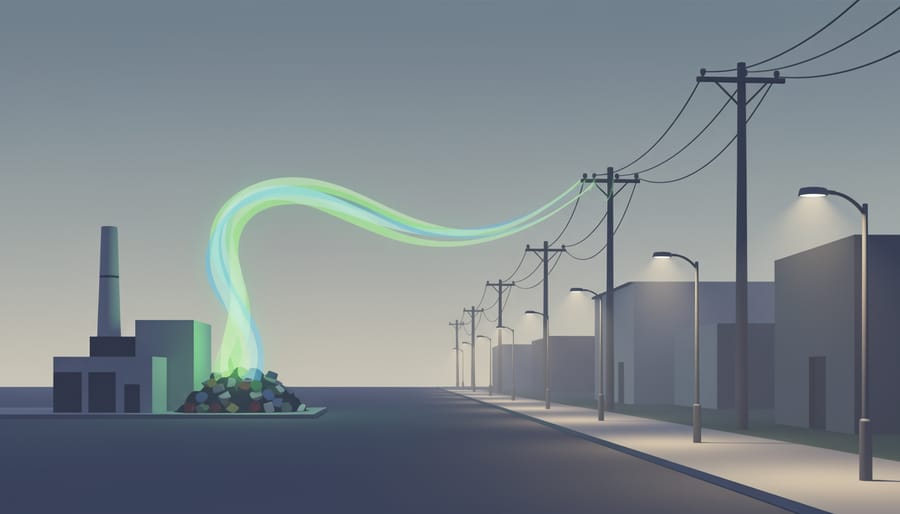
Waste-to-energy facilities aren’t just theoretical solutions, they’re actively powering communities and transforming how we handle trash right now. The technology shows up where waste volumes are high, space is limited, and there’s a genuine commitment to keeping materials out of landfills.
Cities lead the pack in WTE adoption. Urban centers with limited landfill space and dense populations find these facilities solve multiple problems at once. Copenhagen’s Amager Bakke plant processes 440,000 tons of waste annually while generating electricity for 60,000 homes and district heating for 160,000 residents. The facility even features a ski slope on its roof, turning infrastructure into recreation. Closer to home, facilities in places like Hillsborough County, Florida convert municipal waste into enough electricity to power thousands of homes while drastically reducing landfill dependency.
The technology makes the biggest difference in several key areas:
- Municipal solid waste systems that process residential and commercial garbage from entire metro regions
- Landfill diversion programs aiming to meet zero-waste goals or extend existing landfill lifespans
- Industrial waste management for manufacturing facilities generating consistent non-recyclable materials
- District heating networks that distribute thermal energy from WTE plants to homes and businesses
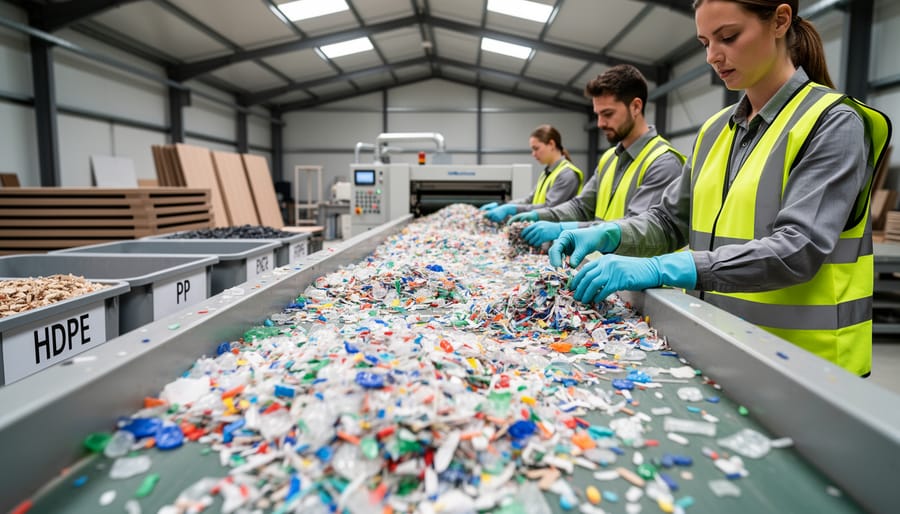
- Combined resource recovery facilities that integrate sorting, recycling, and energy recovery under one roof
Industrial applications showcase WTE’s flexibility. Paper mills, food processing plants, and manufacturing facilities use on-site gasification or anaerobic digestion to convert their own waste streams into energy, cutting disposal costs while powering operations. Pharmaceutical companies and hospitals rely on specialized high-temperature systems to safely destroy medical waste while recovering energy.
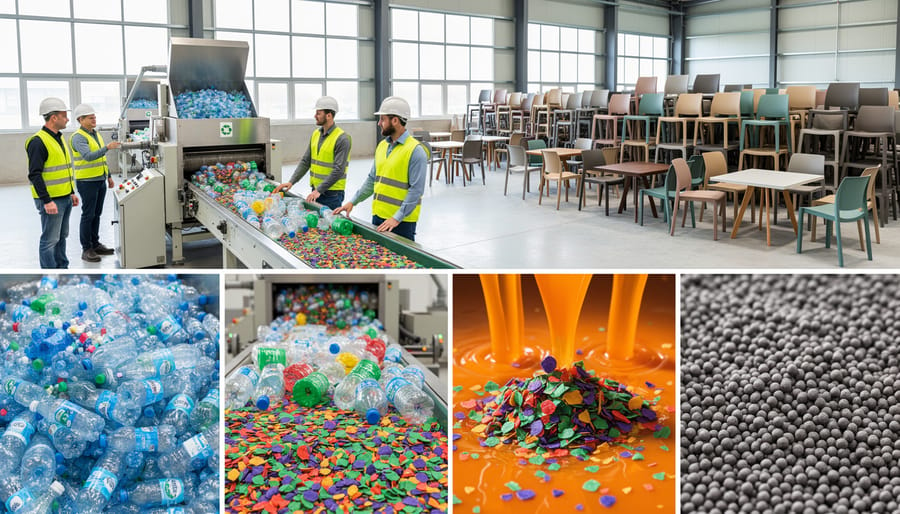
The real magic happens when WTE complements rather than competes with recycling efforts. Modern facilities incorporate front-end sorting to pull out recyclables before combustion. This integration mirrors how operations in the circular economy work together, just as waste becomes furniture through dedicated recycling programs, the materials that can’t be mechanically recycled still contribute value through energy recovery. It’s about finding the right path for every piece of waste, whether that’s a second life as a product or as clean electricity lighting someone’s home.
The Environmental Story Behind Energy from Waste
When you divert a ton of waste from the landfill to a waste-to-energy facility, you’re doing more than just clearing space, you’re preventing decades of methane emissions. Landfills are methane factories. As organic materials decompose without oxygen, they release this greenhouse gas that’s roughly 25 times more potent than carbon dioxide over a century. WTE facilities combust waste under controlled conditions, breaking down those materials immediately and capturing the energy rather than letting it seep into the atmosphere.
The energy displacement story matters just as much. Every megawatt-hour generated from waste is a megawatt-hour we don’t need from coal or natural gas. Modern WTE plants generate enough electricity to power thousands of homes, offsetting fossil fuel consumption and the carbon emissions that come with it. In regions with limited renewable energy infrastructure, this becomes a practical bridge technology that reduces our reliance on the dirtiest energy sources while we build out solar and wind capacity.
Resource recovery extends beyond energy generation. The ash left after combustion contains concentrated metals like iron, aluminum, copper, and even precious metals from electronics. Forward-thinking facilities extract these materials and send them back into manufacturing streams. What started as mixed trash becomes both electricity and reclaimed raw materials, a double environmental win that embodies the circular economy philosophy.
Emission controls have transformed dramatically since early incinerators gave WTE a bad reputation. Today’s plants use multi-stage scrubbing systems, fabric filters, and selective catalytic reduction to remove sulfur dioxide, nitrogen oxides, heavy metals, and particulates. Modern European and North American facilities often emit less dioxin per unit of energy than coal plants, with continuous monitoring ensuring compliance with strict environmental standards.
WTE sits in a specific spot within the waste hierarchy, and understanding that placement matters. Reduction comes first, consuming less creates less waste. Reuse and recycling follow, keeping materials in circulation. Then comes energy recovery for what can’t be reduced, reused, or recycled. Finally, landfilling serves as the last resort. This isn’t about choosing between recycling and energy recovery; it’s about deploying both strategically. We recycle the aluminum can and recover energy from the contaminated food wrapper that recycling facilities reject.
That broader mission of finding value in discarded materials connects everything from upcycled furniture projects to industrial energy recovery. The family business mindset applies at every scale: nothing is truly waste if we’re creative and intentional about recovery.
Common Questions About Turning Trash into Electricity
Is waste-to-energy safe for nearby communities?
Modern waste-to-energy facilities use advanced pollution control systems including scrubbers, filters, and continuous emission monitoring to meet strict air quality standards. These plants typically emit less greenhouse gas per ton of waste than landfills, which release methane, and facilities are regularly inspected to ensure compliance with environmental and health regulations.
How much electricity can trash actually generate?
One ton of municipal solid waste typically generates about 500-600 kilowatt-hours of electricity, enough to power a home for roughly two weeks. A single waste-to-energy facility processing 2,000 tons daily can provide electricity for tens of thousands of homes while dramatically reducing landfill volume.
Does waste-to-energy compete with recycling programs?
Not when systems are designed thoughtfully. WTE plants work best as partners with recycling, handling materials that can’t be recycled economically or materials contaminated beyond recovery. The most effective waste management strategies prioritize reduction and recycling first, then use energy recovery for the remaining non-recyclable waste.
What happens to the ash left after burning trash?
Bottom ash, which makes up about 15-20% of the original waste volume, often gets recycled into road base, construction aggregate, or landfill cover material. Fly ash from pollution control systems requires special handling and typically goes to lined landfills, but the overall volume needing disposal is a fraction of what the original trash would have occupied.
People also wonder about costs. Building a waste-to-energy facility requires significant upfront investment, but operational expenses can be offset by electricity sales and avoided landfill fees. For communities facing limited landfill space or high disposal costs, WTE makes financial sense over the long term.
The comparison to landfills comes up constantly. Landfills consume vast land areas, create methane emissions for decades, and risk groundwater contamination through leachate. Energy recovery transforms that same waste into electricity while reducing volume by roughly 90%. It’s not perfect, nothing beats preventing waste in the first place or finding creative reuse through eco-friendly production methods, but for unavoidable, non-recyclable waste, generating power beats burial.
Some folks ask whether every community needs a WTE plant. The answer depends on waste volume, available land, energy prices, and local recycling infrastructure. Smaller communities might lack the waste stream to justify a facility, while densely populated areas with limited landfill access often find waste-to-energy essential for sustainable waste management.
Waste-to-energy technology represents just one chapter in the bigger story of resource recovery. When you understand how non-recyclable materials can generate electricity instead of sitting in landfills, you start seeing trash differently. That yogurt container that can’t be recycled? It might power streetlights. Those worn-out textiles? Potential fuel for heating homes. And the recyclable plastics that do get processed can become durable products that last decades, with plastic durability rivaling virgin materials.
Our family business grew from the belief that nothing is truly waste until we stop looking for its value. Sometimes that value becomes a piece of upcycled furniture. Other times, it becomes kilowatts of clean energy. The key is matching the right material to its highest purpose.
You don’t need to build a waste-to-energy plant to make a difference. Start by understanding where your trash goes and supporting the facilities and businesses that extract maximum value from it. Choose products made from recycled materials. Push for better waste management in your community. Every choice you make sends a signal about what kind of resource recovery future you want to see. The transformation has already begun, be part of it.